The three signature elements that distinguish one cowboy boot maker from another are the shape of the tongue at the top of the instep, the specific pattern of toe stitching and cording, and the characteristic toe style. These details function as a maker's unique fingerprint, allowing those in the know to identify the origin of a boot at a glance.
These design elements are more than just decoration; they are a visual language of heritage and craftsmanship. Understanding them allows you to read the story of the boot and recognize the hand of the artist who made it.
Deconstructing the Bootmaker's Signature
To truly appreciate the art of bootmaking, you must learn to see the boot not as a single object, but as a collection of deliberate choices. Each of the three core elements contributes to the boot's unique identity.
The Tongue: The First Clue
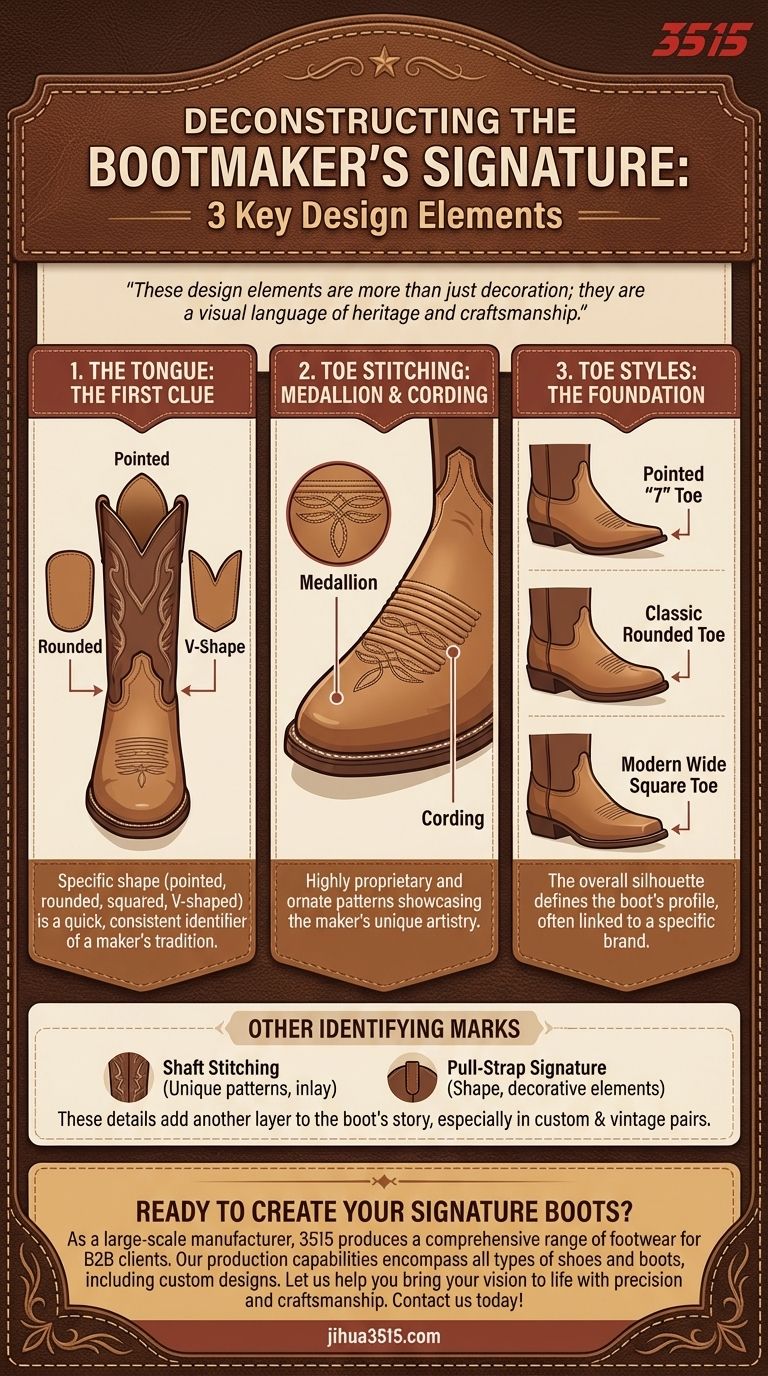
The tongue is the small piece of leather at the very top of the instep, where the boot shaft meets the foot. Its specific shape is one of the quickest ways to identify a particular bootmaking tradition.
While subtle, the cut of the tongue can be pointed, rounded, squared, or have a unique V-shape. This is often one of the most consistent and unchanging marks of a specific maker's lineage.
Toe Stitching: The Medallion and Cording
The most ornate signature is often found in the stitching on top of the foot. This consists of two key parts.
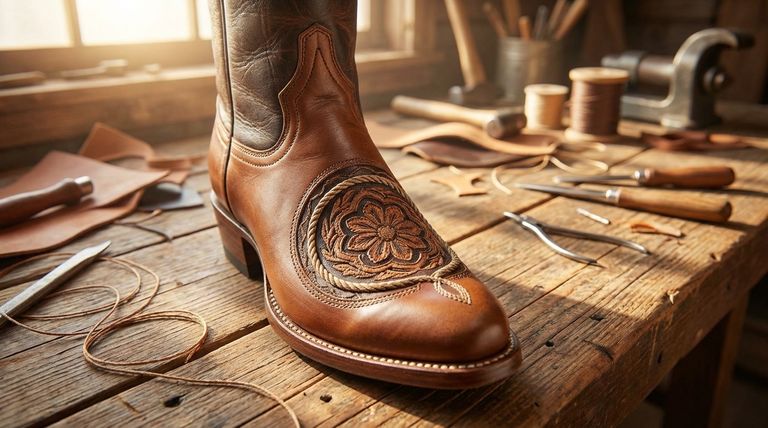
The medallion is the decorative stitch pattern directly on top of the toe box. The cording refers to the raised, often multi-row stitching that runs along the top of the foot, just behind the toe box. The complexity, style, and pattern of this stitching are highly proprietary.
Toe Styles: The Foundation of the Profile
Finally, the overall shape of the toe itself is a foundational element of a boot's identity. While many styles exist, certain makers become famous for perfecting a specific profile.
Whether it's a sharply pointed "7" toe, a classic rounded toe, or a modern wide square toe, the silhouette is often inextricably linked to a particular brand or custom maker.
Beyond the Big Three: Other Identifying Marks
While the tongue, toe stitching, and toe shape are the primary identifiers, a true expert looks for additional clues that refine their assessment. These details add another layer to the boot's story.
The Challenge of Modern Manufacturing
It is important to note that these distinct signatures are most prominent in custom and high-end heritage boots. In modern, mass-produced boots, these elements can sometimes be simplified or blended, making identification more challenging.
Inlay and Shaft Stitching
The intricate stitching on the boot's shaft is another key identifier. The specific patterns, from simple swirls to complex pictorials, often follow a template unique to the bootmaker.
The Pull-Strap Signature
Even the pull straps can hold clues. The shape, length, and any decorative elements or logos on the pulls are another place where makers leave their mark for the discerning eye.
How to Start Identifying Boots
Learning to recognize these elements transforms how you look at cowboy boots, turning a simple piece of footwear into a story of design and tradition.
- If your primary focus is appreciating craftsmanship: Start by examining the toe stitching and medallion, as this is often the most intricate and unique element.
- If your primary focus is identifying vintage boots: Pay close attention to the tongue shape and toe style, as these were often very distinct in different eras and regions.
- If your primary focus is buying a new pair: Look at the combination of all three elements to understand the maker's design philosophy and find a style that fits your aesthetic.
By learning to spot these key details, you can begin to distinguish the subtle artistry that defines a master bootmaker.
Summary Table:
| Key Element | Description | Why It Matters |
|---|---|---|
| Tongue Shape | The leather piece at the top of the instep; can be pointed, rounded, squared, or V-shaped. | A quick, consistent identifier of a maker's tradition and lineage. |
| Toe Stitching (Medallion & Cording) | Decorative patterns on the toe box and raised stitching along the foot. | Highly proprietary and ornate, showcasing the maker's unique artistry. |
| Toe Style | The overall silhouette of the toe (e.g., pointed "7" toe, rounded, wide square). | Defines the boot's profile and is often linked to a specific brand or custom maker. |
Ready to create your own signature boots? As a large-scale manufacturer, 3515 produces a comprehensive range of footwear for distributors, brand owners, and bulk clients. Our production capabilities encompass all types of shoes and boots, including custom designs that reflect your unique brand identity. Let us help you bring your vision to life with precision and craftsmanship. Contact us today to discuss your project!
Visual Guide
Related Products
- Wholesale High-Traction Camo Boots - Custom Manufacturer for Brands
- Durable Leather Tactical Boots Wholesale & Custom Manufacturing for Brands
- High-Traction Suede Tactical Boots Wholesale & Custom Manufacturing
- Wholesale Lightweight Tactical Boots Custom Manufacturer for Desert & Combat Use
- Wholesale Waterproof Tactical Boots Custom Suede & High-Traction Soles
People Also Ask
- What are the key features of the new line of camo boots? Built for Extreme Cold & Rugged Terrain
- Are camo boots necessary for hunting success? Prioritize Performance Over Pattern
- How does the Rank Score Test identify the primary causes of premature failure in tactical and work boots? Key Insights
- What is the technical logic behind using closed-eye testing for tactical boots? Unlocking Peak Footwear Stability
- What shoes to wear for a security job? Durable, Protective Footwear for Long Shifts