The primary risks are contamination and health. Wearing outdoor shoes indoors directly transfers bacteria, viruses, and allergens from the outside world into your living space. This introduces pathogens that can cause a range of illnesses and pollutants that can degrade your home's air quality and cleanliness.
While the immediate danger of contracting a serious illness from your shoes is low for a healthy adult, the core issue is the consistent introduction of contaminants. The decision to wear shoes indoors is ultimately a trade-off between convenience, personal support, and the tangible risks to hygiene and long-term health.
The Contamination Vector: What Your Shoes Bring Inside
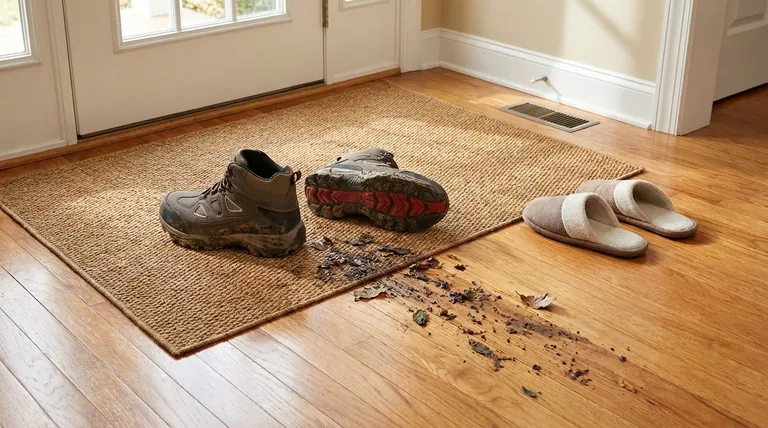
Every time you walk indoors with your outdoor shoes, you are bringing in a microscopic sample of every surface you've crossed. This goes far beyond visible dirt.
Harmful Bacteria and Viruses
Your shoe soles are a prime transport for microorganisms. Studies have identified harmful bacteria on footwear that are linked to intestinal and urinary tract infections, diarrhea, meningitis, and even pneumonia.
Beyond bacteria, viruses that cause conditions like plantar warts and fungi responsible for Athlete's Foot can easily be tracked into your home, increasing the risk of transmission within the household.
Allergens and Pollutants
For individuals with respiratory sensitivities, shoes are a significant source of indoor pollutants. They carry pollen, dust, and residue from lawn chemicals directly onto your floors.
These particles become airborne and degrade indoor air quality, which can trigger or worsen symptoms of allergies and asthma.
The Impact on Vulnerable Groups
The risk is not evenly distributed. Young children and pets spend a significant amount of time on the floor, putting them in direct contact with any contaminants tracked inside.
Their developing immune systems (or, in the case of pets, their grooming habits) make them more susceptible to the bacteria and toxins found on shoe soles.
Beyond Germs: Physical and Environmental Costs
The impact of wearing shoes indoors extends beyond microbiology. It affects your physical environment, your personal health, and even has a broader ecological footprint.
Wear and Tear on Flooring
The abrasive materials on the soles of outdoor shoes—dirt, gravel, and sand—act like sandpaper on your floors. This friction causes premature wear and tear on surfaces like hardwood, laminate, and carpet, leading to costly repairs or replacement.
The Impact on Foot Health
Not all shoes are designed for prolonged indoor wear. Relying on footwear without proper arch support or cushioning can contribute to foot pain, blisters, and long-term conditions like bunions or plantar fasciitis.
Conversely, constant shoe-wearing can weaken the small muscles in your feet, making it important to spend time barefoot to maintain natural strength and flexibility.
The Environmental Footprint
A no-shoes policy can have a positive environmental effect. It reduces the need for frequent, intensive floor cleaning, which in turn cuts down on the consumption of water and chemical cleaning products.
By preserving your flooring, you also delay its replacement, reducing the waste and manufacturing impact associated with producing new materials.
Understanding the Trade-offs
While the risks are clear, there are valid reasons why some individuals choose to wear shoes inside. Objectivity requires acknowledging these benefits.
Protection and Safety
Shoes provide a crucial barrier against common household injuries. They protect feet from being stubbed on furniture, pierced by sharp objects like a dropped piece of glass, and can prevent falls on slippery surfaces with their non-slip soles.
Support and Stability
For individuals with certain medical conditions, such as plantar fasciitis, diabetes, or joint problems, consistent footwear is not a choice but a necessity. The support provided by orthopedic shoes or inserts is essential for stability and pain management throughout the day.
Comfort and Hygiene
In some situations, shoes can enhance comfort. They provide warmth on cold floors and can offer a sense of hygiene by creating a barrier between your feet and floors that may not be perfectly clean.
Making an Informed Decision for Your Home
The right choice depends on your specific household, health, and priorities.
- If your primary focus is maximizing hygiene for children or immunocompromised individuals: A strict no-shoes policy at the door is the most effective strategy.
- If your primary focus is personal support due to a medical condition: Designate a specific pair of supportive "indoor-only" shoes that are never worn outside.
- If your primary focus is general cleanliness and floor preservation: Removing outdoor shoes upon entry is the best practice for protecting your investment and reducing cleaning efforts.
Ultimately, creating a clear boundary between your outdoor footwear and your indoor space is the simplest way to maintain a cleaner and healthier home.
Summary Table:
| Risk Category | Key Concerns |
|---|---|
| Health & Hygiene | Bacteria, viruses, allergens, pollen, and chemical residues. |
| Home Environment | Premature wear on flooring (hardwood, carpet) and degraded air quality. |
| Vulnerable Groups | Higher risk for young children, pets, and immunocompromised individuals. |
| Foot Health | Potential for pain, blisters, and weakened foot muscles from improper support. |
Ready to create a healthier home environment? As a large-scale manufacturer, 3515 produces a comprehensive range of indoor and outdoor footwear for distributors, brand owners, and bulk clients. Our production capabilities encompass all types of shoes and boots, including supportive, hygienic options perfect for indoor use. Let us help you provide the right footwear solutions for your customers. Contact our team today to discuss your needs!
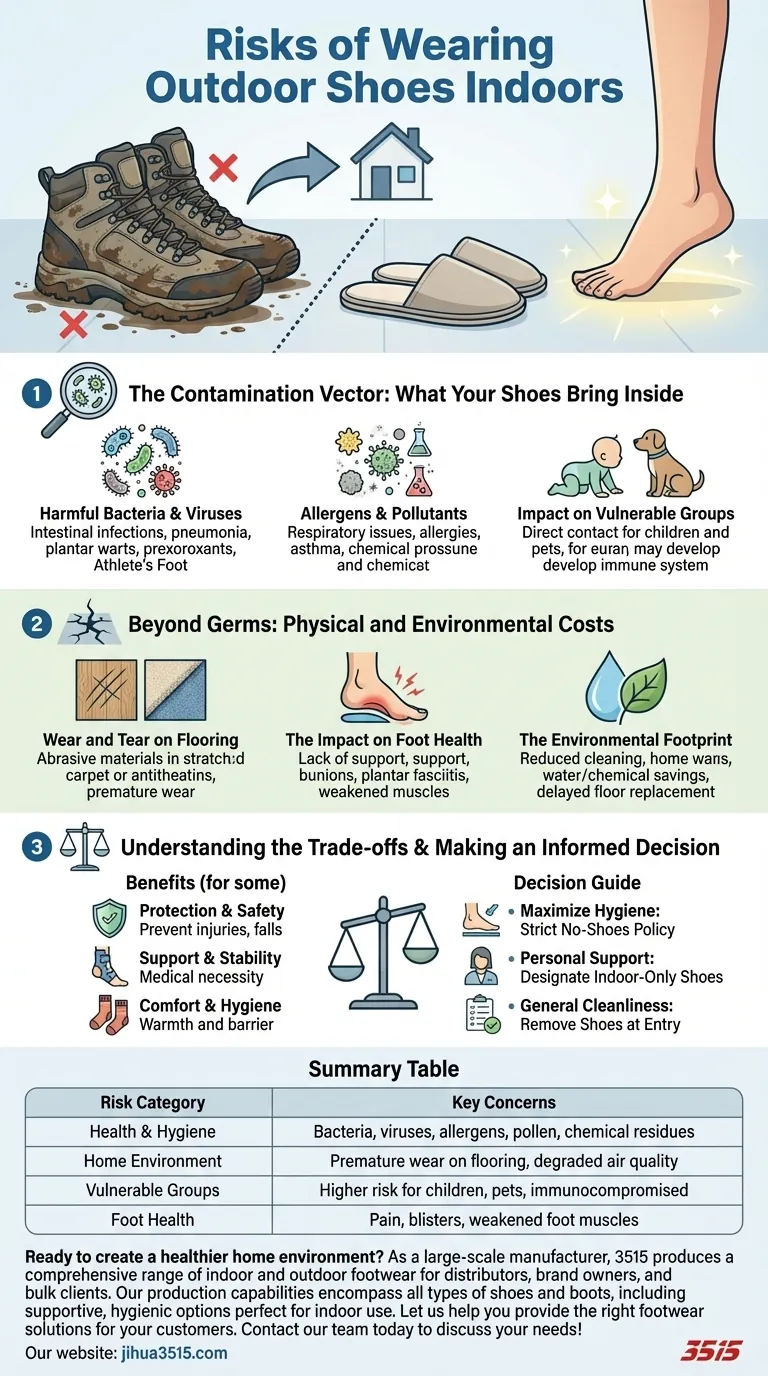
Visual Guide
Related Products
- Durable Rubber Sole Outdoor Shoes Wholesale & Custom Manufacturing
- Wholesale Durable Camouflage Canvas Shoes with High-Traction Cleated Rubber Sole
- Wholesale Waterproof Tactical Boots Custom Suede & High-Traction Soles
- Premium Suede Sport Safety Shoes for Wholesale & Bulk Orders
- Lightweight Breathable Sneakers with Wet-Traction Grip for Wholesale & Private Label
People Also Ask
- What is the function of the sole in outdoor shoes? Find the Perfect Grip and Support
- What role do outdoor shoes and sneakers play in navigating external terrains? Engineered Stability for Every Surface
- How is AI utilized in the design of outdoor and safety footwear? Harnessing Big Data for Market-Driven Shoe Innovation
- Why is durability important when selecting outdoor shoes? A Guide to Safety & Long-Term Value
- What are the key components of outdoor shoes that affect comfort and sturdiness? A Guide to Durable, High-Performance Footwear