
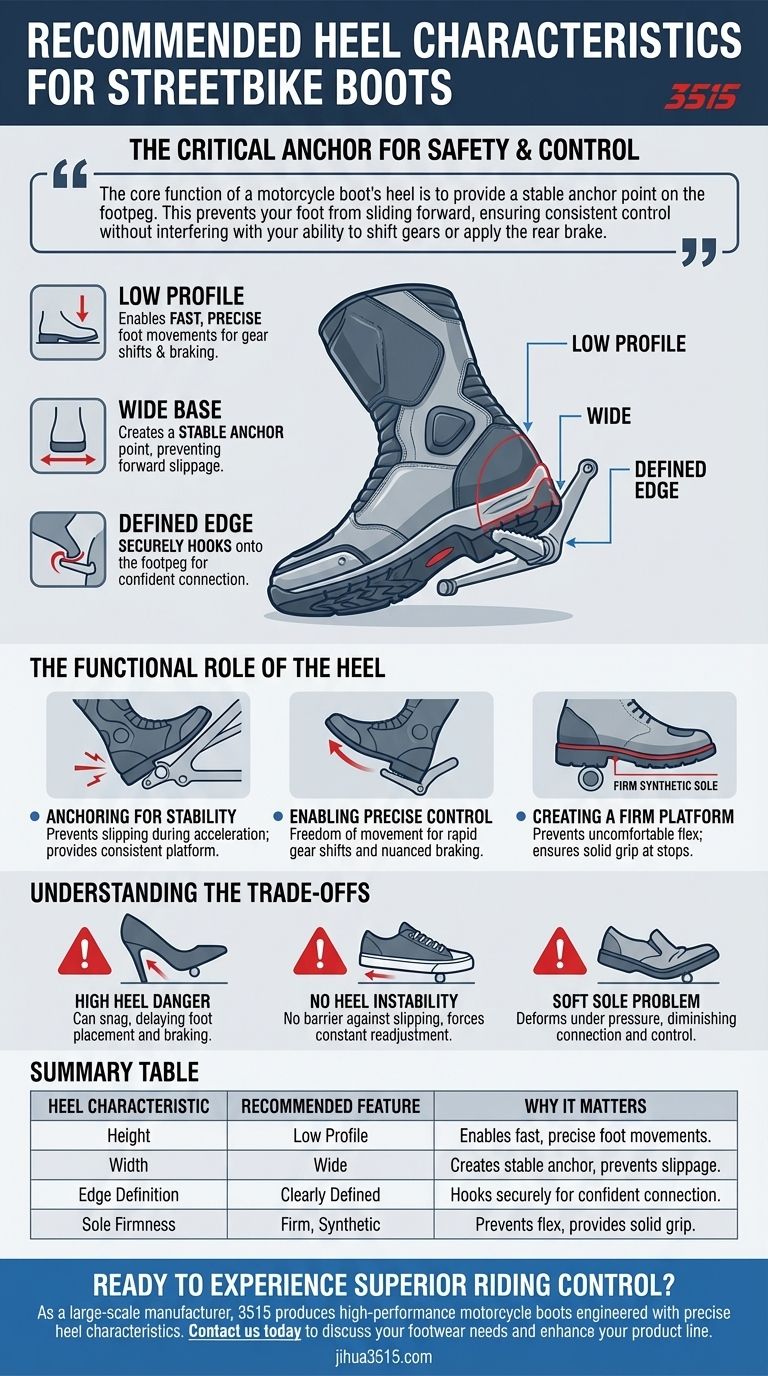
For a streetbike boot, the ideal heel is low and wide, with just enough of a defined edge to securely hook onto the footpeg. This design is not for aesthetics; it is a critical feature engineered for both safety and precise control of the motorcycle.
The core function of a motorcycle boot's heel is to provide a stable anchor point on the footpeg. This prevents your foot from sliding forward, ensuring consistent control without interfering with your ability to shift gears or apply the rear brake.
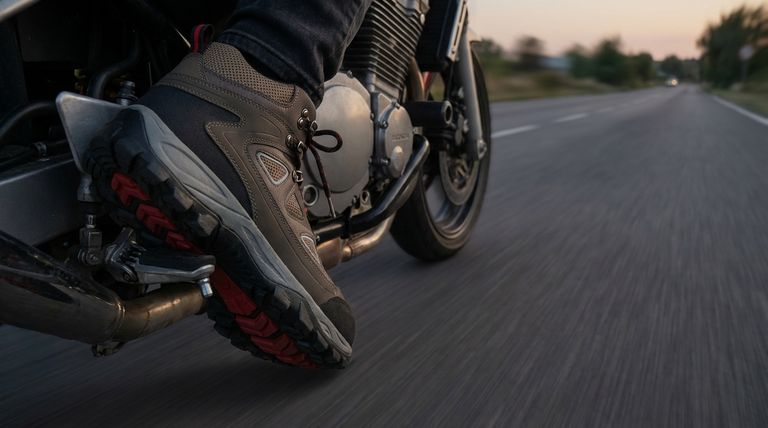
The Functional Role of the Heel
Understanding why a specific heel design is recommended is crucial for making an informed choice. The heel directly impacts your connection to the motorcycle.
Anchoring Your Foot for Stability
The most important job of the heel is to provide a positive stop against the footpeg. This "lodged" or "hooked" position prevents your foot from slipping forward, especially during acceleration or when riding over uneven surfaces.
This secure placement gives you a consistent platform, allowing for confident and stable control at all times.
Enabling Precise Control
A heel that is too tall or bulky can be a significant liability. A low-profile design ensures your foot can pivot easily and quickly on the peg.
This freedom of movement is essential for rapid gear shifts and nuanced application of the rear brake, actions that are critical for both performance and safety.
Creating a Firm Platform
The heel is part of the boot's overall sole structure. Streetbike boots require a firm, typically synthetic, sole.
This firmness prevents the sole from flexing uncomfortably over the narrow footpeg, reducing rider fatigue. It also ensures a solid grip on the pavement when you come to a stop.
Understanding the Trade-offs
Choosing a boot with the wrong heel characteristics introduces unnecessary risk and compromises your riding experience.
The Danger of a High Heel
A heel that is too high, often found on fashion or work boots, is hazardous on a motorcycle. It can easily snag on the footpeg, delaying your ability to put your foot down at a stop or reposition it for braking.
This can lead to a clumsy stop, a loss of balance, or a dangerous delay in an emergency.
The Instability of No Heel
Boots or shoes with a completely flat sole, like many sneakers, offer no physical barrier to prevent your foot from sliding forward on the peg.
Without a defined edge to catch the peg, your foot is prone to slipping out of position, forcing you to constantly readjust and distracting you from the road.
The Problem with Soft Soles
Even if the shape is correct, a soft rubber heel and sole (common in running shoes) will deform under pressure on the peg.
This creates a vague, spongy feeling that diminishes your sense of connection to the bike and can cause discomfort on longer rides.
Making the Right Choice for Your Goal
When evaluating a pair of boots, look at the heel not as a style element, but as a piece of functional equipment.
- If your primary focus is performance or track riding: You need a boot with a very low, integrated heel that maximizes feel and allows for the fastest possible foot movements.
- If your primary focus is touring or daily commuting: Seek a well-defined but still low heel that offers a secure anchor for long-distance comfort and provides excellent grip for frequent stops in traffic.
- If your primary focus is a multi-purpose or casual style: You must still prioritize a firm sole with a distinct heel edge that can reliably hook the footpeg, avoiding completely flat-soled or soft fashion footwear.
Ultimately, the correct heel is one that gives you a confident, secure connection to your motorcycle, allowing you to focus completely on the ride.
Summary Table:
| Heel Characteristic | Recommended Feature | Why It Matters |
|---|---|---|
| Height | Low Profile | Enables fast, precise foot movements for gear shifts and braking. |
| Width | Wide | Creates a stable anchor point on the footpeg, preventing forward slippage. |
| Edge Definition | Clearly Defined | Hooks securely onto the footpeg for a confident and stable connection to the bike. |
| Sole Firmness | Firm, Synthetic | Prevents uncomfortable flex on the peg and provides solid grip when stopping. |
Ready to Experience Superior Riding Control?
As a large-scale manufacturer, 3515 produces a comprehensive range of high-performance motorcycle boots for distributors, brand owners, and bulk clients. Our expertise ensures every pair is engineered with the precise heel characteristics and firm sole construction detailed above, providing the safety, stability, and control that serious riders demand.
Contact us today to discuss your footwear needs and discover how our manufacturing capabilities can enhance your product line.
Visual Guide
Related Products
- Durable Goodyear Welt Leather Work Boots for Wholesale & Private Label
- Wholesale Tactical Boots High-Traction & Reflective for Bulk & Brand Orders
- Puncture-Resistant Velcro Safety Boots for Wholesale & Custom Manufacturing
- Heavy-Duty Waterproof Nubuck Safety Boots Safety Shoes for Bulk Supply
- Premium Wholesale Tactical Style Safety Shoes Boots with Quick Lacing
People Also Ask
- What is the difference between full-grain and top-grain leather? Premium Material Guide for Boot Manufacturers
- What are the advantages of leather as an upper material for work boots? Unmatched Durability & Custom Comfort
- Why is it important to waterproof leather work boots? Protect Your Investment and Performance
- How should new leather work boots be broken in? A Guide to Comfort and Durability
- What are the advantages of leather uppers in work boots? Unmatched Durability & Protection



















