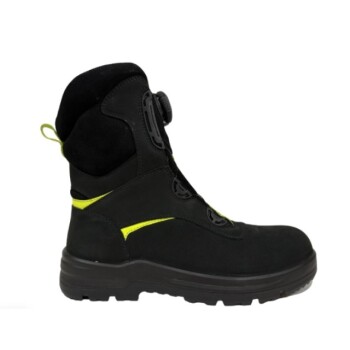
Real-time monitoring of footwear load parameters is the primary function of a pressure-sensing foot sensor system. Specifically, these systems utilize high-frequency data collection to measure contact area, vertical pressure, and stance time directly inside the shoe. This allows researchers to capture precise biomechanical events, such as ground contact and toe-off, to objectively analyze gait patterns.
Core Takeaway: By converting raw pressure data into actionable biomechanical insights, these systems provide a mobile, low-cost alternative to traditional laboratory equipment. They are essential for quantifying gait symmetry and load distribution, particularly when evaluating specialized footwear like safety shoes and tactical boots.
Core Biomechanical Functions
Measuring Fundamental Load Parameters
The foundation of these systems lies in monitoring the physical interaction between the foot and the shoe. The sensors continuously track the contact area and vertical pressure exerted during movement.
This provides a detailed map of how force is distributed across the plantar surface. It enables the identification of high-pressure zones that may indicate potential injury risks or footwear design flaws.
High-Frequency Temporal Analysis
Beyond static pressure, these systems excel at capturing the timing of movement through high-frequency data collection. They precisely record the exact moments of ground contact and toe-off.
This temporal accuracy allows for the calculation of critical gait metrics. Researchers can quantify cadence and stance time, observing how these variables shift across different movement patterns.
From Data to Insight
Assessing Gait Symmetry
The data collected allows for a comparative analysis of movement, specifically regarding gait symmetry. By monitoring both feet, the system identifies imbalances in load or timing.
This is critical for occupational health monitoring. Detecting asymmetries early can prevent long-term musculoskeletal issues in dynamic work environments.
Evaluating Specialized Footwear
A key application of this technology is assessing the performance of specialized footwear, such as tactical boots or safety shoes. The system provides objective data on how different boot designs affect the wearer's gait.
It determines if a specific design alters load distribution negatively or positively. This ensures that protective footwear does not compromise biomechanical efficiency.
Operational Context and Trade-offs
Mobility vs. Laboratory Precision
A major advantage of an in-shoe pressure system is its nature as a wearable, non-invasive mobile platform. It effectively replaces the need for large-scale, stationary motion capture equipment for many applications.
This mobility allows for data collection in real-world scenarios rather than artificial lab settings. It offers a low-cost solution for monitoring occupational health in the field.
Predictive Capabilities
Advanced utilization of this data allows for the conversion of ground reaction forces into joint kinematic predictions. This extrapolates internal joint movement from the pressure data collected at the foot.
However, relying on predictions rather than direct measurement requires robust validation. The accuracy of these kinematic predictions depends heavily on the quality of the pressure data.
The Role of Baseline Calibration
To ensure validity, these systems often require benchmark data. A separate pressure-sensing gait mat is frequently used to establish baseline metrics like walking speed and step length under controlled conditions.
This ensures that the data collected by the wearable in-shoe system is interpreted correctly. It validates that the subject's starting position and movement fall within expected parameters before perturbation testing begins.
Making the Right Choice for Your Goal
When integrating pressure-sensing systems into your research, align the specific capabilities with your primary objective.
- If your primary focus is Occupational Health: Prioritize the system's ability to detect gait symmetry and specific load distribution to identify injury risks in safety footwear.
- If your primary focus is Biomechanical Modeling: Leverage the system's ability to convert ground reaction forces into joint kinematic predictions as a cost-effective alternative to motion capture.
Effective use of these systems transforms raw pressure numbers into a comprehensive understanding of human movement in real-world environments.
Summary Table:
| Key Function | Parameters Measured | Biomechanical Insight |
|---|---|---|
| Load Monitoring | Vertical Pressure & Contact Area | Identifies high-pressure zones and injury risks |
| Temporal Analysis | Stance Time, Contact & Toe-off | Calculates cadence and movement timing accuracy |
| Symmetry Assessment | Bilateral Load Comparison | Detects gait imbalances for occupational health |
| Performance Testing | Footwear Interaction Data | Evaluates the efficiency of specialized boots/shoes |
| Kinematic Prediction | Ground Reaction Forces | Predicts joint movement without motion capture |
Elevate Your Footwear Performance with 3515
As a premier large-scale manufacturer serving global distributors and brand owners, 3515 leverages advanced biomechanical insights to produce high-performance footwear. Whether you are developing our flagship Safety Shoes or require bulk production of tactical boots, outdoor shoes, training sneakers, or formal dress shoes, our comprehensive manufacturing capabilities ensure every pair meets rigorous ergonomic and durability standards.
Partner with us to transform data-driven research into market-leading products. Contact us today to discuss your manufacturing needs and see how our expertise can add value to your brand.
References
- Alyssa A. Logan, Brian D. Nielsen. Circle Diameter Impacts Stride Frequency and Forelimb Stance Duration at Various Gaits in Horses. DOI: 10.3390/s23094232
This article is also based on technical information from 3515 Knowledge Base .
Related Products
- Premium Wholesale Tactical Style Safety Shoes Boots with Quick Lacing
- Advanced KPU Athletic Safety Shoe with Steel Toe Cap Anti-Slip Rotary Lacing System
- Puncture-Resistant Velcro Safety Boots for Wholesale & Custom Manufacturing
- Durable High-Ankle Tactical Boots Wholesale Manufacturer for Custom & Bulk Orders
- High-Traction Suede Tactical Boots Wholesale & Custom Manufacturing
People Also Ask
- How are gait analysis research findings applied to the functional design of safety shoes and tactical boots?
- How can specialized footwear mitigate safety risks? High-Volume OEM/ODM Solutions since 1951
- How does anthropomorphic design influence material selection? Enhance Footwear Performance through Biological Alignment
- How do quality certification standards for safety shoes reduce perceived risk? Buy Online with Technical Certainty
- Why is the synchronization of craftsmanship and UX development emphasized for bulk customization of safety shoes?