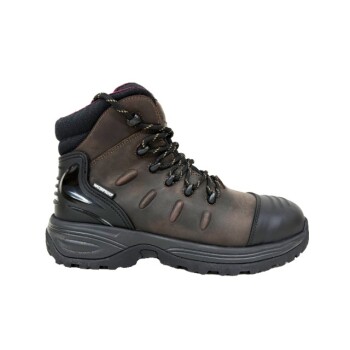
The selection of closed-cell foam materials improves industrial footwear hygiene primarily through physical moisture management. Unlike porous alternatives, the structure of closed-cell foam is inherently non-absorbent, which prevents the accumulation of sweat and liquids that act as breeding grounds for bacteria and fungi. This physical characteristic allows the material to naturally inhibit odor and bacterial growth without relying on temporary chemical treatments.
By utilizing a sealed cellular structure, closed-cell foam eliminates the moisture retention necessary for microbial growth. This provides a permanent, maintenance-free solution for odor control and hygiene that outlasts surface-level chemical applications.
The Mechanics of Hygiene
The Non-Absorbent Barrier
The fundamental advantage of high-performance closed-cell foam lies in its physical structure. Because the cells are sealed shut, the material creates a non-absorbent barrier.
This prevents fluids, sweat, and environmental contaminants from soaking into the boot's lining. By stopping moisture absorption, you remove the primary ecosystem that bacteria require to survive and multiply.
Inherent Anti-Odor Attributes
Odor in footwear is almost exclusively the byproduct of bacterial metabolism. By selecting a material that inhibits bacterial colonization, you automatically achieve deodorizing properties.
Closed-cell foam possesses these anti-odor attributes naturally. This means the odor control is a permanent feature of the material itself, rather than a fleeting result of a spray or wash.
Long-Term Performance Benefits
Eliminating Chemical Dependence
Many industrial boots rely on chemical coatings to kill bacteria. These coatings eventually degrade, wash out, or rub off during heavy use.
Closed-cell foam maintains its hygienic properties without the need for additional chemical coatings. This ensures that the anti-bacterial protection remains effective for the lifespan of the footwear.
Maintaining Foot Dryness
Hygiene is closely linked to dryness. A material that absorbs water will keep the foot damp, promoting fungal infections (like athlete's foot) and discomfort.
Closed-cell foam supports long-term wear by actively maintaining foot dryness. This promotes a healthier environment inside the boot, even during extended shifts.
Comfort and Softness
While the primary focus is often durability, high-performance closed-cell foams are also designed to be soft.
This ensures that the pursuit of hygiene does not come at the cost of comfort. The material cushions the foot while simultaneously acting as a hygienic shield.
Understanding the Trade-offs
Passive vs. Active Protection
It is important to understand the distinction between inhibition and sterilization. Closed-cell foam works by inhibiting growth through environmental control (starving bacteria of moisture).
This is a passive form of protection. Unlike aggressive biocides that chemically attack living organisms, closed-cell foam simply prevents the environment from supporting them. While this is safer and longer-lasting, it relies on the physical integrity of the foam to maintain the barrier.
Making the Right Choice for Your Goal
When selecting materials for industrial footwear, align your choice with your specific operational requirements.
- If your primary focus is long-term hygiene: Prioritize closed-cell foam to ensure anti-bacterial properties persist after the chemical finishes on other materials would have worn away.
- If your primary focus is foot health and dryness: Select closed-cell materials to ensure a non-absorbent environment that prevents the damp conditions favored by fungi and bacteria.
By choosing closed-cell foam, you invest in a proactive, structural solution to hygiene that keeps feet dry and odor-free naturally.
Summary Table:
| Feature | Closed-Cell Foam | Porous Alternatives |
|---|---|---|
| Moisture Absorption | Non-absorbent barrier | High absorption/wicking |
| Anti-Bacterial Mechanism | Physical inhibition (moisture starvation) | Often relies on chemical coatings |
| Odor Control Longevity | Permanent (inherent to structure) | Temporary (degrades over time) |
| Maintenance | Low/Maintenance-free | High (requires cleaning/re-treatment) |
| Foot Health | Promotes dryness & prevents fungi | Can lead to damp, unhygienic environments |
Partner with 3515 for High-Performance Industrial Footwear Solutions
Elevate your product line with the superior hygiene and durability of closed-cell foam technology. As a large-scale manufacturer serving distributors and brand owners, 3515 offers comprehensive production capabilities for all footwear types. Our flagship Safety Shoes series is engineered for peak performance, while our extensive portfolio includes work and tactical boots, outdoor shoes, training shoes, sneakers, and Dress & Formal shoes to meet your diverse bulk requirements.
Why choose 3515?
- Scalable Manufacturing: Robust production for large-scale distribution.
- Material Expertise: Advanced foam technology for permanent odor and bacterial control.
- Versatile Portfolio: From heavy-duty industrial safety to professional formal wear.
Contact us today to discuss your manufacturing needs!
References
- Yirui Peng. Market Fluctuations and the Crocs' Resurgence. DOI: 10.54254/2754-1169/49/20230536
This article is also based on technical information from 3515 Knowledge Base .
Related Products
- Durable Leather Work Boots for Wholesale & Custom Manufacturing
- Puncture-Resistant Velcro Safety Boots for Wholesale & Custom Manufacturing
- Durable Leather Work Boots for Wholesale & Custom OEM Manufacturing
- Wholesale Customizable Safety Boots Durable & Protective Footwear Manufacturing
- Wholesale Heavy-Duty Waterproof Steel Toe Work Boots OEM Manufacturer
People Also Ask
- What is the difference between full-grain and top-grain leather? Premium Material Guide for Boot Manufacturers
- What are the common workplace hazards that can be mitigated with the right work boots? Protect Your Workforce
- What are the common foot issues workers face due to uncomfortable work boots? Prevent Pain & Deformities
- What are the advantages of leather versus synthetic work boots? A Guide to Choosing the Right Material
- What are the key components of modern work boots? Engineered for Ultimate Durability and Comfort