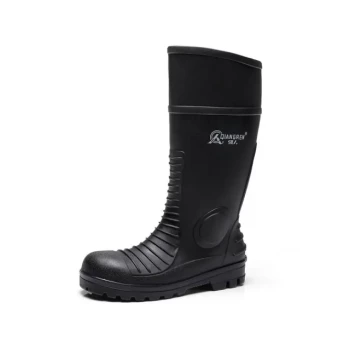
The choice between high-quality TPU and cheaper synthetic plastics is a fundamental decision that dictates a boot’s performance, fit, and long-term market viability. While inexpensive plastics reduce initial production costs, high-quality Thermoplastic Polyurethane (TPU) provides a critical balance of flexibility and structural integrity. This material allows the boot to mold precisely to the wearer’s leg, ensuring a professional-grade fit that heavier, rigid synthetics cannot replicate.
High-quality TPU is the superior choice for boot manufacturing because it combines lightweight performance with the ability to mold to the user's anatomy. For distributors and brand owners, choosing TPU over cheaper synthetics is a strategic move to ensure product durability, reduce returns, and maintain a premium brand reputation.
Engineering Superior Fit: The TPU Advantage
Superior Flexibility and Leg Molding
High-quality TPU is prized for its dynamic flexibility, which allows the boot shell to adapt to the specific contours of the wearer's leg. Unlike rigid plastics, TPU provides a "custom" feel that enhances comfort during prolonged use.
Weight Reduction and Performance
Cheap synthetic plastics are generally heavier, which can lead to user fatigue and diminished performance. TPU achieves higher structural strength with less mass, allowing for a lighter boot that does not sacrifice protection or support.
Long-Term Material Stability
Inexpensive synthetics often become brittle over time or under temperature fluctuations. Premium TPU maintains its elastic properties and impact resistance across a wide range of environments, ensuring the product remains safe and functional for years.
Enterprise-Scale Manufacturing Excellence
Leveraging a Rich Manufacturing Heritage
Successful B2B partnerships rely on manufacturers with deep industry roots, such as those with a heritage dating back to 1951. This longevity ensures that material selection is backed by decades of empirical data and refined production techniques.
State-of-the-Art Equipment and OEM/ODM Precision
Utilizing TPU effectively requires advanced injection molding equipment and technical expertise. High-capacity facilities can leverage these tools to offer bespoke OEM/ODM services, ensuring that even complex designs maintain high structural standards.
Supply Chain Stability and Global Certifications
For large-scale distributors, consistency is as vital as quality. Leading manufacturers back their TPU production with comprehensive international certifications, ensuring that every batch meets rigorous safety and performance standards for global export.
Understanding the Trade-offs
The Cost-Quality Equilibrium
The primary trade-off with high-quality TPU is the higher initial material cost compared to basic synthetics. However, this is typically offset by lower return rates and higher customer lifetime value for the brand.
Manufacturing Complexity
TPU requires more precise temperature controls and specialized machinery than cheaper plastics. Brands must ensure their manufacturing partner has the technical infrastructure to handle these materials without introducing defects.
Market Positioning
Using cheaper plastics may allow for a lower retail price point, but it risks positioning the brand in the "disposable" category. TPU is an investment in premium market positioning, signaling to the consumer that the product is built for professional use.
Making the Strategic Choice for Your Portfolio
Selecting the right material depends on your specific business objectives and target market segment.
- If your primary focus is premium brand positioning: Prioritize high-quality TPU to offer the superior leg-molding and lightweight performance that professional users demand.
- If your primary focus is high-volume supply chain reliability: Partner with a manufacturer that possesses both the massive production scale and international certifications to deliver consistent TPU components at volume.
- If your primary focus is long-term durability and ROI: Invest in TPU-based designs to minimize structural failures and build a reputation for manufacturing excellence.
Choosing high-quality TPU is a commitment to engineering excellence that transforms a simple boot into a high-performance tool for the end user.
Summary Table:
| Feature | High-Quality TPU Materials | Cheaper Synthetic Plastics |
|---|---|---|
| Flexibility & Fit | Dynamic; molds to wearer's leg | Rigid; lacks anatomical adaptation |
| Weight | Lightweight; reduces fatigue | Heavier; diminishes performance |
| Temperature Stability | Remains elastic and impact-resistant | Becomes brittle and prone to cracking |
| Brand Impact | Premium positioning; low return rates | Value positioning; higher return risk |
| Manufacturing | Precise OEM/ODM injection molding | Standard mass production |
Partner with 3515 for Enterprise-Level Footwear Manufacturing
As a large-scale manufacturer serving distributors and brand owners since 1951, 3515 offers the massive production scale and technical expertise your business demands. Our flagship Safety Shoes series and extensive portfolio—including tactical boots, outdoor shoes, and sneakers—are engineered using premium TPU materials to ensure superior fit and long-term durability.
Why choose 3515?
- Rich Heritage: Over 70 years of manufacturing excellence and supply chain stability.
- Premium OEM/ODM: State-of-the-art equipment tailored for complex technical requirements.
- Global Standards: Comprehensive international certifications for consistent large-volume delivery.
Ready to elevate your product line and maximize profit margins with high-performance footwear? Contact our expert team today to discuss your bulk requirements and custom manufacturing needs.
Related Products
- High-Traction Suede Tactical Boots Wholesale & Custom Manufacturing
- Durable Leather Tactical Boots Wholesale & Custom Manufacturing for Brands
- Wholesale Customizable Safety Boots Durable & Protective Footwear Manufacturing
- Durable Leather High-Ankle Tactical Boots for Wholesale & Custom Manufacturing
- Wholesale Durable Safety Boots | Custom Steel Toe & Puncture-Resistant Manufacturing
People Also Ask
- Why is sequential analysis utilized to evaluate tactical boots? Master Dynamic Boot Development and Ergonomic Performance
- How does the material of tactical boots affect their performance? Choose the Right Material for Your Mission
- How do tactical boots differ from regular boots? Performance, Durability & Design Explained
- How do military uniforms and tactical boots impact the prediction of thermal risk? Essential Safety Insights
- What are the benefits of integrating FES and sEMG into tactical boots? Safety, Reliability & Field-Ready Performance