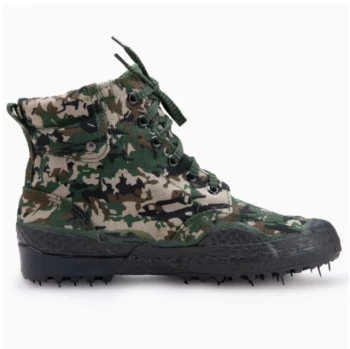
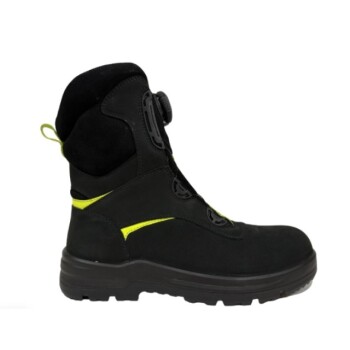
For hunting in prairie terrain, the ideal boot is a lightweight, flexible, and waterproof model with a mid-height shaft. These features prioritize mobility and comfort for covering long distances on flat or rolling ground while still providing essential protection from the elements and terrain hazards.
The central challenge of prairie hunting is the mileage. Your boot selection must reflect this by functioning less like rigid armor and more like a durable, supportive athletic shoe built to minimize fatigue over many miles.
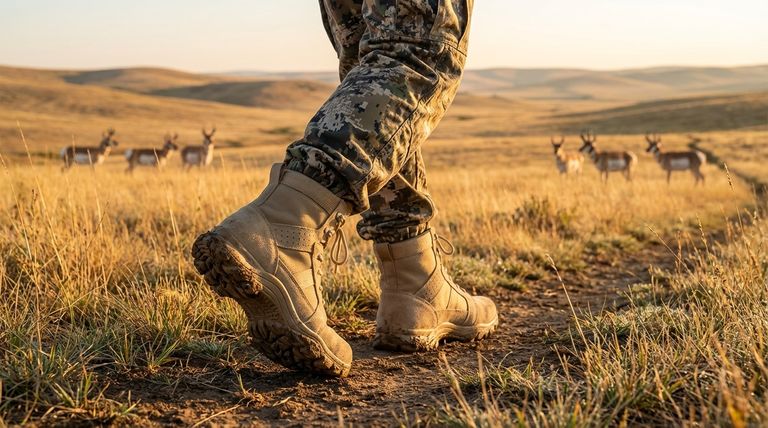
The Core Philosophy: Mobility Over Rigidity
Prairie hunting is a game of walking. Unlike hunts in dense woods or steep mountains, success often depends on your ability to cover significant ground efficiently and quietly. Your footwear must be an asset, not an anchor.
Why Lightweight is Critical
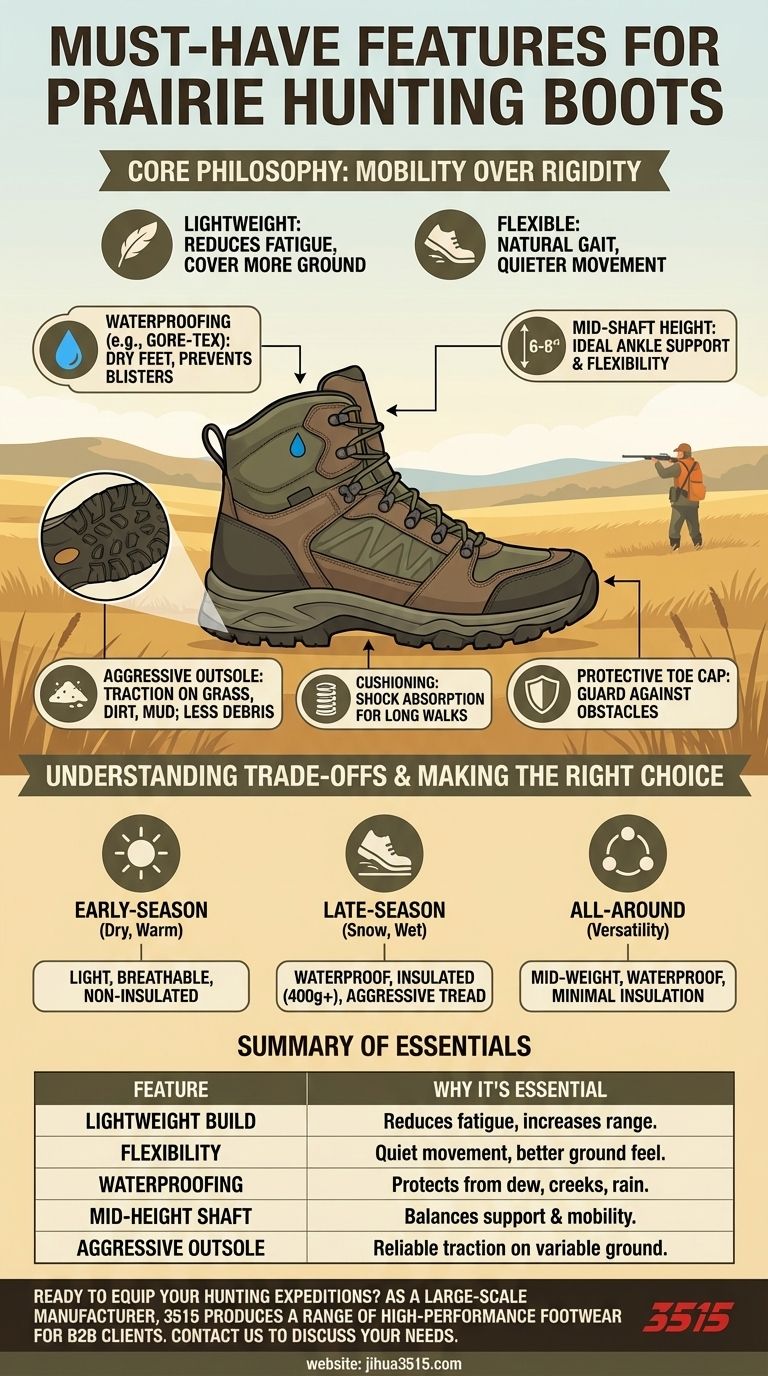
Every extra ounce on your feet multiplies the energy you expend with each step. Over a multi-mile trek, heavy boots lead directly to fatigue, which can compromise your hunt.
Lightweight materials reduce this burden, allowing you to walk farther, move faster when necessary, and stay more alert.
The Need for Flexibility
Prairie terrain is generally flat or gently rolling, without the severe angles and rocky ledges that demand a stiff, rigid boot.
A flexible boot allows your foot to move naturally, increasing comfort and stealth. It provides a better feel for the ground beneath you, which is crucial for moving quietly through dry grass or fields.
Essential Features for Prairie Conditions
Beyond the core philosophy of mobility, several specific features are non-negotiable for handling the unique challenges of the prairie environment.
Waterproofing is a Must
Do not underestimate the moisture on a prairie. Morning dew, unexpected creek crossings, or a sudden rain shower can soak a non-waterproof boot in minutes.
A reliable waterproof membrane (like GORE-TEX) is essential for keeping your feet dry, which is the first step in preventing blisters and maintaining comfort.
The "Goldilocks" Shaft Height
A mid-shaft height (typically 6-8 inches) is the perfect compromise for prairie terrain.
It provides sufficient ankle support to prevent twists on uneven ground without the unnecessary weight and restrictive feel of a tall, 10-inch or higher mountain boot.
Outsole Design for Open Ground
The outsole is your connection to the terrain. Look for a durable rubber compound with an aggressive but not overly deep lug pattern.
This design provides excellent traction on dirt, grass, and mud without collecting excessive debris, which would add weight and reduce grip.
Cushioning for Comfort
Long walks on hard-packed dirt or farmland can take a toll on your joints. A well-cushioned insole and midsole are vital for shock absorption.
This feature reduces the impact on your knees and back, ensuring you can stay out longer without pain or discomfort.
Protective Toe Caps
While you don't need a steel toe, a reinforced or rubberized toe cap offers valuable protection against rocks, brush, and other unseen obstacles, enhancing the boot's durability.
Understanding the Trade-offs
Choosing the right boot means understanding what you are giving up in exchange for specific benefits. No single boot is perfect for every condition.
Flexibility vs. Ankle Support
A boot designed for prairie flexibility will not provide the rigid, locked-in ankle stability required for side-hilling on a steep mountain. Using a prairie boot in genuinely rugged, vertical terrain is a mistake.
Insulation vs. Breathability
Insulation is season-dependent. A heavily insulated boot (800g+) is ideal for a frigid late-season hunt but will cause your feet to sweat excessively during a warm early-season outing, leading to blisters.
Conversely, a non-insulated boot prized for its breathability in September offers inadequate protection when the temperature drops below freezing.
Weight vs. Long-Term Durability
The lightest boots often use synthetic materials to cut ounces. While highly effective, these may not offer the same multi-decade durability as a heavier, full-grain leather boot. Choose a reputable brand known for quality construction to mitigate this trade-off.
Making the Right Choice for Your Hunt
Your final decision should be guided by the specific conditions you anticipate most often.
- If your primary focus is covering long distances in dry, early-season conditions: Prioritize a lightweight, highly breathable, non-insulated boot with excellent cushioning.
- If your primary focus is late-season hunts with potential for snow or wet fields: Select a fully waterproof boot with moderate insulation (400g-800g) and a more aggressive outsole for slick conditions.
- If your primary focus is all-around versatility from September through November: A mid-weight, waterproof boot with minimal insulation (200g or less) and a mid-shaft height is your most reliable option.
Ultimately, choosing the right prairie boot means selecting a specialized tool designed to master the challenges of distance and exposure.
Summary Table:
| Feature | Why It's Essential for Prairie Terrain |
|---|---|
| Lightweight Build | Reduces fatigue over long distances, allowing you to cover more ground efficiently. |
| Flexibility | Provides a natural gait and better ground feel for quiet movement on flat or rolling terrain. |
| Waterproofing | Protects feet from morning dew, creek crossings, and sudden rain showers. |
| Mid-Height Shaft (6-8") | Offers ideal ankle support without the restrictive weight of a taller boot. |
| Aggressive Outsole | Ensures reliable traction on grass, dirt, and mud without collecting excess debris. |
Ready to equip your hunting expeditions with the perfect prairie boots?
As a large-scale manufacturer, 3515 produces a comprehensive range of durable, high-performance footwear tailored for distributors, brand owners, and bulk clients. Our production capabilities encompass all types of hunting boots designed for mobility, comfort, and protection in any terrain.
Let us help you source or create the ideal boot for your customers' needs. Contact our expert team today to discuss your requirements and discover how we can add value to your product line.
Visual Guide
Related Products
- Wholesale Lightweight Tactical Boots Custom Manufacturer for Desert & Combat Use
- High-Traction Suede Tactical Boots Wholesale & Custom Manufacturing
- Durable Military Combat Boots with Water Drainage for Wholesale & OEM
- Durable Leather Tactical Boots Wholesale & Custom Manufacturing for Brands
- Durable Mid-Cut Tactical Boots for Wholesale & Private Label
People Also Ask
- What are the common types of combat boots? Find the Right Boot for Your Mission
- What specialized protections do tactical boots offer? Maximize Endurance with High-Performance Footwear
- What is the role of high-frequency acquisition hardware in technical skill analysis for outdoor and tactical boots?
- How does additive manufacturing equipment reduce environmental risks? Sustainable Tactics for Modern Footwear Production
- What are the main construction similarities between tactical boots and tactical sneakers? Built for Performance & Durability