
In English riding, there are three primary types of tall boots: Field Boots, distinguished by laces at the ankle; Dress Boots, which have a clean, unlaced front for a formal look; and Hunt Boots, which are similar to dress boots but feature a traditional cuff at the top. Each style is designed to meet the specific functional and aesthetic requirements of different riding disciplines.
The core principle to understand is that the design of a tall boot is not arbitrary. It is a direct response to the rider's leg position and the level of flexibility or stiffness required by their specific equestrian discipline.
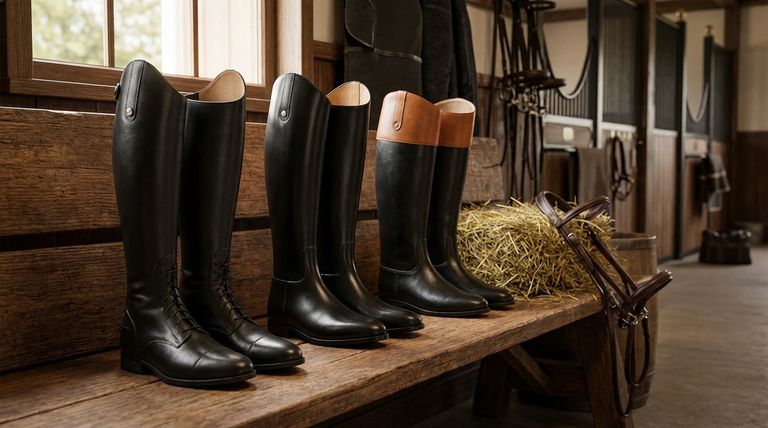
The Anatomy of a Tall Boot: Form Follows Function
Before examining the types, it's crucial to recognize that every design element serves a purpose. From the ankle construction to the stiffness of the leather, a boot is engineered to support the rider and enhance their communication with the horse.
Field Boots: Engineered for Flexibility
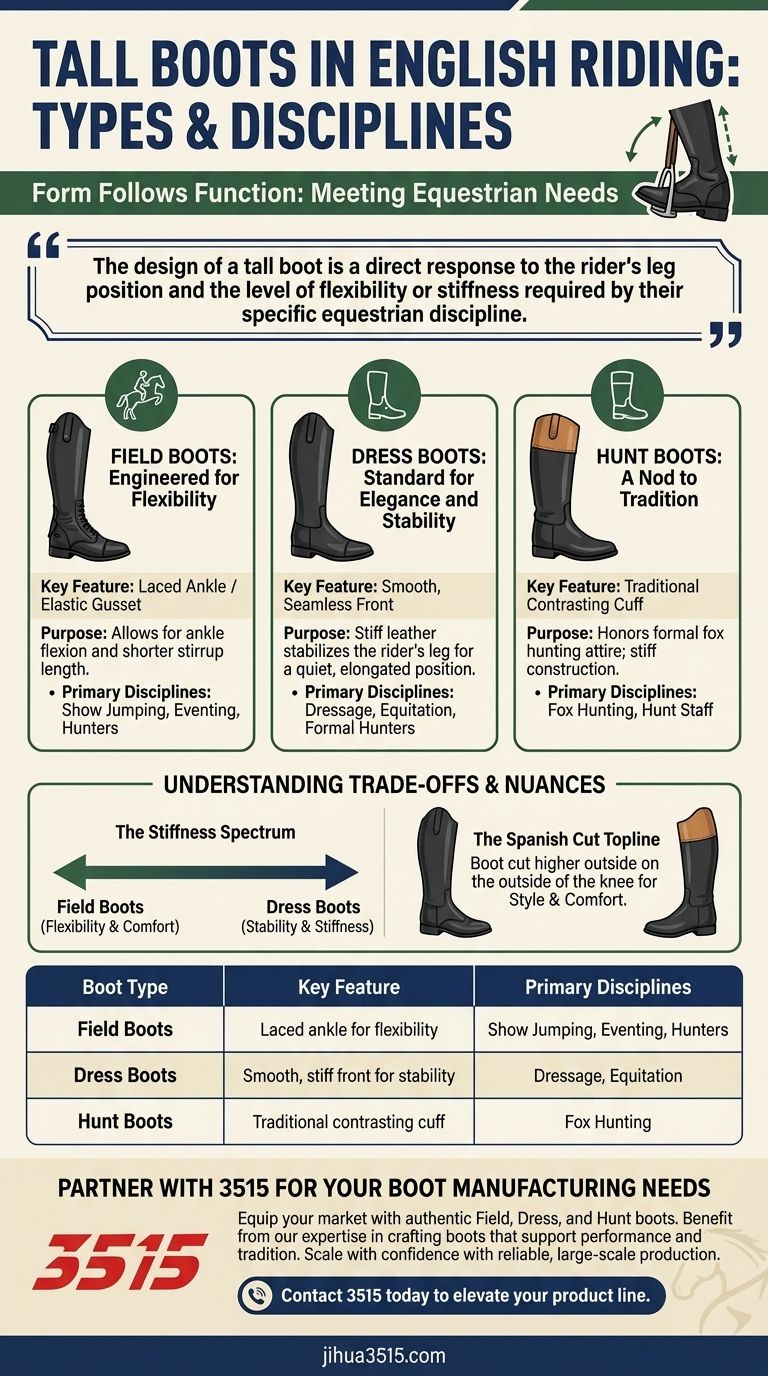
Field boots are immediately identifiable by their laced ankle closure, often called an elastic gusset. This is their defining functional feature.
This design allows for greater ankle flexion, which is essential for riders who use a shorter stirrup length. The need to bend the ankle and sink weight into the heel over jumps makes this flexibility non-negotiable.
Consequently, field boots are the standard for show jumping, eventing, and most hunter disciplines.
Dress Boots: The Standard for Elegance and Stability
Dress boots present a smooth, seamless front with no laces. This creates a clean, traditional, and formal silhouette.
They are typically crafted from stiffer leather than field boots. This rigidity helps to stabilize the rider's lower leg, encouraging a quiet and elongated leg position—the hallmark of the dressage discipline.
While they are the required footwear for dressage, their formal appearance also makes them a popular choice for equitation and formal hunter classes.
Hunt Boots: A Nod to Tradition
The hunt boot is technically a variation of the dress boot. It shares the same unlaced front and stiff construction.
Its distinguishing feature is the contrasting cuff at the top, which is traditionally tan or brown on a black boot. This style pays homage to the formal attire of fox hunting.
As the name implies, these are worn for formal fox hunting and by hunt staff. They are less common in modern show rings but represent a deep-seated equestrian tradition.
Understanding the Trade-offs and Nuances
Choosing a boot involves more than just matching it to your discipline; it's about understanding the practical implications of its design.
The Stiffness Spectrum
The primary trade-off is between flexibility and stability. Field boots offer immediate comfort and ease of movement, while dress boots require a significant "break-in" period.
A specialized dressage boot is an even stiffer version of a standard dress boot. This extreme rigidity provides maximum leg stability for upper-level riders but can feel restrictive to a novice.
The "Spanish Cut" Topline
Most modern tall boots feature a Spanish cut. This means the boot is cut higher on the outside of the knee than the inside.
This is not just for style; it creates the illusion of a longer, more elegant leg while preventing the boot top from uncomfortably digging into the back of the rider's knee.
Materials and Maintenance
The choice of leather, from soft calfskin to durable full-grain, impacts the boot's break-in time, longevity, and appearance. Stiffer boots demand meticulous care to maintain the leather and prevent cracking, especially around the ankle.
Making the Right Choice for Your Discipline
Your decision should be guided by your primary riding activity and long-term goals.
- If your primary focus is jumping (Hunters, Jumpers, Eventing): A Field Boot is the correct choice, providing the essential ankle flexibility needed over fences.
- If your primary focus is Dressage: A Dress Boot is the standard, with dedicated dressage boots offering the highest level of stiffness for advanced riders.
- If your primary focus is formal Fox Hunting: The traditional Hunt Boot is the most appropriate and historically correct option.
- If your primary focus is versatility across disciplines: A softer, less-constricting Dress Boot or a plain, all-black Field Boot can serve as an excellent all-purpose choice.
Ultimately, the right boot is a critical piece of equipment that supports your position, enhances your performance, and honors the traditions of your sport.
Summary Table:
| Boot Type | Key Feature | Primary Disciplines |
|---|---|---|
| Field Boots | Laced ankle for flexibility | Show Jumping, Eventing, Hunters |
| Dress Boots | Smooth, stiff front for stability | Dressage, Equitation |
| Hunt Boots | Traditional contrasting cuff | Fox Hunting |
Ready to Equip Your Riders with the Perfect Boot?
As a large-scale manufacturer, 3515 produces a comprehensive range of equestrian footwear for distributors, brand owners, and bulk clients. Our production capabilities encompass all types of riding boots, ensuring quality, durability, and the precise design features your customers need.
Partner with us to:
- Offer a Complete Range: Supply your market with authentic Field, Dress, and Hunt boots.
- Ensure Superior Quality: Benefit from our expertise in crafting boots that support performance and tradition.
- Scale with Confidence: Meet any volume requirement with reliable, large-scale production.
Contact 3515 today to discuss your manufacturing needs and elevate your product line.
Visual Guide
Related Products
- Factory-Direct Wholesale Canvas Boots with High-Traction Rubber Soles
- Durable High-Ankle Tactical Boots for Wholesale & Custom Manufacturing
- Durable High-Ankle Tactical Boots Wholesale Manufacturer for Custom & Bulk Orders
- Durable Leather High-Ankle Tactical Boots for Wholesale & Custom Manufacturing
- Wholesale High-Traction Camo Boots - Custom Manufacturer for Brands
People Also Ask
- What types of jobs are canvas work boots suitable for? Ideal for Light-Duty, High-Mobility Roles
- What are the functional advantages of choosing rubber soles over leather soles for work boots? Superior Safety & Durability
- What are the advantages of rubber soles for work boots? Unbeatable Grip & Durability
- Why are slip-resistant soles important in work boots? Prevent Slips & Boost Safety
- What are the benefits and limitations of using canvas as a primary material for footwear? Key B2B Manufacturing Insights



















