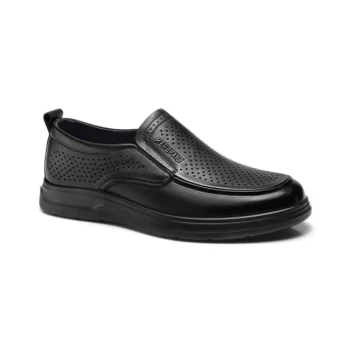
The main types of non-slip shoes are best understood by their intended environment, as each is engineered to handle specific hazards. Common categories include heavy-duty safety boots for construction, oil-resistant clogs for kitchens, lightweight server shoes for restaurants, and athletic-style sneakers for roles requiring mobility. The style of the shoe—be it a boot, clog, or sneaker—is directly tied to the level of protection and grip required for the job.
The term "non-slip" is not a single feature but a system of design. The right shoe is not the one with the most grip, but the one with the correct type of grip and protection for your specific environment.
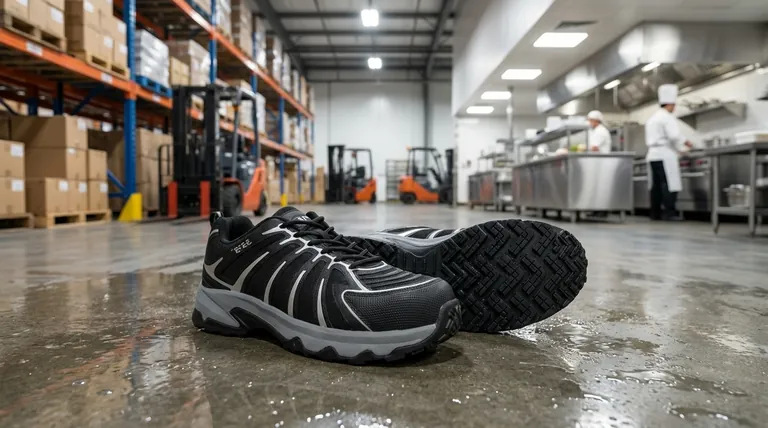
How Non-Slip Shoes Actually Work
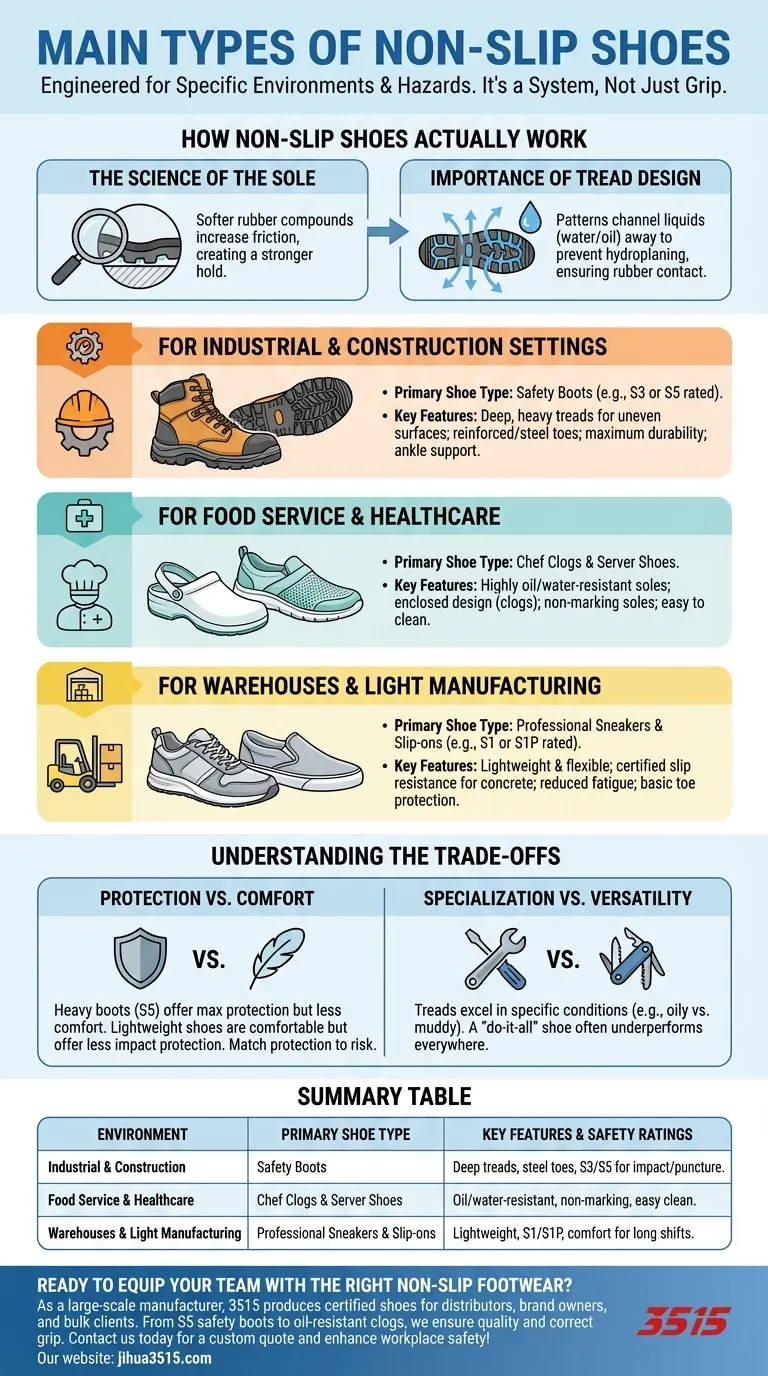
The Science of the Sole
The defining characteristic of any slip-resistant shoe is its sole. Unlike regular shoes, these soles are typically made from softer rubber compounds that increase the coefficient of friction.
This softer material allows the shoe to better conform to microscopic imperfections in the floor, creating a stronger hold.
The Importance of Tread Design
The pattern cut into the sole, known as the tread, is designed to channel liquids like water and oil out from under the shoe.
These patterns create a series of channels that prevent a layer of fluid from building up, which would otherwise lead to hydroplaning and loss of contact with the surface. A good tread ensures the rubber sole maintains direct contact with the floor.
Key Types Defined by Environment
The effectiveness of a non-slip shoe is entirely dependent on its suitability for the environment. A shoe designed for a kitchen will not perform well on a construction site.
For Industrial & Construction Settings
These environments demand protection from slips, impacts, and punctures.
Safety boots are the standard, featuring deep, heavy treads for grip on uneven or loose surfaces. They often include reinforced or steel toes and are built for maximum durability and ankle support. Look for specific safety ratings like S3 or S5 for this type of work.
For Food Service & Healthcare
Kitchens, hospitals, and restaurants present constant slip hazards from water, grease, and other spills.
Chef clogs are designed with soles that are highly resistant to oil and water. Their enclosed design also offers protection from hot spills and is easy to clean for hygiene. Server shoes are lighter and more discreet, with a focus on non-marking soles that provide excellent grip on smooth, wet indoor floors.
For Warehouses & Light Manufacturing
These roles require mobility, comfort, and reliable grip without the heavy-duty protection of a construction boot.
Slip-on shoes and professional sneakers are common choices. They provide certified slip resistance for concrete floors but are lighter and more flexible, reducing fatigue over a long shift. They may carry S1 or S1P ratings for basic toe protection.
Understanding the Trade-offs
Choosing the right shoe involves balancing competing needs. No single shoe is perfect for every situation.
Protection vs. Comfort
There is a direct trade-off between the level of protection and all-day comfort. A heavy S5 safety boot offers maximum protection but is also heavy and rigid.
A lightweight chef clog is comfortable for a 12-hour shift but offers no protection from a falling object. You must match the level of protection to the actual risks of your job.
Specialization vs. Versatility
The tread patterns that make a shoe excellent on an oily kitchen floor are different from those that excel on a muddy, uneven construction site.
A shoe highly specialized for one surface will almost always underperform on another. Trying to find a "do-it-all" non-slip shoe often results in a product that isn't truly effective anywhere.
Making the Right Choice for Your Goal
To select the correct footwear, you must first identify the primary hazards of your environment.
- If your primary focus is protection from impact and puncture hazards: Seek out S3 or S5-rated safety boots with deep treads designed for construction or heavy industry.
- If your primary focus is preventing slips on wet or oily indoor floors: Choose chef clogs or dedicated server shoes with certified oil and slip-resistant soles.
- If your primary focus is mobility and comfort in a less hazardous environment: Look for professional-grade sneakers or slip-on styles that meet S1 or S1P safety standards.
Choosing the right non-slip shoe is a critical investment in your daily safety and performance.
Summary Table:
| Environment | Primary Shoe Type | Key Features & Safety Ratings |
|---|---|---|
| Industrial & Construction | Safety Boots | Deep treads, steel toes, S3/S5 ratings for impact/puncture protection |
| Food Service & Healthcare | Chef Clogs & Server Shoes | Oil/water-resistant soles, non-marking, easy to clean |
| Warehouses & Light Manufacturing | Professional Sneakers & Slip-ons | Lightweight, S1/S1P ratings, comfort for long shifts |
Ready to equip your team with the right non-slip footwear?
As a large-scale manufacturer, 3515 produces a comprehensive range of certified non-slip shoes and boots for distributors, brand owners, and bulk clients. Whether you need S5-rated safety boots for construction or oil-resistant clogs for kitchens, our production capabilities ensure quality, durability, and the correct grip for any environment.
Contact us today for a custom quote and enhance workplace safety!
Visual Guide
Related Products
- Advanced KPU Athletic Safety Shoe with Steel Toe Cap Anti-Slip Rotary Lacing System
- Premium Suede Sport Safety Shoes for Wholesale & Bulk Orders
- Durable High-Traction Canvas Sneakers Wholesale & Custom Manufacturing
- Durable Goodyear Welt Leather Work Boots for Wholesale & Private Label
- Heavy-Duty Waterproof Nubuck Safety Boots Safety Shoes for Bulk Supply
People Also Ask
- What are the key differences between steel toe and composite toe caps? Choose the Right Safety for Your Job
- What impact do steel toe caps have on toe skin health? Prevent Friction and Pressure in Your Safety Shoes
- What are the primary protective functions of safety shoes with steel toes in the automotive repair industry?
- What type of safety shoe is recommended for workers exposed to heavy machinery? Steel Toe Boots for Ultimate Protection
- How does defining specific friction interface models in FEA assist in predicting safety shoe toe cap failure modes?