
At its core, hiking footwear is categorized into three main types. These are hiking shoes, which are low-cut and versatile; trail running shoes, which are lightweight and flexible for moving fast; and hiking boots, which provide greater ankle support and durability for rough terrain and heavy loads.
The most critical insight is not knowing the categories, but understanding that the right choice is a calculated trade-off between weight, support, and the specific demands of the terrain you intend to cover.
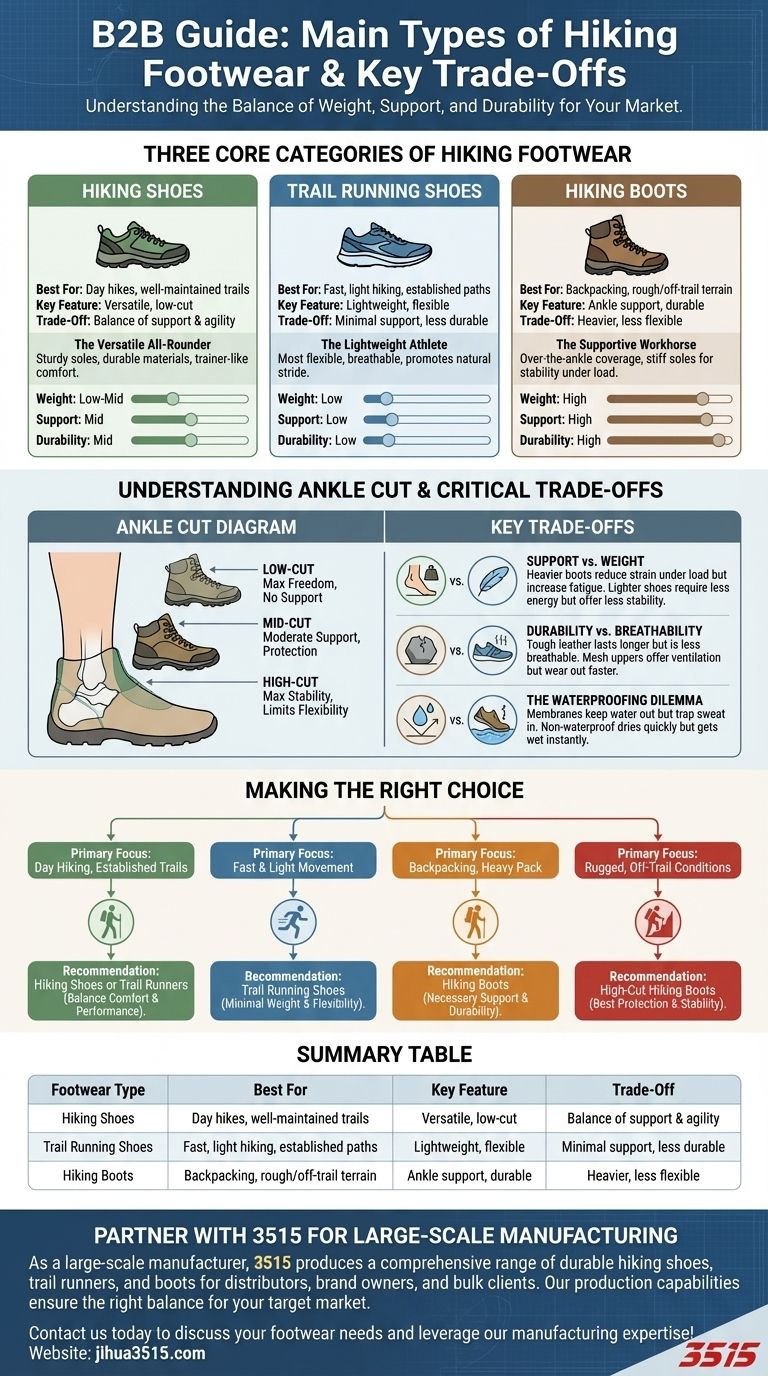
The Three Core Categories of Hiking Footwear
To select the right gear, you must first understand the fundamental purpose of each category. Each type is a tool designed for a specific job.
Hiking Shoes: The Versatile All-Rounder
Hiking shoes are essentially toughened-up, low-cut walking shoes. They borrow the sturdy soles and durable materials from boots but maintain the comfort and agility of a trainer.
They are the go-to option for the majority of day hikes and excursions on well-maintained to moderately rugged trails. Their versatility makes them an excellent starting point for new hikers.
Trail Running Shoes: The Lightweight Athlete
As the name implies, these are designed for running on trails, but their features make them a favorite among many hikers, especially those who prioritize speed and low weight.
They are the most flexible and breathable option, promoting an agile, natural stride. This makes them ideal for fast-paced hiking on established paths with a light pack, but they offer the least amount of support and protection.
Hiking Boots: The Supportive Workhorse
Hiking boots are defined by their over-the-ankle coverage and robust construction. They are built to protect your feet and ankles from the stress of carrying a heavy pack over difficult, uneven terrain.
Their stiff soles provide stability on rocks and roots, while the durable materials stand up to significant abuse. They are the standard choice for multi-day backpacking trips and off-trail adventures.
A Critical Feature: Understanding Ankle Cut
The height of the collar is a defining feature that exists across boots and shoes, directly impacting mobility and stability.
Low-Cut
Found on all hiking shoes and trail runners, a low cut ends below the ankle bone. This design offers maximum freedom of movement and minimal weight but provides no direct ankle support.
Mid-Cut
This popular boot design provides a balance, covering the ankle to offer moderate support and protection from debris. It's a common choice for lighter backpacking boots, providing stability without being overly restrictive.
High-Cut
Reserved for the most serious hiking and mountaineering boots, a high cut fully encases the ankle. This offers maximum stability for carrying very heavy loads in the most demanding terrain but significantly limits flexibility.
Understanding the Trade-offs
Choosing footwear is never about finding a "perfect" shoe, but about accepting the right compromises for your goal.
Support vs. Weight
This is the central trade-off. Heavier, stiffer boots provide more support for your feet and ankles, which reduces strain when carrying a heavy pack. However, that extra weight on your feet requires more energy to lift with every step, leading to faster fatigue.
Durability vs. Breathability
Tough, full-grain leather boots can last for thousands of miles but are often warm and less breathable. In contrast, lightweight trail runners with mesh uppers offer fantastic ventilation but will wear out much more quickly.
The Waterproofing Dilemma
Waterproof membranes (like Gore-Tex) are excellent at keeping external moisture out. However, they are less breathable, meaning they also trap sweat inside the shoe. Once a waterproof boot gets fully soaked, it can take a very long time to dry. Non-waterproof shoes get wet instantly but also dry very quickly.
Making the Right Choice for Your Hike
Your decision should be driven by your intended use. Match the tool to the task at hand.
- If your primary focus is day hiking on established trails: Hiking shoes or trail runners offer the best balance of comfort and performance.
- If your primary focus is backpacking with a heavy pack: Hiking boots provide the necessary support and durability for carrying weight over rough terrain.
- If your primary focus is moving fast and light: Trail running shoes are the clear choice for their minimal weight and flexibility.
- If your primary focus is hiking in rugged, off-trail conditions: A durable, high-cut hiking boot offers the best protection and stability.
Choosing the right footwear is the foundational decision for every successful hike.
Summary Table:
| Footwear Type | Best For | Key Feature | Trade-Off |
|---|---|---|---|
| Hiking Shoes | Day hikes, well-maintained trails | Versatile, low-cut | Balance of support & agility |
| Trail Running Shoes | Fast, light hiking, established paths | Lightweight, flexible | Minimal support, less durable |
| Hiking Boots | Backpacking, rough/off-trail terrain | Ankle support, durable | Heavier, less flexible |
Ready to equip your next adventure with the perfect footwear?
As a large-scale manufacturer, 3515 produces a comprehensive range of durable hiking shoes, trail runners, and boots for distributors, brand owners, and bulk clients. Our production capabilities ensure you get the right balance of support, weight, and durability for your target market.
Contact us today to discuss your footwear needs and leverage our manufacturing expertise!
Visual Guide
Related Products
- Durable Rubber Sole Outdoor Shoes Wholesale & Custom Manufacturing
- Wholesale High-Traction Camo Boots - Custom Manufacturer for Brands
- Wholesale Durable Camouflage Canvas Shoes with High-Traction Cleated Rubber Sole
- Wholesale Lightweight Tactical Boots Custom Manufacturer for Desert & Combat Use
- Wholesale Waterproof Tactical Boots Custom Suede & High-Traction Soles
People Also Ask
- What is the function of the sole in outdoor shoes? Find the Perfect Grip and Support
- What role do outdoor shoes and sneakers play in navigating external terrains? Engineered Stability for Every Surface
- How is AI utilized in the design of outdoor and safety footwear? Harnessing Big Data for Market-Driven Shoe Innovation
- Why is durability important when selecting outdoor shoes? A Guide to Safety & Long-Term Value
- What are the key components of outdoor shoes that affect comfort and sturdiness? A Guide to Durable, High-Performance Footwear



















