Alright, let's break this down. My goal is to craft a definitive guide that cuts through the noise and provides actionable insights. The user needs to understand the true difference between waterproof and water-resistant boots, not just the dictionary definitions, but the practical implications for their specific work environments. This means going beyond the superficial and exploring the trade-offs involved, particularly that crucial balance between protection and comfort.
First, I'll tackle the surface-level question: What's the literal difference? Waterproof means impervious. It's a complete barrier, designed for full submersion. Think sealed seams, gusseted tongues, and materials like Gore-Tex. Water-resistant, on the other hand, is like a treated raincoat. It repels water to a point, but it's not designed for prolonged exposure or submersion.
Now, the "why" becomes critical. The user needs to know which boot is right for their job. I need to paint a clear picture of the environments where each type excels. Waterproof boots are for standing water, heavy rain, and truly wet conditions, while water-resistant boots are perfectly suitable for light rain, damp ground, and environments where breathability is a priority.
The key is to highlight the trade-offs. Waterproof boots are typically less breathable. The very membrane that keeps water out also traps sweat. This can lead to uncomfortable, clammy feet, even if the boots are keeping external water out. Durability is also a factor, as waterproof membranes can be damaged, and water-resistant coatings can wear off.
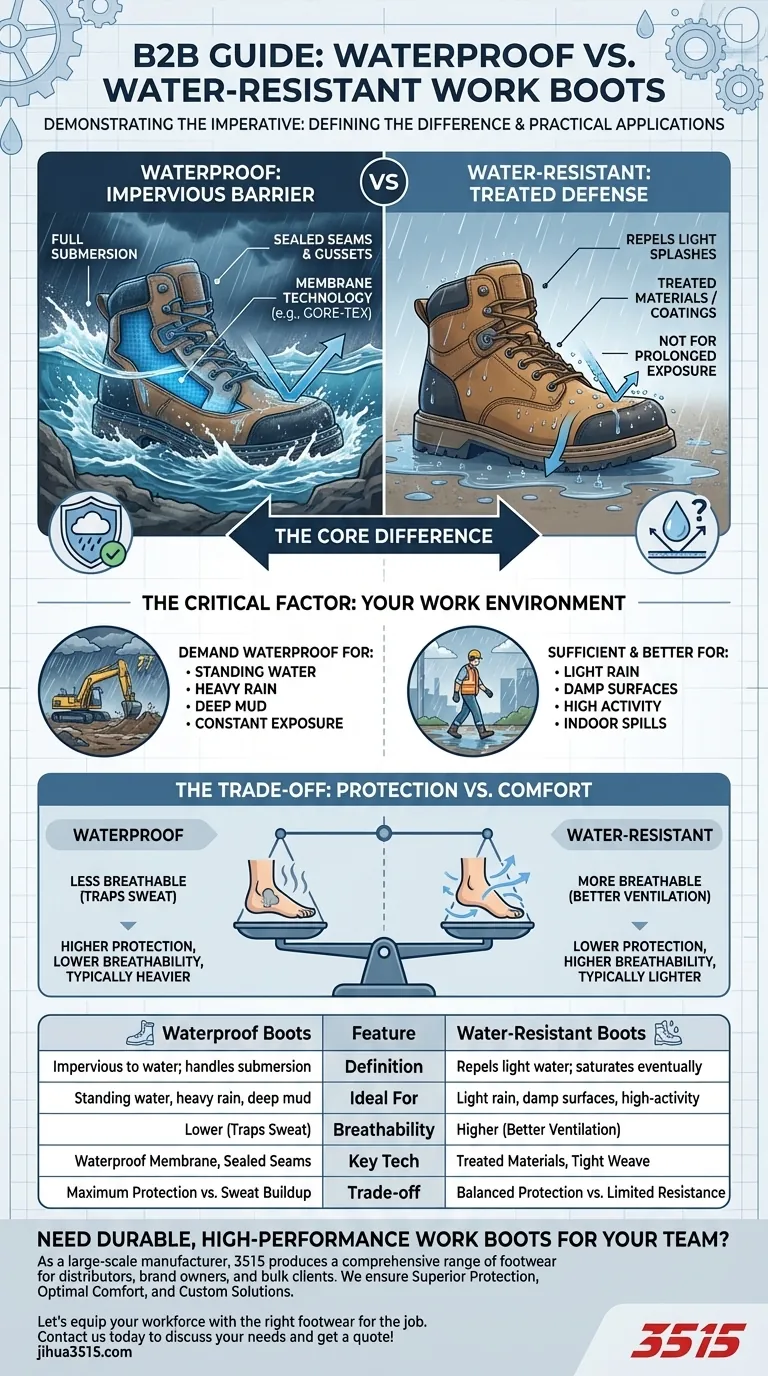
My plan is to structure the article logically, starting with a concise definition, followed by an exploration of the various work environments and, crucially, a deep dive into the protection-vs-comfort trade-off. Bullet points with actionable advice will be key in the conclusion, providing the user with clear guidance on making the right choice. My goal is to empower them with the knowledge to select the boot that is perfectly suited to their working conditions, ensuring both protection and comfort. It's about matching the right tool to the job. Waterproof means impervious; water-resistant means it will only repel water up to a certain point. A truly waterproof boot is constructed with a membrane and sealed seams to create a complete barrier against moisture, allowing for full submersion without leaks. In contrast, a water-resistant boot is typically made of material treated to shed light splashes and brief rain but will eventually allow water to penetrate under prolonged or heavy exposure.
The core decision between waterproof and water-resistant boots is a trade-off between absolute protection and active comfort. Waterproof offers a complete shield against water at the cost of breathability, while water-resistant prioritizes breathability for less demanding, damp conditions.
Deconstructing the Technology
To make the right choice, you must first understand the fundamental difference in how these boots are constructed and what the industry terms actually signify.
The Waterproof Standard: A Complete Barrier
A boot labeled waterproof is designed to be completely impenetrable to water. This is not just about the outer material.
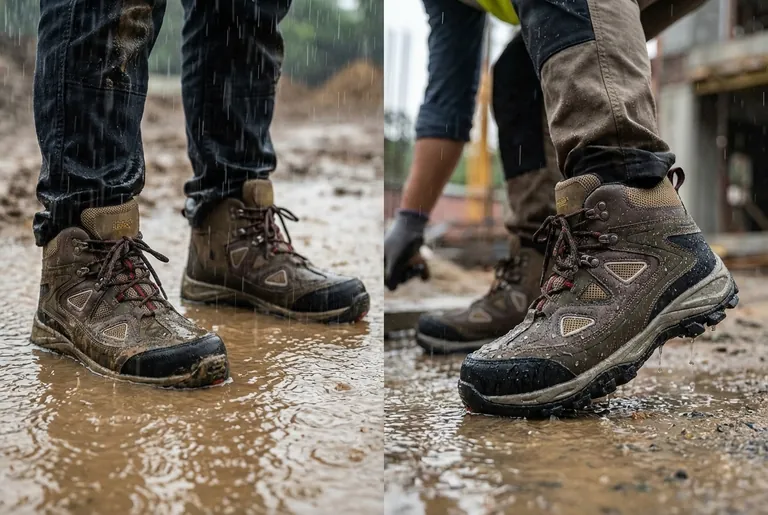
It involves a system, often including a waterproof membrane or lining (like Gore-Tex) built into the boot's structure. Key features include sealed seams and gusseted tongues to ensure there are no entry points for moisture. You can stand in deep puddles or work in heavy, persistent rain, and your feet will remain dry from external water.
The Water-Resistant Approach: A Treated Defense
Water-resistant boots do not contain a waterproof membrane. Instead, their materials are either tightly woven or treated with a coating that causes water to bead up and roll off.
This provides a solid first line of defense against light, intermittent moisture like splashes or a brief walk through damp grass. However, under pressure or prolonged exposure, water will eventually saturate the material and seep through.
The Critical Factor: Your Work Environment
The right boot is a tool specifically chosen for the job. Your daily environment is the single most important factor in this decision.
When to Demand Waterproof Boots
A waterproof boot is non-negotiable in environments with consistent and significant water exposure.
This includes work in heavy rain, deep mud, standing water, or industries like mining and pressure washing. If your feet are regularly submerged or drenched for extended periods, only a true waterproof boot will suffice.
When Water-Resistant Is Sufficient (and Often Better)
A water-resistant boot is often the superior choice for more varied conditions where breathability is a key concern.
If your work involves high activity levels, occasional light rain, or damp surfaces, a water-resistant boot protects against minor moisture while allowing sweat vapor to escape much more effectively.
Understanding the Trade-offs
Neither option is universally "better." Each comes with a distinct set of performance compromises that you must weigh against your needs.
The Breathability Problem
The primary trade-off is breathability. The same membrane that blocks water from entering a waterproof boot also makes it much harder for sweat to escape.
In high-exertion jobs or warm climates, this can lead to feet becoming damp from your own perspiration, defeating the purpose of keeping them dry and potentially causing blisters or fungus. Water-resistant boots are almost always more breathable.
Durability and Maintenance
Waterproof membranes can be punctured or wear out over time, compromising their integrity.
Likewise, the repellent coatings on water-resistant boots can wear off. These often require re-treatment with spray-on or wash-in products to maintain their effectiveness throughout the life of the boot.
Weight and Flexibility
Typically, the robust construction required for a truly waterproof boot, including the membrane and sealed components, adds weight and can reduce overall flexibility compared to a simpler water-resistant design.
Making the Right Choice for Your Job
Your goal is to select the boot that matches the reality of your workday, balancing protection against the need for comfort and foot health.
- If your primary focus is working in standing water, heavy rain, or deep mud: You must choose a truly waterproof boot to guarantee your feet stay dry from external elements.
- If your primary focus is high physical activity with exposure to occasional light rain or splashes: A water-resistant boot will provide a much better balance of moderate protection and essential breathability.
- If your primary focus is indoor work with intermittent spill hazards: Water-resistant boots offer more than enough protection without sacrificing the all-day comfort that comes from better ventilation.
Ultimately, choosing the right boot is about matching its specific water-handling capabilities to the daily demands of your work.
Summary Table:
| Feature | Waterproof Boots | Water-Resistant Boots |
|---|---|---|
| Definition | Impervious to water; can handle submersion | Repels light water but will eventually saturate |
| Ideal For | Standing water, heavy rain, deep mud | Light rain, damp surfaces, high-activity work |
| Breathability | Lower (traps sweat) | Higher (better ventilation) |
| Key Technology | Waterproof membrane (e.g., Gore-Tex), sealed seams | Treated materials, tight weaving |
| Trade-off | Maximum protection vs. potential sweat buildup | Balanced protection vs. limited water resistance |
Need Durable, High-Performance Work Boots for Your Team?
As a large-scale manufacturer, 3515 produces a comprehensive range of footwear for distributors, brand owners, and bulk clients. Our production capabilities encompass all types of shoes and boots, including both waterproof and water-resistant models tailored to your specific industry needs.
We ensure:
- Superior Protection: Advanced materials and construction for maximum safety and durability.
- Optimal Comfort: Designs that balance weatherproofing with breathability for all-day wear.
- Custom Solutions: Scalable production to meet your exact specifications and volume requirements.
Let's equip your workforce with the right footwear for the job. Contact us today to discuss your needs and get a quote!
Visual Guide
Related Products
- Wholesale Premium Waterproof Nubuck Safety Shoes Boots
- Wholesale Heavy-Duty Waterproof Steel Toe Work Boots OEM Manufacturer
- Premium Waterproof Nubuck Safety Boots for Wholesale
- Factory Direct Wholesale Rain Boots Durable Waterproof & Fully Customizable
- Premium Wholesale Waterproof Safety Boots High Performance Protection for Industrial Markets
People Also Ask
- Why are waterproof safety boots recommended for certain work environments? Essential Protection for Wet & Hazardous Jobs
- What materials are commonly used in waterproof boots? The Complete Guide to Durable, Breathable Protection
- What are the drawbacks of waterproof boots? The Breathability vs. Protection Trade-Off
- What is the advantage of one-piece construction in waterproof boots? Unbeatable Seamless Protection
- What is the difference between waterproof, water-resistant, and water-repellent boots? Choose the Right Protection for Your Feet