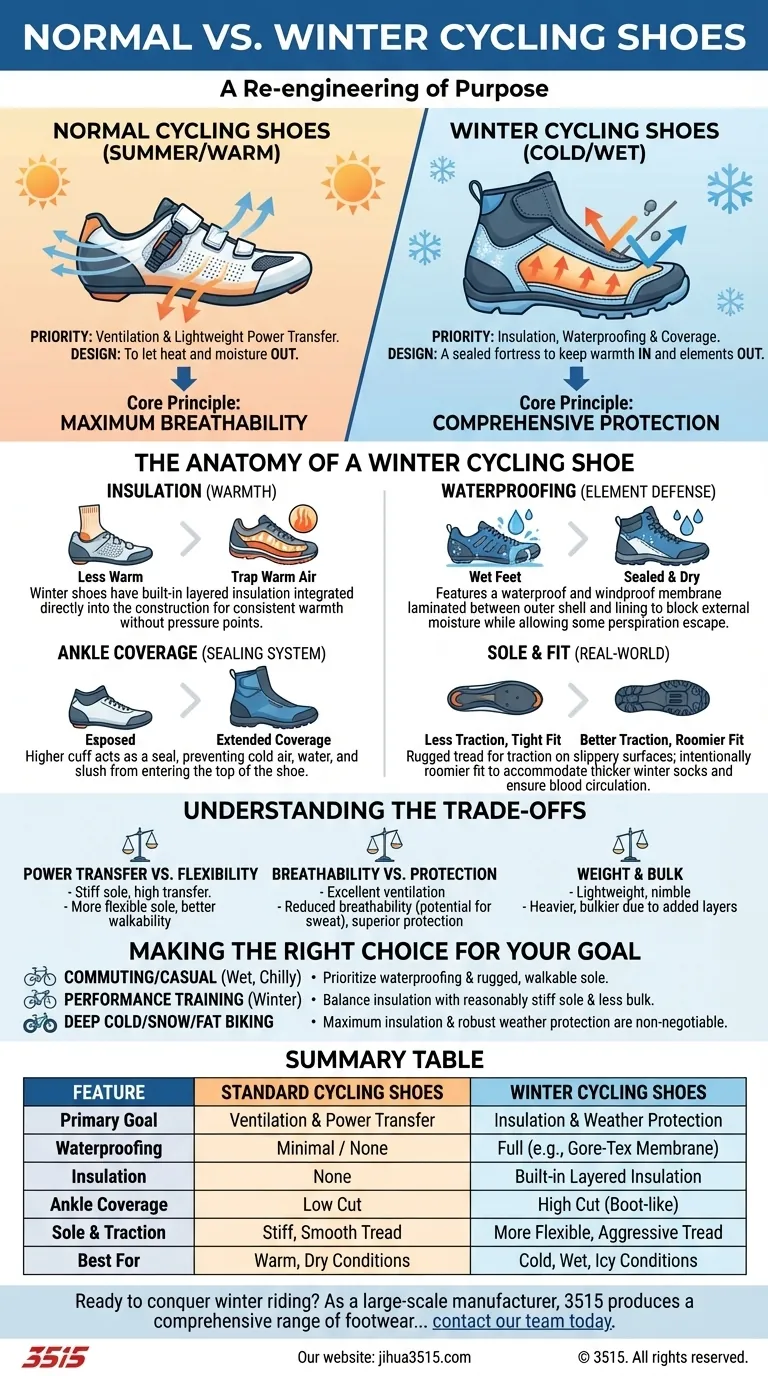
The fundamental difference between winter and normal cycling shoes is a complete re-engineering of the shoe's purpose. While standard shoes prioritize ventilation and lightweight power transfer for warm conditions, winter shoes are built as a self-contained system focused entirely on insulation, waterproofing, and coverage to protect your feet from cold, wet, and harsh weather.
A standard cycling shoe is designed to let heat and moisture out. A winter cycling shoe is a sealed fortress designed to keep warmth in and the elements out. Understanding this core principle is key to appreciating why they are a necessary tool, not a luxury, for cold-weather riding.
The Anatomy of a Winter Cycling Shoe
To understand the value of a dedicated winter shoe, we must break down its key components. Each feature is a direct solution to a specific problem posed by cold and wet environments.
Insulation: The Core of Warmth
A winter shoe’s primary job is to keep your feet warm. This is achieved through layered insulation integrated directly into the shoe's construction.
Unlike simply wearing thick socks in a summer shoe, this built-in insulation traps a layer of warm air around the entire foot without creating pressure points that can restrict blood flow—a common issue when stuffing a standard shoe.
Waterproofing: Your Defense Against the Elements
Wet feet become cold feet exponentially faster. Winter shoes combat this with a waterproof and windproof membrane, such as Gore-Tex, which is laminated between the shoe's outer shell and inner lining.
This membrane blocks external moisture from rain, snow, and road spray while allowing a small amount of perspiration to escape, preventing your feet from getting soaked from the inside.
Ankle Coverage: Sealing the System
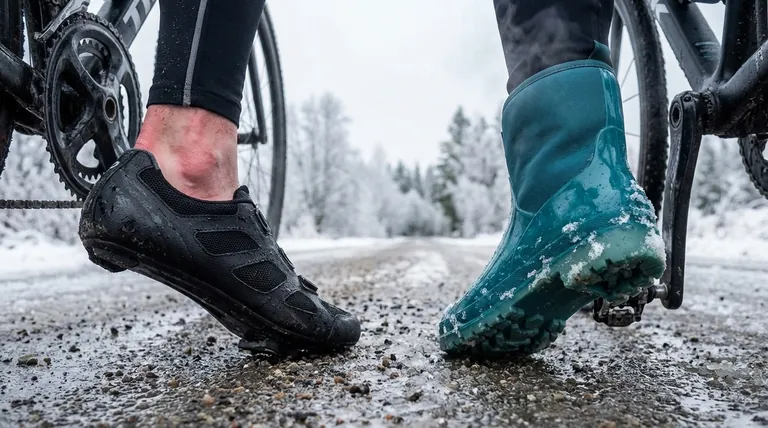
You will immediately notice that winter cycling shoes have a much higher cuff, often resembling a short boot. This extended ankle coverage serves a critical purpose.
It creates a seal that prevents cold air, water, and slush from entering the shoe from the top. This high cuff works in tandem with the waterproof membrane to create a fully protected environment for your foot and ankle.
Sole and Fit: Built for Real-World Conditions
Winter conditions often involve walking on slippery surfaces. Winter shoe soles typically feature a more rugged and aggressive tread made from softer rubber compounds for better traction on ice and snow.
Furthermore, the overall fit is intentionally roomier than a performance summer shoe. This extra space accommodates thicker winter socks and ensures healthy blood circulation, which is vital for maintaining warmth in your extremities.
Understanding the Trade-offs
A dedicated winter shoe is a specialized tool, and like any specialized tool, it comes with inherent trade-offs compared to its standard counterpart.
Power Transfer vs. Flexibility
The stiff carbon soles found on high-performance summer shoes are designed for maximum power transfer. Winter shoes often have a slightly more flexible sole (typically nylon composite) to make walking easier and more comfortable. For most winter training, this difference in pedaling efficiency is negligible compared to the massive gain in comfort and warmth.
Breathability vs. Protection
The waterproof membranes that are essential for winter protection inherently reduce breathability. While this is a benefit in the cold, it means the shoes can feel overly warm and sweaty if temperatures rise unexpectedly during your ride. Standard shoes, with their extensive mesh panels and vents, are vastly superior for warm-weather ventilation.
Weight and Bulk
There is no way around it: insulation, waterproofing layers, and a robust construction add significant weight and bulk. A winter cycling shoe will always be heavier and feel less nimble than a sleek summer racing shoe. This is the necessary price for comprehensive protection.
Making the Right Choice for Your Goal
Selecting the right footwear depends entirely on the conditions you face and your performance goals.
- If your primary focus is commuting or casual riding in wet, chilly conditions: Prioritize a shoe with excellent waterproofing and a rugged, walkable sole.
- If your primary focus is performance training through the winter: Look for a model that effectively balances insulation with a reasonably stiff sole and a less cumbersome profile.
- If your primary focus is riding in deep cold, snow, or fat biking: Maximum insulation and the most robust weather protection are non-negotiable, even at the cost of extra weight and bulk.
Investing in the right winter shoe transforms winter from a season to endure into a season to enjoy on the bike.
Summary Table:
| Feature | Standard Cycling Shoes | Winter Cycling Shoes |
|---|---|---|
| Primary Goal | Ventilation & Power Transfer | Insulation & Weather Protection |
| Waterproofing | Minimal / None | Full (e.g., Gore-Tex Membrane) |
| Insulation | None | Built-in Layered Insulation |
| Ankle Coverage | Low Cut | High Cut (Boot-like) |
| Sole & Traction | Stiff, Smooth Tread | More Flexible, Aggressive Tread |
| Best For | Warm, Dry Conditions | Cold, Wet, Icy Conditions |
Ready to conquer winter riding? As a large-scale manufacturer, 3515 produces a comprehensive range of footwear for distributors, brand owners, and bulk clients. Our production capabilities encompass all types of cycling shoes and boots, including high-performance winter models designed for ultimate protection and comfort. Let us help you gear up for the season—contact our team today to discuss your needs!
Visual Guide
Related Products
- Premium Insulated Safety Boots and Shoes for Wholesale & Bulk Orders
- Lightweight Breathable Sneakers with Wet-Traction Grip for Wholesale & Private Label
- Premium Suede Sport Safety Shoes for Wholesale & Bulk Orders
- Durable Waterproof Rain Boots | Custom Manufacturer for Wholesale & Brands
- Durable Rubber Sole Outdoor Shoes Wholesale & Custom Manufacturing
People Also Ask
- What are the recommended insulation ratings for mild winter conditions? A Guide for Active & Stationary Workers
- How does insulation thickness correlate with temperature ranges? A Guide to Choosing the Right Warmth
- What insulation level is needed for severe cold and stationary work? 1200g or Higher is Essential
- What safety advantages do insulated boots offer beyond warmth? Dielectric Protection & Superior Grip
- How does fleece lining contribute to the warmth of insulated boots? Trapping Air for Superior Cold Protection