
At its core, the choice between full-grain leather and synthetic boots like Gore-Tex/Cordura is a decision between long-term durability and out-of-the-box performance. Leather offers unmatched longevity and a custom fit over time, while synthetic materials provide immediate comfort, lighter weight, and reliable waterproofing from day one. Your specific use case and priorities will determine which is the superior option.
The fundamental trade-off is this: Full-grain leather is an investment in durability and a personalized fit that requires a break-in period and regular maintenance. Gore-Tex/Cordura synthetics offer instant comfort and weather protection at the cost of a shorter operational lifespan.
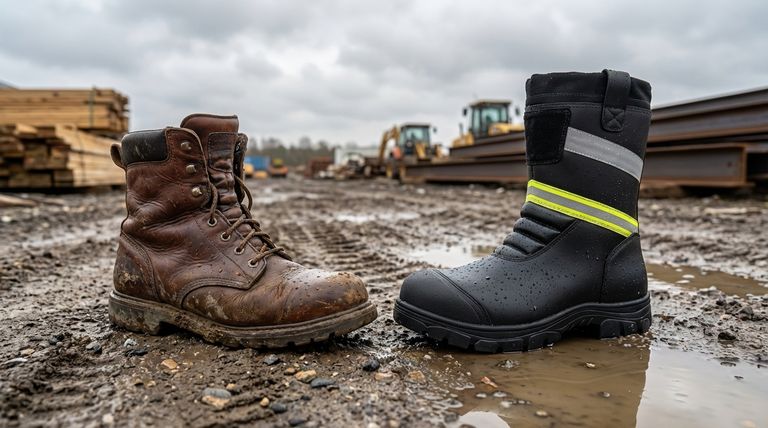
Deconstructing the Materials: Leather vs. Synthetics
To make an informed decision, you must first understand the inherent nature of each material. They are engineered with fundamentally different philosophies.
The Case for Full-Grain Leather
Full-grain leather is a traditional material valued for its incredible toughness. It's the highest quality grade of leather, taken from the outer layer of the hide.
Its primary strength is its ability to mold to your foot over time, creating a truly custom and supportive fit that is difficult to replicate.
With proper care, a well-made leather boot can last for decades and can often be resoled multiple times, significantly extending its life. It is naturally water-resistant and highly breathable.
The Advantage of Gore-Tex & Cordura
This category represents a combination of materials designed for specific performance characteristics. It's not one material, but a system.
Cordura is a high-performance nylon fabric known for its exceptional resistance to abrasions, tears, and scuffs. It provides the boot's outer structure and durability.
Gore-Tex is a microporous membrane layered inside the boot. It contains millions of tiny pores that are too small for liquid water to pass through but large enough for water vapor (sweat) to escape. This is what makes the boot both waterproof and breathable.
A Head-to-Head Comparison of Key Attributes
Breaking down the choice requires a direct comparison of how each material handles the demands you place on it.
Durability and Longevity
Leather is the clear winner for long-term durability. A thick, full-grain leather upper can withstand years of abuse, scrapes, and flexing. Its weakness is at the seams, but overall, the material itself is paramount.
Synthetic boots, while highly abrasion-resistant thanks to Cordura, can fail at seams under high stress. More importantly, the internal Gore-Tex membrane can be punctured or worn down over time, compromising its core waterproof feature.
Waterproofing vs. Breathability
This is the most nuanced comparison. A well-maintained leather boot, treated with waxes or oils, is highly water-resistant and exceptionally breathable. It's an excellent choice for keeping feet dry over long periods.
A Gore-Tex boot is truly waterproof from the start. However, the membrane can make the boot feel warmer and less breathable than leather in hot, dry conditions. If the membrane fails, the boot loses its primary advantage.
Weight and Comfort
Synthetics are significantly lighter than leather boots of a similar size and class. This reduces fatigue on long treks.
They also require little to no break-in period. The comfort you feel in the store is largely what you will get on the trail. In contrast, leather boots are heavier and often require a significant, sometimes uncomfortable, break-in period.
Maintenance and Repair
Leather demands consistent maintenance. It must be cleaned and conditioned regularly to prevent it from drying out, cracking, and to maintain its water resistance. However, it can often be repaired by a skilled cobbler.
Synthetics are low-maintenance, typically requiring only basic cleaning. The critical drawback is that a failure of the waterproof membrane is often impossible to repair, effectively ending the boot's life for wet-weather use.
Understanding the Trade-offs and Common Pitfalls
Trust in your footwear comes from understanding its limitations. Neither material is a perfect solution for every scenario.
"Waterproof" Isn't Forever
The most common point of failure for synthetic boots is the Gore-Tex membrane. Dirt and grit that get inside the boot can act like sandpaper, slowly abrading the membrane until it leaks. Once compromised, it cannot be fixed.
The Break-in Period is a Commitment
Many users give up on high-quality leather boots because of the initial stiffness and discomfort. The legendary comfort of leather is earned through wearing the boots until they conform to your feet. This can take weeks of regular use.
Context is Everything
The ideal boot material is dictated by its intended use. A lightweight Gore-Tex hiker is perfect for a weekend trip but may not survive a season of rugged, off-trail mountaineering. Conversely, a heavy leather boot is overkill for a simple day hike.
Making the Right Choice for Your Goal
Select your boot by prioritizing your most common activity and environment.
- If your primary focus is maximum durability and longevity for heavy use: Choose a full-grain leather boot and commit to the break-in and maintenance schedule.
- If your primary focus is lightweight performance and comfort out of the box: Choose a synthetic boot with a Gore-Tex membrane for day hikes or short backpacking trips.
- If your primary focus is guaranteed waterproofing for consistently wet and cold conditions: A Gore-Tex boot provides the most reliable barrier against external moisture, but understand its lifespan is finite.
Ultimately, the best boot is the one that matches the demands of your mission and the anatomy of your foot.
Summary Table:
| Attribute | Full-Grain Leather | Gore-Tex/Cordura Synthetics |
|---|---|---|
| Durability & Longevity | Excellent (decades, resoleable) | Good (shorter lifespan, membrane can fail) |
| Waterproofing | High water resistance (with maintenance) | Guaranteed waterproof (until membrane fails) |
| Breathability | Excellent | Moderate (can feel warmer) |
| Weight | Heavier | Significantly lighter |
| Break-in Period | Significant (weeks) | Minimal to none |
| Maintenance | High (regular cleaning/conditioning) | Low (basic cleaning) |
| Best For | Heavy use, long-term investment, custom fit | Lightweight performance, instant comfort, wet conditions |
Ready to Equip Your Team with the Perfect Boots?
As a large-scale manufacturer, 3515 produces a comprehensive range of high-performance footwear for distributors, brand owners, and bulk clients. Whether your mission demands the legendary durability of full-grain leather or the lightweight, waterproof reliability of Gore-Tex/Cordura synthetics, we have the production capabilities and expertise to deliver.
We provide:
- Custom Solutions: Boots tailored to your specific use-case and environment.
- Bulk Reliability: Consistent quality and scale for large orders.
- Expert Guidance: Helping you select the right materials and construction for your customers' needs.
Let's build the perfect boot for your market. Contact our team today to discuss your requirements and get a quote.
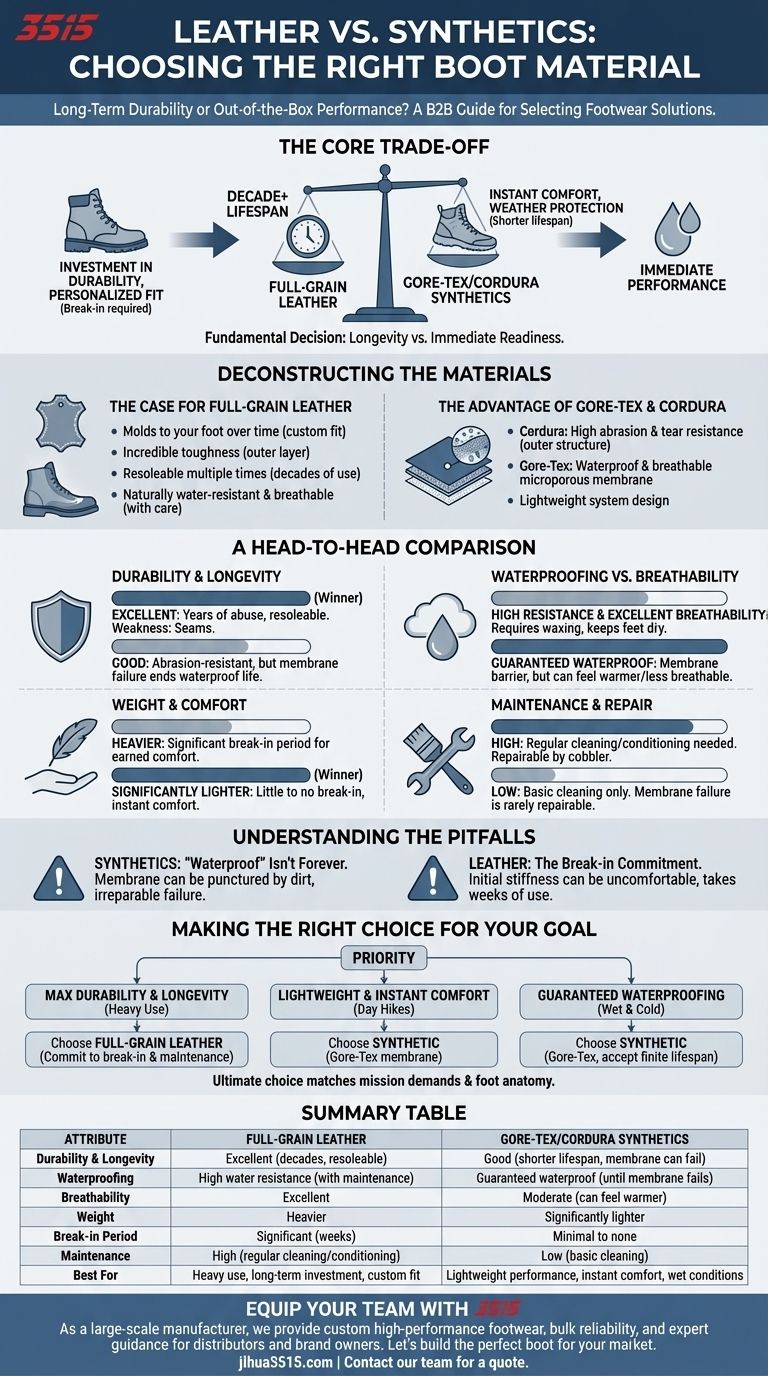
Visual Guide
Related Products
- High-Traction Suede Tactical Boots Wholesale & Custom Manufacturing
- Durable Leather Work Boots Wholesale Manufacturer & Custom Factory
- Durable Leather Work Boots for Wholesale & Custom Manufacturing
- Durable Leather Work Boots for Wholesale & Custom OEM Manufacturing
- Durable Leather Tactical Boots Wholesale & Custom Manufacturing for Brands
People Also Ask
- Why is sequential analysis utilized to evaluate tactical boots? Master Dynamic Boot Development and Ergonomic Performance
- How does the material of tactical boots affect their performance? Choose the Right Material for Your Mission
- How do tactical boots differ from regular boots? Performance, Durability & Design Explained
- How do military uniforms and tactical boots impact the prediction of thermal risk? Essential Safety Insights
- What are the benefits of integrating FES and sEMG into tactical boots? Safety, Reliability & Field-Ready Performance


















