
In short, the primary limitations of combat boots are their weight, lack of flexibility, and poor breathability. While engineered for maximum protection and durability in harsh military environments, these same design choices make them less comfortable, more fatiguing, and unsuitable for specialized tasks when compared to other types of footwear.
The core trade-off of a combat boot is simple: it sacrifices comfort, agility, and specialized performance in exchange for uncompromising durability and protection. Understanding this principle is key to knowing when it is—and is not—the right tool for the job.
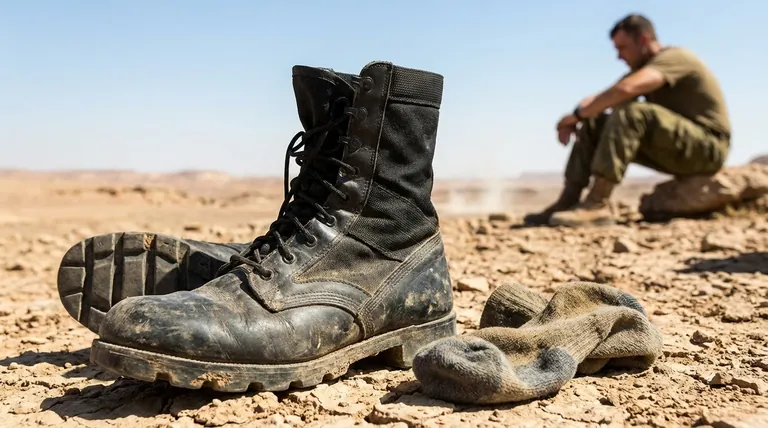
The Design Philosophy: Protection Above All Else
To understand a combat boot's limitations, you must first appreciate its purpose. It is a piece of equipment designed to keep a soldier's feet safe in unpredictable and hostile conditions.
Built for Uncompromising Durability
Combat boots are typically made from full-grain leather and other robust synthetic materials. This construction is meant to withstand extreme wear and tear, far beyond what is expected of civilian footwear.
Engineered for Ankle Support and Stability
The characteristic high-cut design is not for style. It provides rigid ankle support to prevent sprains and injuries when navigating uneven, difficult terrain under load.
A Shield for Your Feet
Features like reinforced toe caps and puncture-resistant shanks are standard. They guard against impacts from rocks, debris, and other hazards common in a combat zone. The aggressive outsoles are built for traction on varied surfaces like mud, rock, and rubble.
The Inherent Trade-offs: Where Combat Boots Fall Short
The very features that make combat boots excellent for protection create significant disadvantages in other contexts. Every design choice that adds durability often subtracts from comfort or performance in another area.
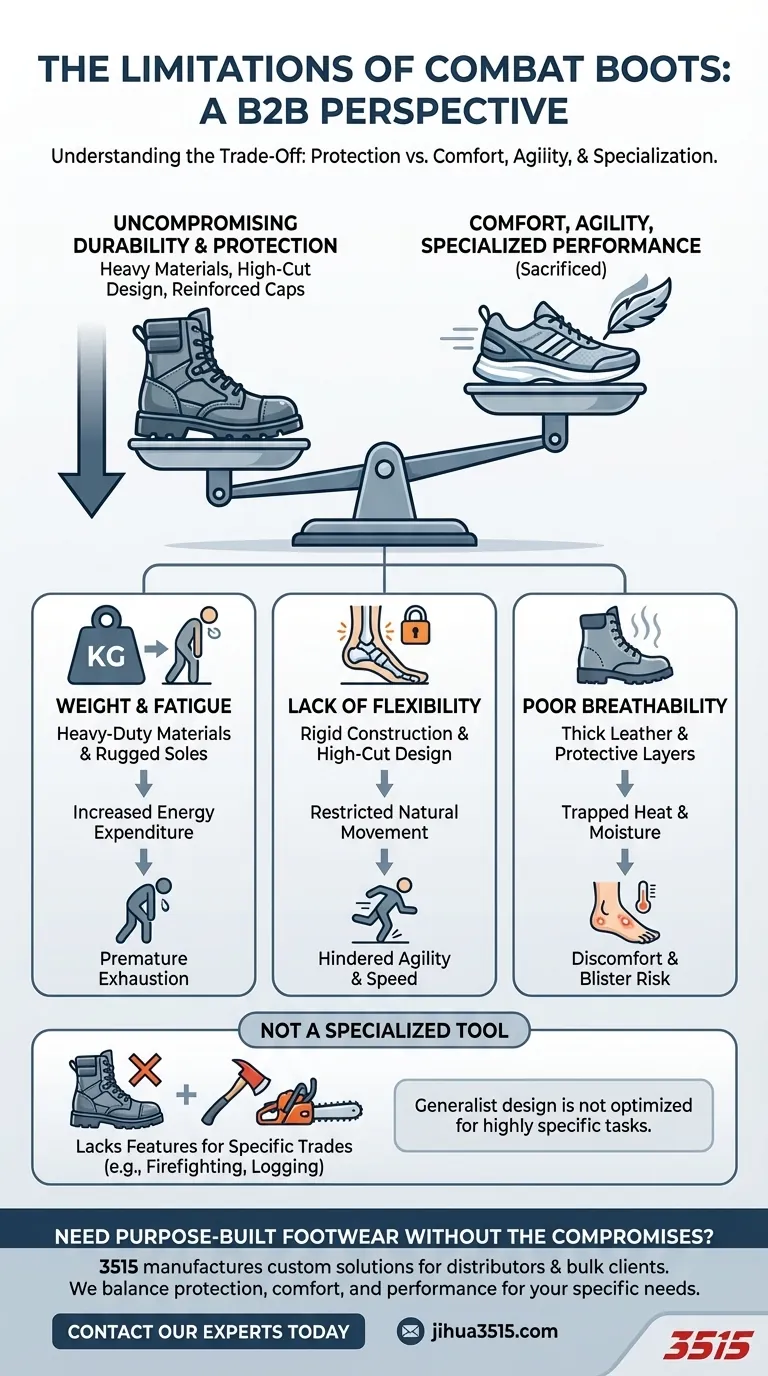
Limitation 1: Weight and Fatigue
The heavy-duty materials, thick leather, and rugged soles add significant weight. Over a long march or an active day, this extra weight requires more energy to lift with every step, leading to premature fatigue.
Limitation 2: Lack of Flexibility
The same rigid construction that protects the ankle also restricts its natural movement. This makes combat boots feel clunky and slow compared to more agile footwear, hindering quick movements.
Limitation 3: Poor Breathability
Thick leather and protective layers are not designed for airflow. This traps heat and moisture, making the boots uncomfortably hot in warm climates and increasing the risk of blisters and fungal infections.
Limitation 4: Not a Specialized Tool
A combat boot is a generalist's tool designed for a wide range of military duties. It is not built for highly specific tasks. For example, it lacks the specialized heat resistance of a firefighter's boot or the unique grip and safety features of a logger's boot.
Making the Right Choice for Your Goal
Selecting the correct footwear depends entirely on a realistic assessment of your needs. A combat boot is an excellent tool, but only for the right job.
- If your primary focus is maximum durability and protection in rugged, unpredictable terrain: The combat boot is an outstanding choice, offering unparalleled stability and safety.
- If your primary focus is speed, agility, and comfort during prolonged activity: A lighter, more flexible tactical boot or a quality hiking boot is likely a better option.
- If your primary focus is a specialized trade like logging or firefighting: You must use the purpose-built footwear designed with the specific safety standards required for that job.
Ultimately, choosing the right boot means understanding its purpose and accepting its inherent compromises.
Summary Table:
| Limitation | Key Impact |
|---|---|
| Weight & Fatigue | Increased energy expenditure, leading to quicker exhaustion. |
| Lack of Flexibility | Restricted ankle movement, hindering agility and speed. |
| Poor Breathability | Trapped heat and moisture, increasing discomfort and blister risk. |
| Not a Specialized Tool | Lacks features for specific trades like firefighting or logging. |
Need Durable, Purpose-Built Footwear Without the Compromises?
As a large-scale manufacturer, 3515 produces a comprehensive range of footwear for distributors, brand owners, and bulk clients. Our production capabilities encompass all types of shoes and boots, from rugged tactical styles to specialized occupational footwear. We can help you design and source the perfect boot for your specific needs, balancing protection, comfort, and performance.
Contact our experts today to discuss your custom footwear requirements and get a quote!
Visual Guide
Related Products
- Durable Military Combat Boots with Water Drainage for Wholesale & OEM
- Durable Leather Tactical Boots Wholesale & Custom Manufacturing for Brands
- High-Traction Suede Tactical Boots Wholesale & Custom Manufacturing
- Wholesale Lightweight Tactical Boots Custom Manufacturer for Desert & Combat Use
- Durable Mid-Cut Tactical Boots for Wholesale & Private Label
People Also Ask
- Why must gait validation for military applications be conducted in combat boots? Ensure Data Accuracy for Soldiers
- What are the common types of combat boots? Find the Right Boot for Your Mission
- What factors should be considered when choosing military boots for hiking? Durability vs. Weight for Your Terrain
- What are the key considerations when choosing military boots? Prioritize Compliance, Environment & Fit
- How should the midfoot and heel fit in military boots? Achieve a Snug, Secure Fit for Blister Prevention

















