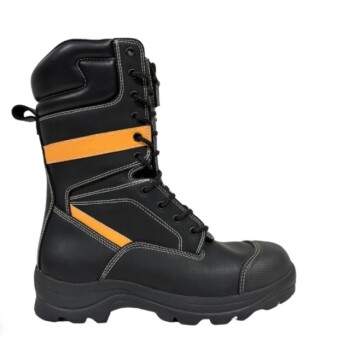
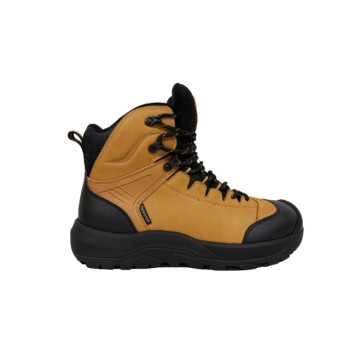
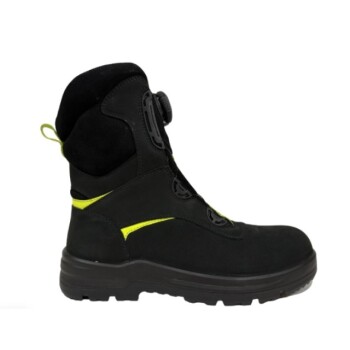
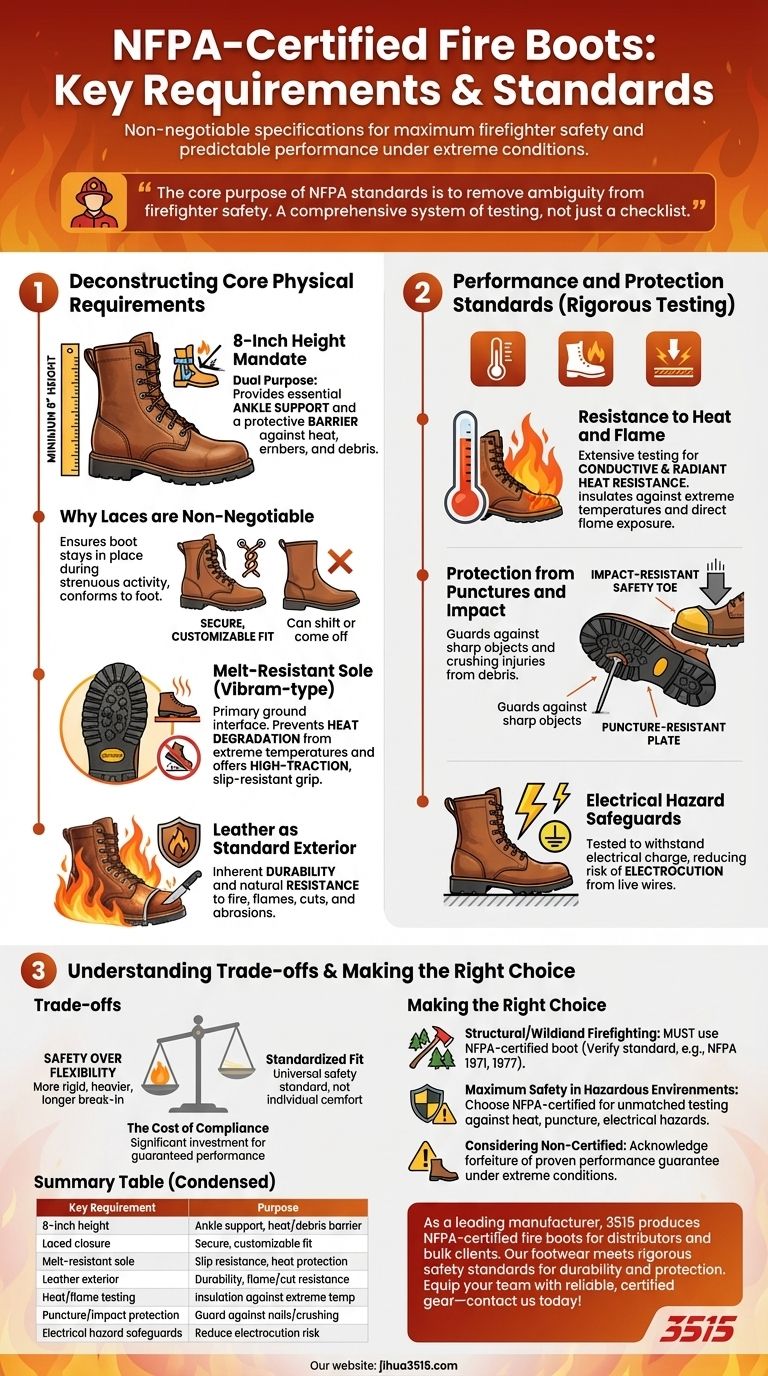
To be NFPA-certified, a fire boot must meet a strict set of non-negotiable requirements. These include being a laced leather boot measuring a minimum of 8 inches high, featuring a melt-resistant Vibram-type sole, and passing rigorous testing for protection against heat, punctures, and electrical hazards.
The core purpose of NFPA standards is to remove ambiguity from firefighter safety. The requirements are not merely a checklist of features; they represent a comprehensive system of testing designed to ensure a boot will perform predictably under the extreme and varied conditions of a fire ground.
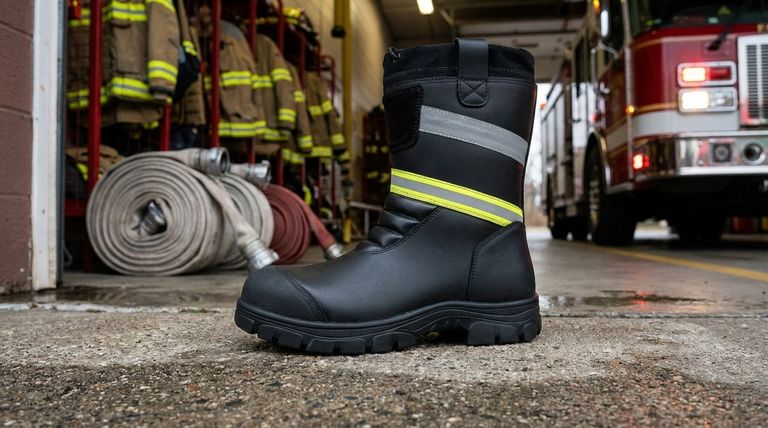
Deconstructing the Core NFPA Requirements
Each physical requirement of an NFPA-certified boot is directly linked to a specific safety function. Understanding the "why" behind these rules is crucial for appreciating the level of protection they provide.
The 8-Inch Height Mandate
The minimum height of 8 inches from the bottom of the heel to the top of the boot serves a dual purpose. It provides essential ankle support to prevent sprains and twists on uneven terrain and offers a critical protective barrier against heat, embers, and sharp debris entering the boot.
Why Laces are Non-Negotiable
The requirement for a laced closure system ensures a secure and customizable fit. Unlike pull-on boots, which can shift or come off entirely during strenuous activity, laced boots can be tightened to conform to the individual's foot and ankle, guaranteeing they stay in place when it matters most.
The Role of a Melt-Resistant Sole
The sole is the boot's primary interface with the ground, which can reach extreme temperatures. A melt-resistant, Vibram-type sole is specified to prevent degradation from heat exposure. This design also provides the high-traction, slip-resistant grip necessary for navigating wet, oily, or unstable surfaces safely.
Leather as the Standard Exterior
Leather is the required exterior material due to its inherent durability and natural resistance to fire. It provides a robust shield against flames, cuts, and abrasions, maintaining its structural integrity far better than synthetic materials when exposed to high heat.
Performance and Protection Standards
Beyond the physical design, NFPA certification involves subjecting boots to a battery of standardized tests to verify their protective capabilities.
Resistance to Heat and Flame
Boots undergo extensive testing to measure their conductive and radiant heat resistance. This ensures they can insulate the firefighter's feet from extreme ambient temperatures and brief, direct exposure to flame without failing.
Protection from Punctures and Impact
NFPA standards mandate protection against common physical hazards on the fire ground. This includes a puncture-resistant plate in the sole to guard against nails and other sharp objects, as well as an impact-resistant safety toe to protect against crushing injuries from falling debris.
Electrical Hazard Safeguards
Certified boots must also provide a degree of protection against electrical shock. They are tested to ensure the sole and heel can withstand a specific electrical charge, reducing the risk of electrocution from downed power lines or faulty equipment.
Understanding the Trade-offs
It is important to recognize that NFPA certification prioritizes maximum protection, which can involve certain trade-offs.
Safety Over Flexibility
NFPA-certified boots are, by design, more rigid and heavier than standard work boots. This robust construction is necessary to provide the required support and protection, but it can result in a longer "break-in" period and less flexibility.
A Standardized Fit
The specifications are built around a universal standard for safety, not individual comfort preferences. While manufacturers offer various sizes, the core design principles cannot be altered, which means a certified boot's primary goal is protection, not necessarily all-day comfort for non-emergency tasks.
The Cost of Compliance
The rigorous testing, specialized materials, and durable construction required for certification mean these boots represent a significant investment. However, this cost reflects a guaranteed level of performance and safety that non-certified alternatives cannot offer.
Making the Right Choice for Your Goal
When selecting a fire boot, your specific role and the hazards you will face are the most important considerations.
- If your primary focus is structural or wildland firefighting: You must use an NFPA-certified boot. Verify that the boot is certified to the correct standard for your job (e.g., NFPA 1971 for structural, NFPA 1977 for wildland).
- If your primary focus is maximum safety in any hazardous environment: Choose an NFPA-certified boot, as it guarantees a level of testing against heat, puncture, and electrical hazards that is unmatched by other safety ratings.
- If you are considering non-certified boots for related work: Acknowledge that you are forfeiting the proven guarantee of performance under extreme fire-related conditions that only NFPA certification provides.
Ultimately, choosing a boot that meets these stringent standards is a critical investment in your personal safety on the job.
Summary Table:
| Key Requirement | Purpose |
|---|---|
| 8-inch height | Ankle support and barrier against heat/debris |
| Laced closure | Secure, customizable fit for stability |
| Melt-resistant sole (Vibram-type) | Slip resistance and heat degradation protection |
| Leather exterior | Durability and flame/cut/abrasion resistance |
| Heat/flame resistance testing | Insulation against extreme temperatures |
| Puncture/impact protection | Guard against nails, debris, and crushing injuries |
| Electrical hazard safeguards | Reduce electrocution risks from live wires |
As a leading manufacturer, 3515 produces a comprehensive range of NFPA-certified fire boots tailored for distributors, brand owners, and bulk clients. Our footwear meets rigorous safety standards, ensuring durability, protection, and performance in extreme conditions. Let us help you equip your team with reliable, certified safety gear—contact us today to discuss your needs and explore our production capabilities!
Visual Guide
Related Products
- High Performance Fire-Retardant Waterproof Safety Boots
- Premium Flame-Retardant Waterproof Safety Boots and Shoes
- High-Traction Suede Tactical Boots Wholesale & Custom Manufacturing
- Wholesale Lightweight Tactical Boots Custom Manufacturer for Desert & Combat Use
- Premium Wholesale Waterproof Safety Boots High Performance Protection for Industrial Markets
People Also Ask
- Why are waterproof safety boots recommended for certain work environments? Essential Protection for Wet & Hazardous Jobs
- What roles do 3D vision systems and industrial robots play in the manufacturing of fire safety boots? Smart Automation
- What is the difference between waterproof, water-resistant, and water-repellent boots? Choose the Right Protection for Your Feet
- What materials make waterproof boots durable? The Ultimate Guide to Long-Lasting Footwear
- How can you ensure your feet stay dry during winter walks? A Two-Part Defense System for Total Comfort