
The most effective work shoes for standing all day are an engineered system of support, not merely a piece of footwear. The key features to look for are a combination of deep cushioning for shock absorption, structured arch support for proper body alignment, a spacious toe box to accommodate natural foot swelling, and a slip-resistant outsole for safety. These elements work together to reduce fatigue and prevent pain in your feet, joints, and back.
Standing for extended periods places constant stress on your entire body. The right shoe isn't about a single feature, but about the synergy between structural support, impact-absorbing cushioning, and a fit that adapts to the demands of your workday.
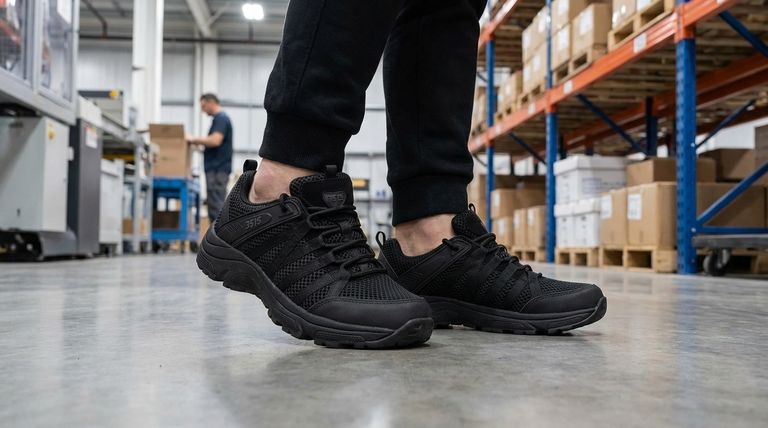
The Foundation: Deconstructing the Ideal Work Shoe
Understanding the core components of a supportive shoe empowers you to look past marketing and focus on what truly matters for all-day comfort and health. Each element plays a distinct role in protecting your body from the ground up.
Cushioning and Shock Absorption: Your First Line of Defense
Cushioning is the material in the midsole that absorbs the impact of your body weight against hard surfaces. High-quality work shoes often use EVA foam or gel inserts for this purpose.
Effective shock absorption is critical for protecting not just your feet, but also your ankles, knees, and lower back from the cumulative stress of a long shift.
Arch Support: The Key to Alignment
Proper arch support is non-negotiable. A contoured footbed that matches the natural curve of your foot helps distribute pressure evenly.
This support maintains proper foot alignment, which in turn promotes better posture and reduces the strain that can lead to conditions like plantar fasciitis, as well as pain in your knees and back.
A Stable Platform: Width and Outsole Design
The outsole of the shoe provides the foundation for your stability. Look for a shoe with a sufficiently wide platform, which helps prevent your foot from rolling inward or outward.
Furthermore, a slip-resistant outsole is a critical safety feature, providing reliable traction on potentially slick surfaces common in many workplaces.
The Importance of Space: Toe Room and Fit
Your feet naturally swell throughout the day. A shoe with a spacious toe box allows your toes to spread out naturally, preventing cramping, blisters, and discomfort.
A proper fit should feel secure around the heel and midfoot but offer ample room for the toes. The heel height should be modest, typically less than two inches, to maintain a natural posture.
Beyond Comfort: Job-Specific Safety Requirements
For many professions, standard comfort features are only the starting point. Your work environment may mandate specific safety technologies designed to protect you from on-site hazards.
Protection from Impact and Puncture
If you work around heavy objects or construction materials, a safety toe (steel, composite, or alloy) is essential to protect against crushing injuries.
Similarly, a puncture-resistant plate in the sole is vital for environments with sharp debris like nails or scrap metal.
Environmental and Hazard Resistance
Shoes designed with oil, chemical, or water resistance are crucial for maintaining safety and durability in industrial or wet environments.
These features ensure both the longevity of the shoe and the safety of the wearer by preventing slips and protecting the foot from hazardous substances.
Electrical Hazard (EH) Protection
For electricians and others working near live electrical circuits, EH-rated footwear is a critical piece of personal protective equipment. These shoes are designed with non-conductive soles to provide a secondary layer of protection against electric shock.
Understanding the Trade-offs and Common Pitfalls
Selecting the right shoe involves balancing competing needs. Being aware of common misconceptions and design trade-offs will lead to a better decision.
The Myth of the "Break-In" Period
A well-fitting work shoe, especially a safety shoe, should feel comfortable from the very first wear. Unlike some casual shoes, rigid safety footwear does not "break in" over time. If it feels too tight or pinches in the store, it will only feel worse after an eight-hour shift.
Weight vs. Durability
There is often a direct trade-off between a shoe's weight and its protective features. A lightweight design is excellent for reducing fatigue, but shoes with steel toes, puncture plates, and thick rubber outsoles will naturally be heavier. Determine the level of protection you truly need.
Breathability vs. Waterproofing
Highly waterproof shoes are excellent for wet conditions but often trap heat and moisture, reducing breathability. Conversely, shoes made with breathable mesh are great for hot environments but offer little protection from water. Consider which feature is more critical for your daily work environment.
Making the Right Choice for Your Workday
Your final decision should be guided by a clear understanding of your personal needs and professional requirements.
- If your primary focus is alleviating foot and back pain: Prioritize shoes with exceptional arch support and deep cushioning to ensure proper alignment and shock absorption.
- If your primary focus is safety in a hazardous environment: Your selection must begin with the required safety ratings (e.g., slip resistance, safety toe, EH), with comfort as the second critical factor.
- If your primary focus is mobility and reducing fatigue: Seek out a lightweight design with a flexible sole and breathable materials to minimize energy expenditure throughout the day.
A well-chosen work shoe is a professional tool that directly invests in your long-term health and daily performance.
Summary Table:
| Key Feature | Why It Matters |
|---|---|
| Arch Support & Cushioning | Reduces fatigue, prevents pain in feet, knees, and back by ensuring proper alignment and shock absorption. |
| Spacious Toe Box | Accommodates natural foot swelling throughout the day to prevent cramping and blisters. |
| Slip-Resistant Outsole | Provides critical safety and stability on slick surfaces common in workplaces. |
| Safety Toe & Hazard Protection | Essential for protection from impact, puncture, chemicals, or electrical hazards in industrial settings. |
Ready to equip your workforce with footwear engineered for performance and safety?
As a large-scale manufacturer, 3515 produces a comprehensive range of durable and comfortable work shoes and boots for distributors, brand owners, and bulk clients. Our production capabilities encompass all types of safety and occupational footwear, designed with the precise features outlined above to support your team's health and productivity.
Contact us today to discuss your specific needs and discover how we can be your reliable manufacturing partner.
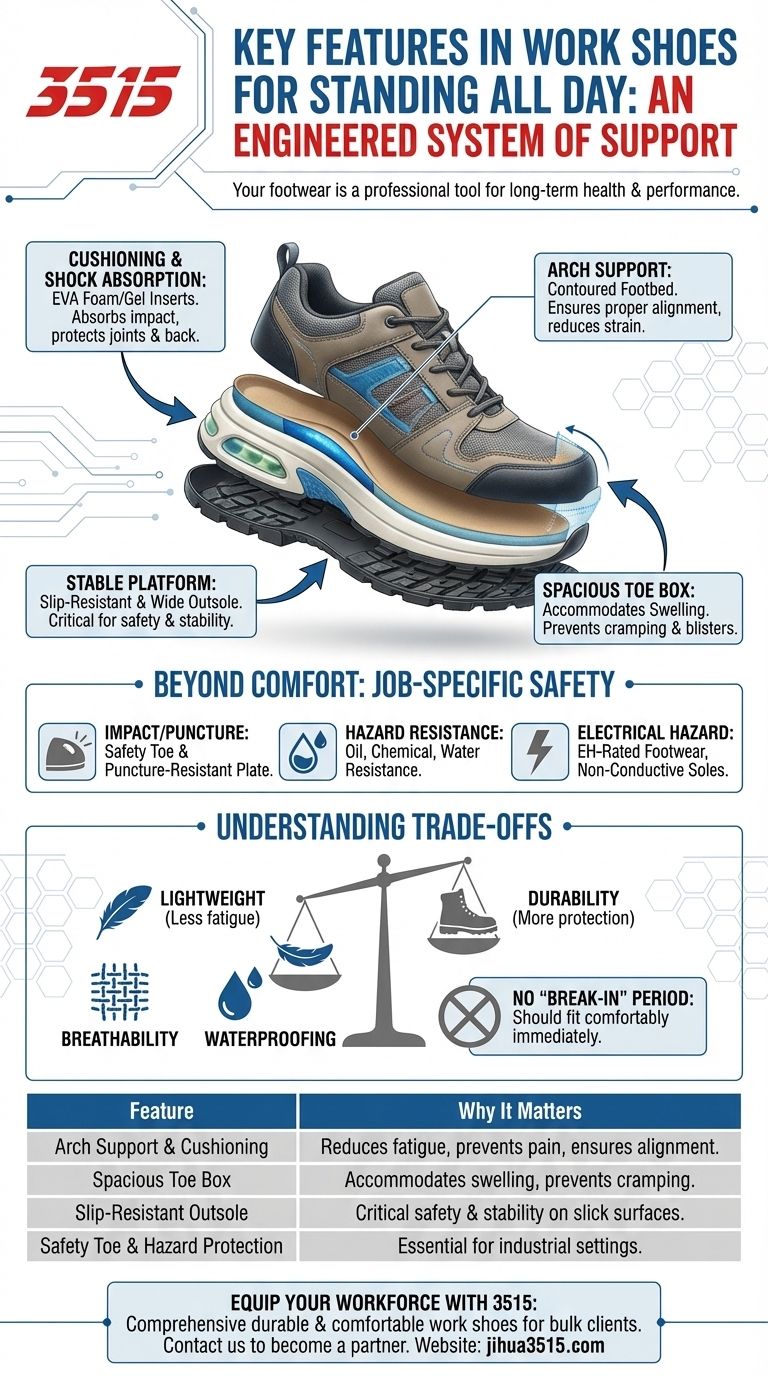
Visual Guide
Related Products
- Durable Leather Moc Toe Work Boots for Wholesale & Custom Manufacturing
- Durable Canvas Work Shoes with Rubber Lug Sole | Wholesale Manufacturer
- Durable Leather Work Boots for Wholesale & Custom Manufacturing
- Durable Leather Work Boots for Wholesale & Custom OEM Manufacturing
- Wholesale Durable Safety Boots Manufacturer Customizable Steel Toe Work Boots
People Also Ask
- What are moc toe work boots designed for? Superior Comfort and Mobility for Tradespeople
- What are the key features to look for when purchasing moc toe boots? A Guide to Durability & Fit
- How did moc toe boots originate? A Legacy of Workwear Durability and Style
- What clothing items complement the Outdoorsman/Heritage Look with moc toe boots? Build a Timeless, Rugged Wardrobe
- What types of outfits can moc toe boots be worn with? Versatile Style Guide


















