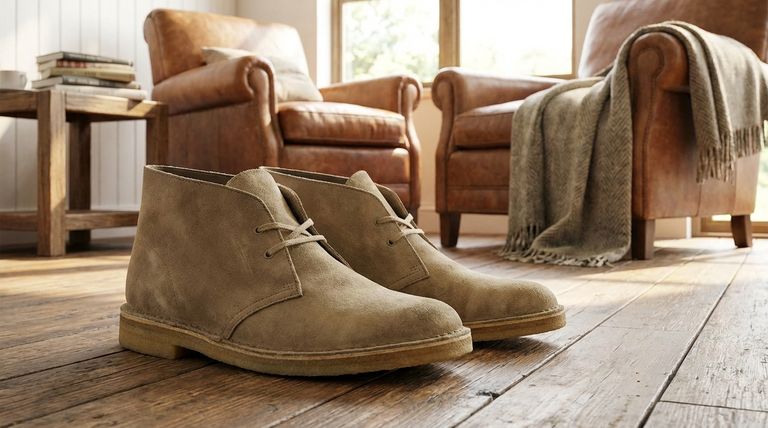
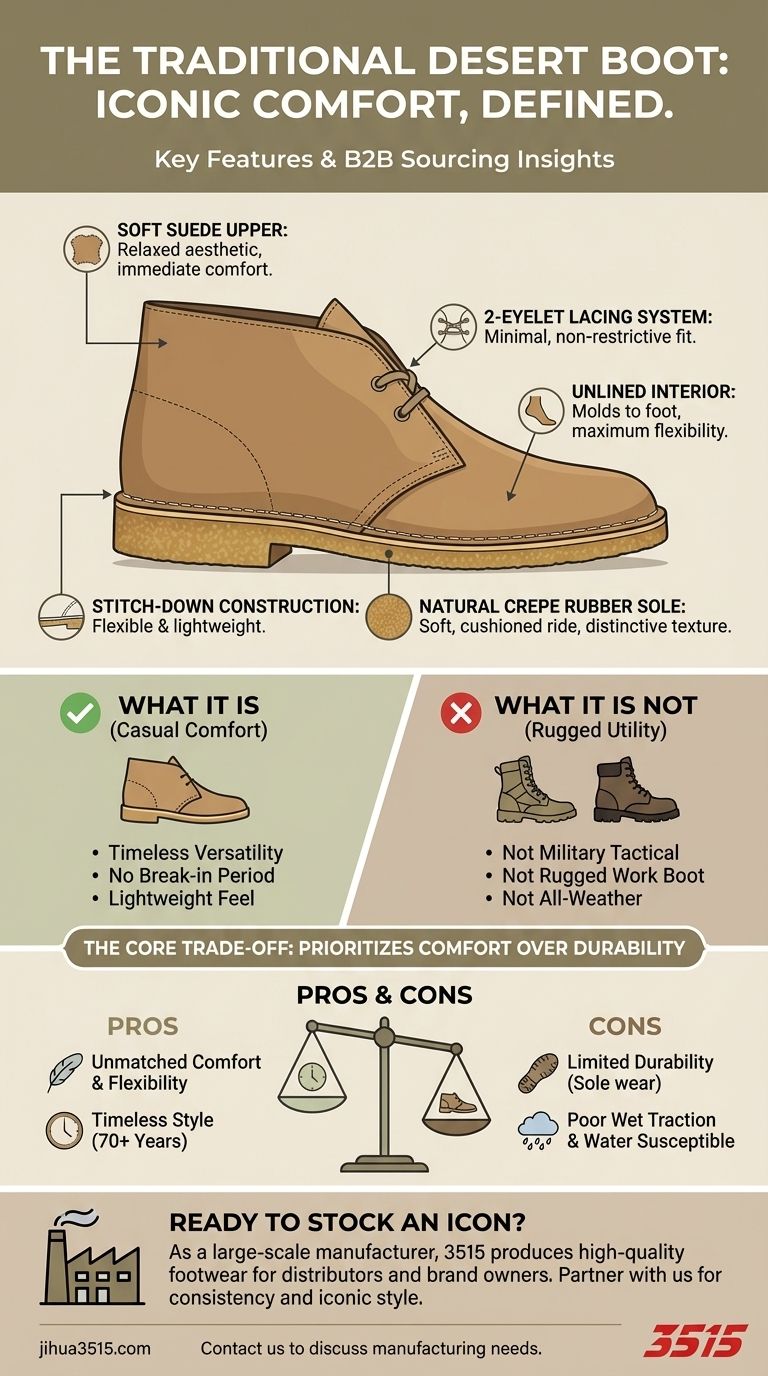
At its core, a traditional Desert Boot is defined by four key features. These are its simple two-eyelet lacing system, a soft natural crepe rubber sole, minimalist stitch-down construction, and a largely unlined interior for maximum flexibility and comfort.
The Desert Boot's design prioritizes lightweight, casual comfort over rugged durability. Understanding this core trade-off is essential to appreciating its role as a style icon, not a heavy-duty workhorse.
The Anatomy of a Classic Desert Boot
The original design, popularized by Clarks in 1950, is a masterclass in simplicity. Each component is chosen to create a boot that is exceptionally lightweight and flexible, feeling more like a slipper than a piece of traditional footwear.
The Two-Eyelet Lacing System
The minimal two or three-eyelet open lacing system is a defining visual characteristic. This design avoids the rigid structure of more heavily laced boots, allowing for a comfortable, less restrictive fit around the ankle.
The Natural Crepe Sole
The sole is made from natural crepe rubber, which has a distinctive, gummy texture. This material provides a soft, cushioned ride, making the boot very comfortable for walking on pavement and in casual settings.
Unlined Interior and Stitch-Down Construction
Most traditional Desert Boots are unlined, particularly in the vamp and quarters. This reduces weight and stiffness, allowing the suede or leather to mold to your foot. The upper is attached to the sole via stitch-down construction, which is flexible and durable enough for casual wear.
Soft Suede or Leather Upper
While available in various materials, the archetypal Desert Boot features a soft, pliable suede upper. This enhances the boot's relaxed aesthetic and contributes significantly to its immediate, out-of-the-box comfort.
What a Desert Boot Is Not
It's critical to distinguish the classic Desert Boot from its modern, rugged namesakes. The name can be confusing, but the function and construction are worlds apart.
Not a Military Tactical Boot
Modern "military desert boots" are engineered for performance in harsh environments. They feature high ankle support, aggressive slip-resistant outsoles, protective toe caps, and often use side-zips for quick access. These are technical tools, not casual footwear.
Not a Rugged Work Boot
Similarly, boots designed for demanding work like wildland firefighting are built with durability as the absolute priority. They use heavy-duty materials and construction methods designed to withstand extreme terrain and abuse, a purpose for which the classic Desert Boot is completely unsuited.
Understanding the Trade-offs
The Desert Boot's greatest strengths are also the source of its limitations. Its design is a deliberate compromise between comfort and longevity.
Pro: Unmatched Comfort and Flexibility
The combination of an unlined upper, simple construction, and a soft crepe sole makes the Desert Boot one of the most comfortable boots you can buy. There is virtually no break-in period required.
Pro: Timeless Versatility
Its clean, uncluttered design has remained stylish for over 70 years. It pairs effortlessly with jeans, chinos, and other casual wear, making it a highly versatile staple in any wardrobe.
Con: Limited Durability
This is the most important trade-off. The soft crepe sole wears down relatively quickly with consistent use, and suede uppers are prone to scuffing and staining. It is not built for longevity under hard wear.
Con: Not an All-Weather Option
The crepe sole offers poor traction on wet or slippery surfaces. Furthermore, suede is susceptible to water damage, making the Desert Boot a poor choice for rainy or snowy conditions.
Making the Right Choice for Your Goal
To avoid disappointment, select your boot based on its intended purpose, not just its name.
- If your primary focus is casual style and daily comfort: The classic Desert Boot is an excellent, time-tested choice for office or urban environments.
- If your primary focus is durability for outdoor or tactical use: You must look for a modern military boot with features like high-traction soles and protective elements.
Understanding that the classic Desert Boot was built for comfort, not combat, is the key to appreciating its enduring design.
Summary Table:
| Key Feature | Description |
|---|---|
| Two-Eyelet Lacing | Minimal open lacing for a comfortable, less restrictive fit. |
| Crepe Rubber Sole | Soft, gummy texture provides a cushioned, comfortable ride. |
| Stitch-Down Construction | Flexible method of attaching the upper to the sole for a lightweight feel. |
| Largely Unlined Interior | Allows the suede/leather to mold to the foot for immediate comfort. |
| Trade-off: Durability | Prioritizes comfort over rugged longevity; not for heavy-duty use. |
Ready to Stock an Icon?
As a large-scale manufacturer, 3515 produces a comprehensive range of high-quality footwear for distributors, brand owners, and bulk clients. Our production capabilities encompass all types of shoes and boots, including timeless classics like the Desert Boot. We can help you bring this iconic style to your market with the quality and consistency your customers expect.
Contact our team today to discuss your manufacturing needs and how we can partner for success.
Visual Guide
Related Products
- Wholesale Lightweight Tactical Boots Custom Manufacturer for Desert & Combat Use
- Durable Military Combat Boots with Water Drainage for Wholesale & OEM
- Wholesale High-Traction Camo Boots - Custom Manufacturer for Brands
- Durable Leather Tactical Boots Wholesale & Custom Manufacturing for Brands
- Durable Waterproof Rain Boots | Custom Manufacturer for Wholesale & Brands
People Also Ask
- What are the common types of combat boots? Find the Right Boot for Your Mission
- What specialized protections do tactical boots offer? Maximize Endurance with High-Performance Footwear
- What are the main construction similarities between tactical boots and tactical sneakers? Built for Performance & Durability
- What are the different types of tactical boots available? Find the Right Boot for Your Mission
- How is the compatibility of polymer materials demonstrated in smart footwear? Enhancing Tactical & Training Performance