At its core, the quality of a dress shoe is determined by three critical factors: the materials it's made from, its construction method, and the overall fit. While style is subjective, these three elements are objective measures of craftsmanship, durability, and long-term value.
A high-quality dress shoe is an investment, not a disposable purchase. The true indicators of quality lie in how the shoe is assembled and the grade of its materials, which determine if it can be repaired and last for decades or will fail within a year.
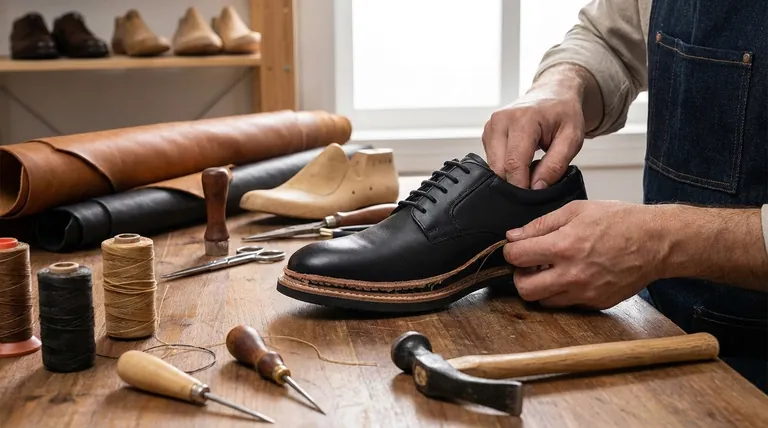
The Foundation: Shoe Construction
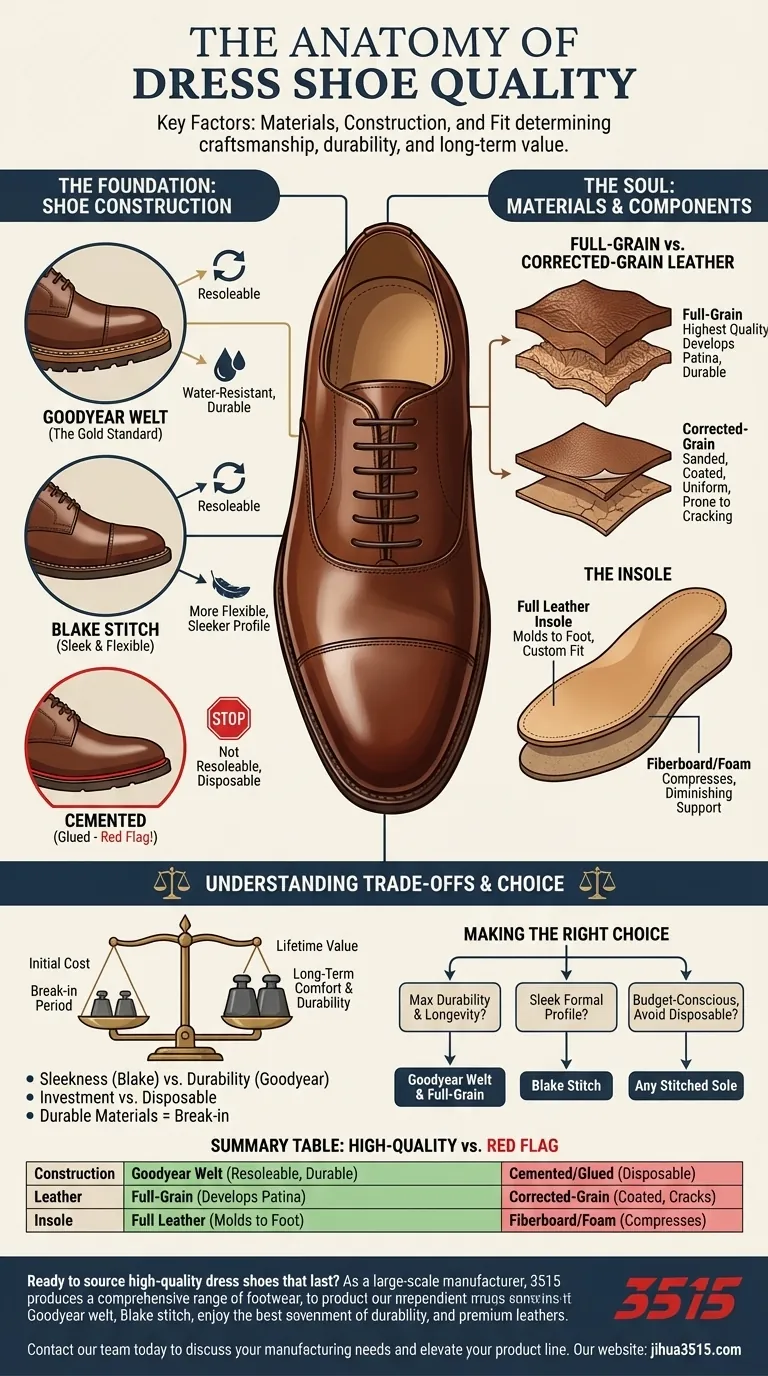
How a shoe's sole is attached to its upper is the single most important indicator of its quality and lifespan. There are two primary methods to look for and one to avoid.
Goodyear Welt: The Gold Standard
A Goodyear welt involves a strip of leather (the "welt") that is stitched to the shoe's upper and a different set of stitches attaching that welt to the sole.
This complex construction creates an exceptionally durable, water-resistant, and supportive shoe. Most importantly, it allows a cobbler to easily remove the old sole and attach a new one, extending the shoe's life indefinitely.
Blake Stitch: Sleek and Flexible
With a Blake stitch, the shoe's upper is stitched directly to the sole from the inside. This method results in a more flexible shoe with a sleeker, closer-cut profile than a Goodyear welt.
While still a durable and high-quality construction method that allows for resoling, it offers less water resistance than a Goodyear welt.
The Red Flag: Cemented (Glued) Soles
This is the construction method used for the vast majority of low-cost footwear. The sole is simply attached to the upper with a strong adhesive.
These shoes cannot be resoled. Once the sole wears out or begins to separate from the upper, the shoe must be discarded. This is a clear sign of fast-fashion footwear designed for a short lifespan.
The Soul of the Shoe: Materials
The quality of the leather and internal components directly impacts comfort, breathability, and how the shoe ages.
Full-Grain vs. Corrected-Grain Leather
Full-grain leather is the highest quality grade. It comes from the top layer of the hide and includes all the natural grain and imperfections. It is extremely durable, breathable, and develops a beautiful patina over time.
Corrected-grain leather has been sanded and buffed to remove imperfections, then finished with a synthetic coating. It looks uniform and shiny out of the box but is less breathable, prone to cracking, and does not age well.
The Importance of the Insole
A quality dress shoe will feature a full leather insole. Over time, the leather molds to the unique shape of your foot, creating a custom-like fit.
Lower-quality shoes often use fiberboard or foam, which compresses and offers diminishing support. Some modern high-end shoes offer a removable, supportive footbed for temperature regulation and immediate comfort.
Understanding the Trade-offs
Choosing the right shoe involves balancing cost, durability, and aesthetics. There is no single "best" option for everyone.
Initial Cost vs. Lifetime Value
Shoes with Goodyear welt or Blake stitch construction have a significantly higher upfront cost due to the skilled labor involved. However, their ability to be resoled multiple times means their cost-per-wear over a decade can be far lower than repeatedly buying cheap, cemented shoes.
Break-in Period vs. Immediate Comfort
Traditionally constructed shoes, especially those with Goodyear welts and thick leather insoles, often require a break-in period as the stiff materials conform to your foot. While some modern high-quality shoes are designed for comfort out of the box, a break-in period is often a sign of durable materials that will last.
Sleekness vs. Durability
The Blake stitch allows for a very trim and elegant silhouette, making it ideal for more formal or fashion-forward styles. The Goodyear welt creates a slightly bulkier profile but offers superior durability and water resistance, making it perfect for a daily workhorse shoe.
Making the Right Choice for Your Goal
Select a shoe based on its construction and materials, tailored to your specific needs.
- If your primary focus is maximum durability and longevity: Choose a shoe with a Goodyear welt and full-grain leather uppers.
- If your primary focus is a sleek, modern profile for formal wear: Choose a shoe with a Blake stitch construction.
- If your primary focus is avoiding disposable footwear on a budget: Insist on a stitched sole (either Blake or Goodyear) over a glued one.
Ultimately, investing in a well-constructed shoe is an investment in both your style and your future.
Summary Table:
| Factor | High-Quality Indicator | Red Flag |
|---|---|---|
| Construction | Goodyear Welt (resoleable, durable) | Cemented/Glued Sole (disposable) |
| Leather | Full-Grain (develops patina) | Corrected-Grain (coated, cracks) |
| Insole | Full Leather (molds to foot) | Fiberboard/Foam (compresses) |
Ready to source high-quality dress shoes that last?
As a large-scale manufacturer, 3515 produces a comprehensive range of footwear for distributors, brand owners, and bulk clients. Our production capabilities encompass all types of shoes and boots, including durable Goodyear welt and sleek Blake stitch constructions using premium full-grain leathers.
We help you offer your customers exceptional value through long-lasting, repairable footwear. Contact our team today to discuss your manufacturing needs and elevate your product line.
Visual Guide
Related Products
- Wholesale Comfort Dress Shoes with Dial Closure for Custom Manufacturing
- Classic Leather Derby Dress Shoes Wholesale & Custom Manufacturing
- Wholesale Leather Derby Dress Shoes Custom Manufacturer for Brands
- Wholesale Patent Oxford Dress Shoes | Custom & Bulk Manufacturing
- Wholesale Perforated Comfort Dress Shoes | Custom Derby Shoe Manufacturer
People Also Ask
- How do comfort dress shoes differ from traditional dress shoes? Discover the Ergonomic Advantage
- Which dress shoe styles are suitable for wearing with jeans? A Guide to Smart-Casual Style
- What features make dress shoes suitable for standing all day? Achieve All-Day Comfort with Anatomical Design
- What are the benefits of resoling dress shoes? Extend Life & Boost Comfort
- What recent trends have influenced traditional dress shoe designs? The Shift to Modern Comfort