
Choosing the right motorcycle boots is a critical decision that goes far beyond style. The key is to evaluate boots as essential safety equipment, prioritizing features like certified armor, abrasion-resistant materials, and construction that supports your specific riding style. A great boot protects you from impact and abrasion while providing the comfort and control needed to operate your motorcycle safely.
The most common mistake is viewing motorcycle boots as simple footwear. A proper riding boot is a piece of technical safety gear designed to prevent specific, severe injuries like crushed bones, torn ligaments, and skin abrasion that a standard work boot or sneaker simply cannot handle.
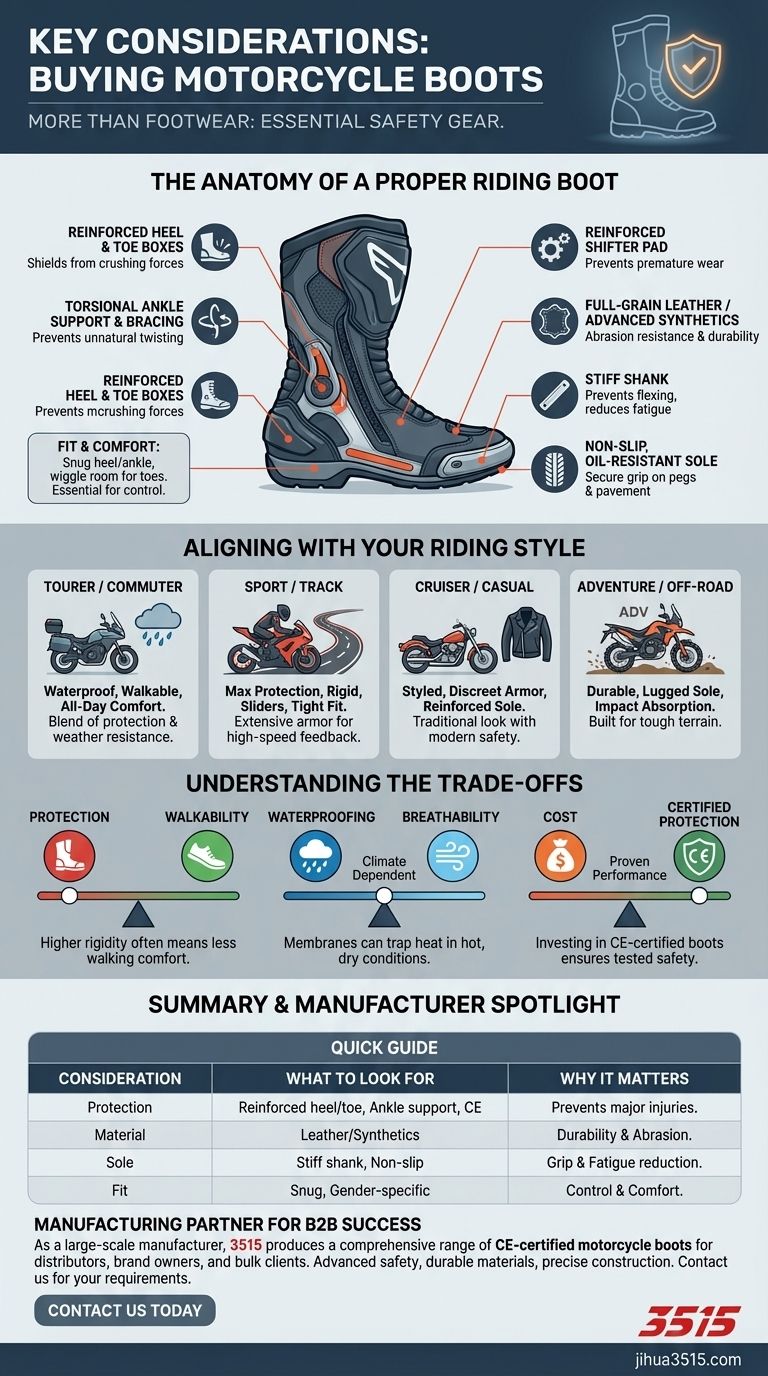
The Anatomy of a Proper Riding Boot
To make an informed decision, you must understand the components that separate a true riding boot from a casual one. Each element serves a distinct protective purpose.
Protection is Non-Negotiable
A boot's primary job is to protect your feet and ankles. Look for reinforced heel and toe boxes, which shield you from crushing forces.
Crucially, the boot must provide torsional stiffness and ankle support. This prevents your ankle from twisting unnaturally during a slide or impact, a common and debilitating injury. Many high-quality boots feature internal or external bracing systems for this purpose.
Finally, a reinforced shifter pad on the toe area prevents premature wear from the gear lever and adds comfort during shifts.
The Foundation: Material and Construction
The material dictates the boot's durability, comfort, and protective capability. Full-grain leather remains a top choice for its exceptional abrasion resistance and ability to mold to your foot over time.
Synthetic materials like microfiber and advanced textiles (e.g., Cordura) offer excellent alternatives. They are often lighter, require less break-in, and can provide superior water resistance and breathability from the start.
The Sole: Your Connection to the Bike and Road
The sole of a motorcycle boot is engineered for a specific job. It must be made from a non-slip, oil-resistant rubber compound to ensure a secure grip on the pegs and on the pavement when you stop.
A good boot also has a stiff shank embedded in the sole. This internal support prevents the boot from flexing over the footpeg, reducing foot fatigue on long rides and protecting your arch from bending backwards in a crash.
Fit and Comfort Dictate Control
A poorly fitting boot is both a distraction and a hazard. The boot should be snug around your heel and ankle to prevent lifting, but you should still be able to wiggle your toes freely.
Consider gender-specific boots when appropriate. They are designed around different foot shapes and calf muscle anatomy, providing a more precise and comfortable fit than a unisex model.
Aligning Boots with Your Riding Style
The ideal boot is one that matches the demands of your primary type of riding. A boot designed for the racetrack is not well-suited for a cross-country tour.
For the Tourer or Daily Commuter
Riders in this category prioritize a blend of protection, weather resistance, and off-bike comfort. Look for waterproof membranes and a more modest height that is easier to walk in. Protection is still key, but it's often more discreet.
For the Sport and Track Rider
Here, maximum protection is the goal. These boots are tall, rigid, and feature extensive external armor. Key features include replaceable toe sliders, advanced ankle-bracing systems, and a precise, tight fit for maximum feedback and control.
For the Cruiser or Casual Rider
Style is often a priority, but it should never replace safety. The best cruiser boots integrate modern protective features like discreet ankle armor and reinforced soles into a traditional leather boot design. Avoid unrated fashion boots that only offer the look of protection.
For the Adventure and Off-Road Rider
These boots are built for maximum durability and impact absorption. They are tall and heavily armored, often resembling motocross boots, with aggressive, deep-lugged soles for traction on dirt, mud, and gravel.
Understanding the Trade-offs
Choosing the perfect boot always involves balancing competing factors. Being aware of these compromises is key to making a wise investment.
Protection vs. Walkability
There is a direct relationship between a boot's protective rigidity and its comfort for walking. A highly protective race boot will be stiff and awkward to walk in, while a more flexible short boot offers less protection against twisting injuries.
Waterproofing vs. Breathability
A boot with a reliable waterproof membrane is excellent for wet or cold conditions. However, that same membrane will trap heat and sweat, making it less comfortable in a hot, dry climate. Consider your local weather and if ventilated boots might be a better option.
Cost vs. Certified Protection
More expensive boots typically use higher-quality materials and have undergone rigorous testing to achieve safety certifications (like a CE rating). While budget-friendly options exist, investing in certified protection provides proven performance when you need it most.
Making the Right Choice for Your Goal
Filter your options by focusing on your primary need.
- If your primary focus is daily commuting: Prioritize a balance of certified protection, waterproofing, and enough comfort to walk in an office or store.
- If your primary focus is aggressive sport or track riding: Invest in maximum torsional ankle support and abrasion resistance, even at the expense of off-bike comfort.
- If your primary focus is long-distance touring: Seek a durable boot that offers robust protection, proven weather resistance, and all-day comfort on the pegs.
- If your primary focus is casual cruising: Do not compromise on safety; choose boots that integrate hidden ankle armor and a stiff, supportive sole into your preferred style.
Ultimately, the best motorcycle boot is the one that fits you, your bike, and your riding style without compromising on the protection your feet and ankles demand.
Summary Table:
| Key Consideration | What to Look For | Why It Matters |
|---|---|---|
| Protection | Reinforced heel/toe, ankle support, torsional stiffness, CE certification | Prevents crushing, twisting, and abrasion injuries in a crash. |
| Material & Construction | Full-grain leather or advanced synthetics (e.g., Cordura) | Determines durability, abrasion resistance, and weather protection. |
| Sole | Stiff shank, non-slip, oil-resistant rubber | Ensures grip on pegs and pavement, protects arch, and reduces fatigue. |
| Fit & Comfort | Snug heel/ankle, wiggle room for toes, gender-specific options | Provides control, prevents distraction, and enhances riding experience. |
| Riding Style | Commuter, Sport/Track, Cruiser, or Adventure/Off-Road specific features | Aligns protection and functionality with your primary type of riding. |
As a large-scale manufacturer, 3515 produces a comprehensive range of CE-certified motorcycle boots for distributors, brand owners, and bulk clients. We combine advanced safety features with durable materials and precise construction to deliver the protection and performance your customers demand. Whether you need boots for touring, sport, or casual riding, our production capabilities ensure high-quality, reliable footwear.
Contact us today to discuss your specific requirements and discover how we can support your business with a reliable supply of high-performance motorcycle boots.
Visual Guide
Related Products
- Wholesale Tactical Boots High-Traction & Reflective for Bulk & Brand Orders
- High Performance Fire-Retardant Waterproof Safety Boots
- Durable Goodyear Welt Leather Work Boots for Wholesale & Private Label
- Wholesale High-Traction Camo Boots - Custom Manufacturer for Brands
- Wholesale Waterproof Tactical Boots Custom Suede & High-Traction Soles
People Also Ask
- How do tactical boots protect against injuries? Discover the Integrated Safety System
- What boots do navy SEALs run in? Discover the Mission-Driven Footwear Philosophy
- How do manufacturing processes for electronic textiles balance durability with wearing comfort? Innovation in Footwear
- Why is the footwear standardization essential in ambient temperature studies? Ensure Scientific Data Accuracy
- Importance of Professional Tactical Boots in Loess Gully Regions: Ensure Safety and Precision for Field Monitoring



















