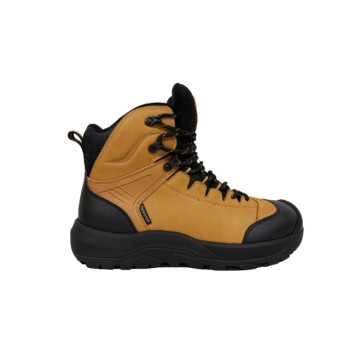
Beyond basic protection, the most critical considerations for firefighters' boots are fit, traction, and agility. While hazard resistance is the non-negotiable foundation, these other factors determine a firefighter's effectiveness, endurance, and long-term health in the field. A boot that fails in these areas can become a liability during a critical incident.
The right boot does more than protect you from the environment; it enhances your ability to perform within it. Focusing solely on hazard ratings without considering fit and mobility is a critical oversight that can lead to fatigue, injury, and reduced operational readiness.
The Critical Role of Fit and Support
A proper fit is the cornerstone of performance and endurance. It goes far beyond simple comfort and has a direct impact on your ability to function over long hours under immense physical stress.
Beyond Length and Width
The internal shape of the boot must match your foot. Adequate arch support is crucial for distributing weight evenly and preventing conditions like plantar fasciitis, a common source of chronic pain and fatigue.
The Importance of Cushioning
Firefighting involves high-impact movements, from jumping off a truck to climbing stairs with heavy gear. Proper cushioning absorbs this shock, protecting your joints—ankles, knees, and back—from cumulative stress and acute injury.
Breathability and Moisture Management
Feet trapped in non-breathable boots sweat, leading to blisters, discomfort, and fungal infections. Modern boots use breathable materials and moisture-wicking liners to keep feet as cool and dry as possible, which is essential for foot health during long incidents.
From Stability to Agility
Once fit is established, the boot's design must enable, not hinder, movement. In an unpredictable environment, a firefighter’s ability to move quickly and confidently is paramount.
The Science of Traction
Traction is about more than just deep lugs. The sole's material composition and tread pattern are engineered to grip a variety of surfaces, including wet concrete, oily floors, and uneven rubble. Reliable traction is fundamental for preventing slips and falls, which are a leading cause of injury.
Ease of Movement and Flexibility
A boot that is too stiff forces you to expend extra energy with every step. A well-designed boot provides necessary ankle support while still allowing for a natural range of motion. This flexibility conserves energy and allows for faster, more fluid movement when seconds count.
Understanding the Trade-offs
Choosing the perfect boot involves balancing competing priorities. Understanding these trade-offs helps you make an informed decision based on your specific needs.
Protection vs. Flexibility
Often, the most heavily armored and protective boots are also the stiffest. While essential for structural firefighting, this rigidity might be a disadvantage in wildland or technical rescue scenarios that demand more agility.
Durability vs. Weight
Lighter boots can significantly reduce fatigue and increase speed. However, this reduction in weight may come at the cost of long-term durability or a slight reduction in protective layers. You must evaluate the most common demands of your job.
The "Break-In" Period
While a quality leather boot will mold to your foot over time, a boot should feel supportive and reasonably comfortable out of the box. A painful "break-in" period is often a sign of a fundamentally poor fit, not a feature to be endured.
Making the Right Choice for Your Role
Your specific role and typical environment should guide your final decision. Use these principles to select the best boot for your mission.
- If your primary focus is structural firefighting: Prioritize a certified boot with excellent support and cushioning for long hours on hard surfaces, even if it means slightly more weight.
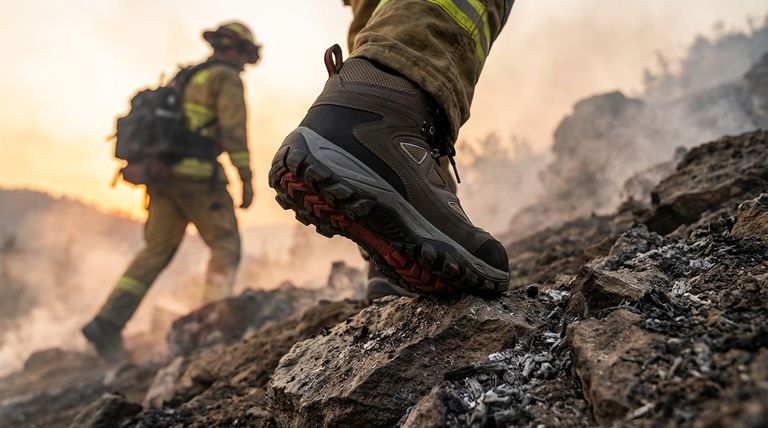
- If your primary focus is wildland or technical rescue: Emphasize lighter weight, aggressive traction for uneven terrain, and greater flexibility for climbing and hiking.
- For any role, if you have specific foot issues (e.g., flat feet, high arches): Make arch support and overall fit your absolute top priority, potentially considering custom insoles.
Ultimately, the best boot is an extension of your body that allows you to perform your job safely and effectively without a second thought.
Summary Table:
| Key Consideration | Why It Matters |
|---|---|
| Fit & Support | Prevents fatigue, distributes weight, and protects joints from long-term damage. |
| Traction | Ensures stability and prevents slips on wet, oily, or uneven surfaces. |
| Agility & Flexibility | Conserves energy and enables fast, fluid movement in critical situations. |
| Breathability | Manages moisture to keep feet dry, reducing blisters and discomfort. |
As a large-scale manufacturer, 3515 produces a comprehensive range of high-performance footwear for distributors, brand owners, and bulk clients. Our production capabilities encompass all types of professional boots, including specialized models for structural firefighting, wildland response, and technical rescue. We focus on the critical balance of protection, fit, and agility to ensure your teams are equipped for peak performance and safety.
Ready to equip your team with boots that enhance operational readiness? Contact 3515 today to discuss your specific needs and discover how our manufacturing expertise can deliver value and reliability for your business.
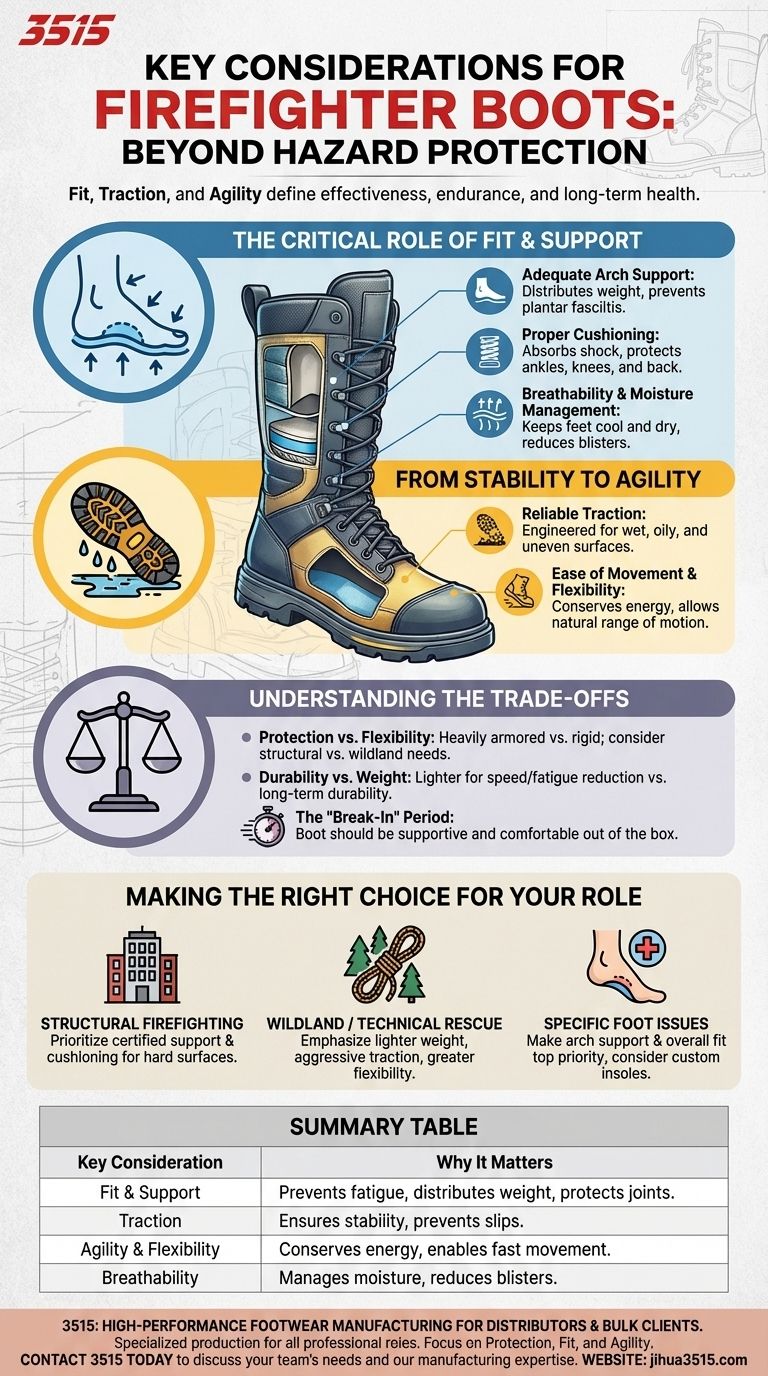
Visual Guide
Related Products
- High Performance Fire-Retardant Waterproof Safety Boots
- Premium Flame-Retardant Waterproof Safety Boots and Shoes
- Durable Military Combat Boots with Water Drainage for Wholesale & OEM
- Wholesale Lightweight Tactical Boots Custom Manufacturer for Desert & Combat Use
- High-Traction Suede Tactical Boots Wholesale & Custom Manufacturing
People Also Ask
- Why are waterproof safety boots recommended for certain work environments? Essential Protection for Wet & Hazardous Jobs
- What roles do 3D vision systems and industrial robots play in the manufacturing of fire safety boots? Smart Automation
- What is the advantage of one-piece construction in waterproof boots? Unbeatable Seamless Protection
- How does boot construction affect waterproofing? The Science Behind Truly Dry Feet
- What is a drawback of waterproof boots? The Hidden Cost of Trapped Sweat and Heat