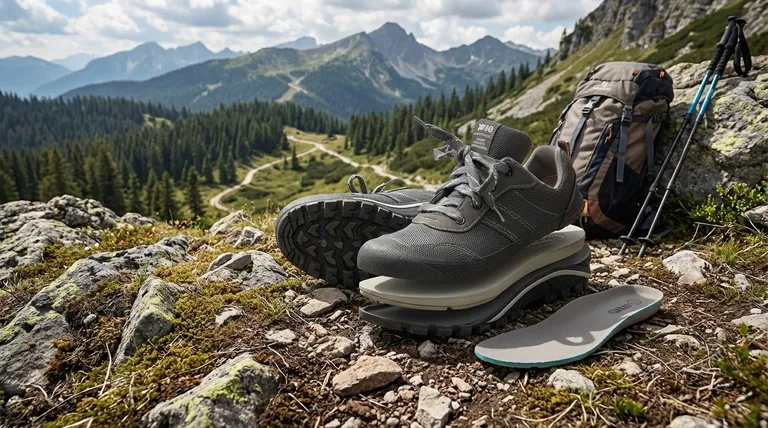
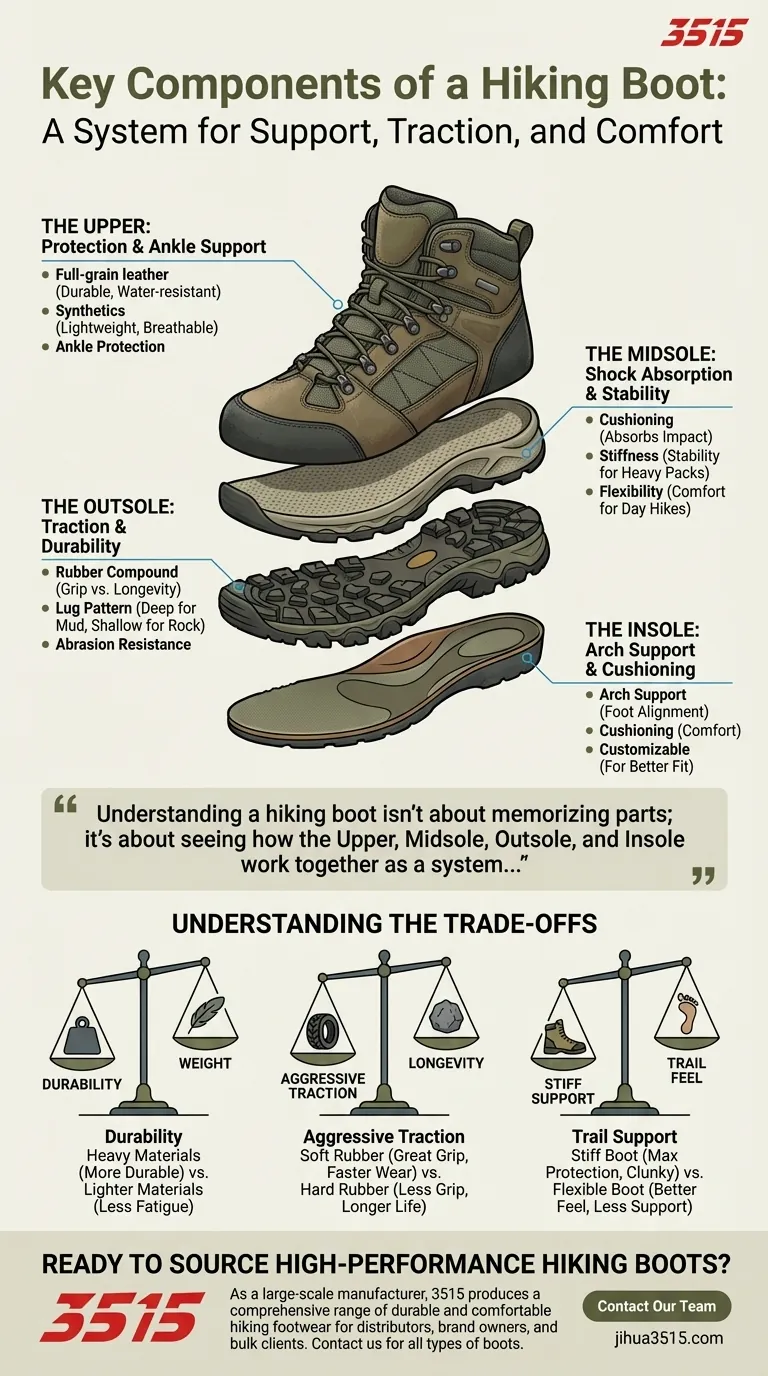
At its core, a hiking boot is a system of four distinct parts working in concert. The Upper is the main body that protects your foot, the Midsole provides crucial shock absorption, the Outsole is the rubber layer that grips the ground, and the Insole is the removable footbed that provides arch support. Each component serves a specific function, and their combined design determines the boot's performance, comfort, and ideal use.
Understanding a hiking boot isn't about memorizing parts; it's about seeing how the Upper, Midsole, Outsole, and Insole work together as a system to deliver support, traction, and comfort for a specific type of terrain.
Deconstructing the Hiking Boot System
A hiking boot is more than just footwear; it is a piece of technical equipment. To choose the right one, you must understand how each part contributes to the whole.
The Upper: Your First Line of Defense
The upper is the entire part of the boot that covers your foot. Its primary jobs are to provide protection from rocks and debris and to support your ankle.
The material of the upper is a critical decision point. Full-grain leather offers exceptional durability and water resistance but is often heavier. Synthetic fabrics are lighter, break in faster, and dry more quickly, but may offer less long-term durability.
The Midsole: The Unseen Shock Absorber
Tucked between your foot and the rubber outsole, the midsole is the boot's primary source of cushioning. It absorbs impact, protecting your joints during long treks.
While you don't see it, the midsole's stiffness is a key factor. A stiffer midsole provides more stability for carrying heavy packs on uneven ground, while a more flexible one is more comfortable for light day hikes.
The Outsole: Your Connection to the Trail
The outsole is the rubber layer that makes direct contact with the ground. Its entire purpose is to provide traction and withstand abrasion.
The effectiveness of an outsole depends on two things: its rubber compound and its lug pattern. A softer rubber grips smooth rock better but wears out faster, while a harder compound is more durable but can be slick. Deep, jagged lugs excel in mud and loose dirt, while shallow, widely-spaced lugs provide more surface contact for gripping on slab rock.
The Insole: The Foundation of Fit
Often called the footbed, the insole sits directly beneath your foot. It is a removable layer designed to provide cushioning and arch support.
While stock insoles are functional, this is the component most easily customized. Many hikers replace them with aftermarket insoles to better match their specific arch length and foot volume, dramatically improving comfort and support.
Understanding the Trade-offs
Every design choice in a hiking boot involves a trade-off. Recognizing these compromises is key to finding the boot that aligns with your specific needs.
Durability vs. Weight
Heavier materials, like full-grain leather, generally offer superior durability and support for demanding conditions. Lighter synthetic materials reduce fatigue on the trail but may not withstand the same level of abuse over time.
Aggressive Traction vs. Longevity
An outsole with soft, sticky rubber will provide phenomenal grip on challenging surfaces like wet rock. However, this same compound will wear down much faster than a harder, more durable rubber, which might offer less traction in exchange for a longer lifespan.
Stiff Support vs. Trail Feel
A stiff, rigid boot provides maximum protection and support, which is essential when carrying a heavy pack over technical terrain. The trade-off is a loss of flexibility and "trail feel," which can make the boot feel clunky on simpler, well-maintained paths.
Making the Right Choice for Your Hike
The "best" boot doesn't exist. The right boot is the one whose components are best suited to the terrain you plan to cover and the load you plan to carry.
- If your primary focus is day hiking on established trails: Look for a boot with a flexible midsole and a lightweight synthetic upper for all-day comfort.
- If your primary focus is multi-day backpacking with a heavy pack: Prioritize a stiffer boot with a durable leather or robust synthetic upper for maximum support and stability.
- If your primary focus is navigating slippery or loose terrain: Pay close attention to the outsole's lug pattern and rubber compound to ensure you have reliable traction.
By understanding these core components, you can move beyond marketing and select the precise tool for your adventure.
Summary Table:
| Component | Primary Function | Key Considerations |
|---|---|---|
| Upper | Protection & Ankle Support | Material: Full-grain leather (durable) vs. Synthetics (lightweight) |
| Midsole | Shock Absorption & Stability | Stiffness: Stiff for heavy loads vs. Flexible for comfort |
| Outsole | Traction & Durability | Rubber Compound & Lug Pattern: Grip vs. Longevity |
| Insole | Arch Support & Cushioning | Often customizable for a perfect fit |
Ready to Source High-Performance Hiking Boots?
As a large-scale manufacturer, 3515 produces a comprehensive range of durable and comfortable hiking footwear for distributors, brand owners, and bulk clients. Our production capabilities encompass all types of boots, from lightweight day hikers to heavy-duty backpacking models, ensuring you get the perfect blend of support, traction, and comfort for your target market.
Let's build the perfect boot for your customers' adventures. Contact our team today to discuss your manufacturing needs!
Visual Guide
Related Products
- Wholesale High-Traction Camo Boots - Custom Manufacturer for Brands
- Durable Rubber Sole Outdoor Shoes Wholesale & Custom Manufacturing
- Durable Spiked Camouflage Boots Wholesale & Factory Production
- Wholesale Lightweight Tactical Boots Custom Manufacturer for Desert & Combat Use
- Wholesale Waterproof Tactical Boots Custom Suede & High-Traction Soles
People Also Ask
- What are the key features of the new line of camo boots? Built for Extreme Cold & Rugged Terrain
- Are camo boots necessary for hunting success? Prioritize Performance Over Pattern
- How does the Rank Score Test identify the primary causes of premature failure in tactical and work boots? Key Insights
- What is the technical logic behind using closed-eye testing for tactical boots? Unlocking Peak Footwear Stability
- What shoes to wear for a security job? Durable, Protective Footwear for Long Shifts