
The primary benefits of wearing dedicated hiking shoes or boots for backpacking are their ability to provide critical support under heavy loads, superior traction on unpredictable terrain, and essential protection from trail hazards. Unlike standard athletic shoes, they are specifically engineered systems designed to reduce fatigue and prevent injury over long, demanding multi-day trips.
The core purpose of backpacking footwear isn't just to cover your feet—it's to create a stable, protective platform that counteracts the unique physical stresses of carrying a heavy pack over rugged ground, ensuring both safety and comfort.
The Foundation: Support and Stability
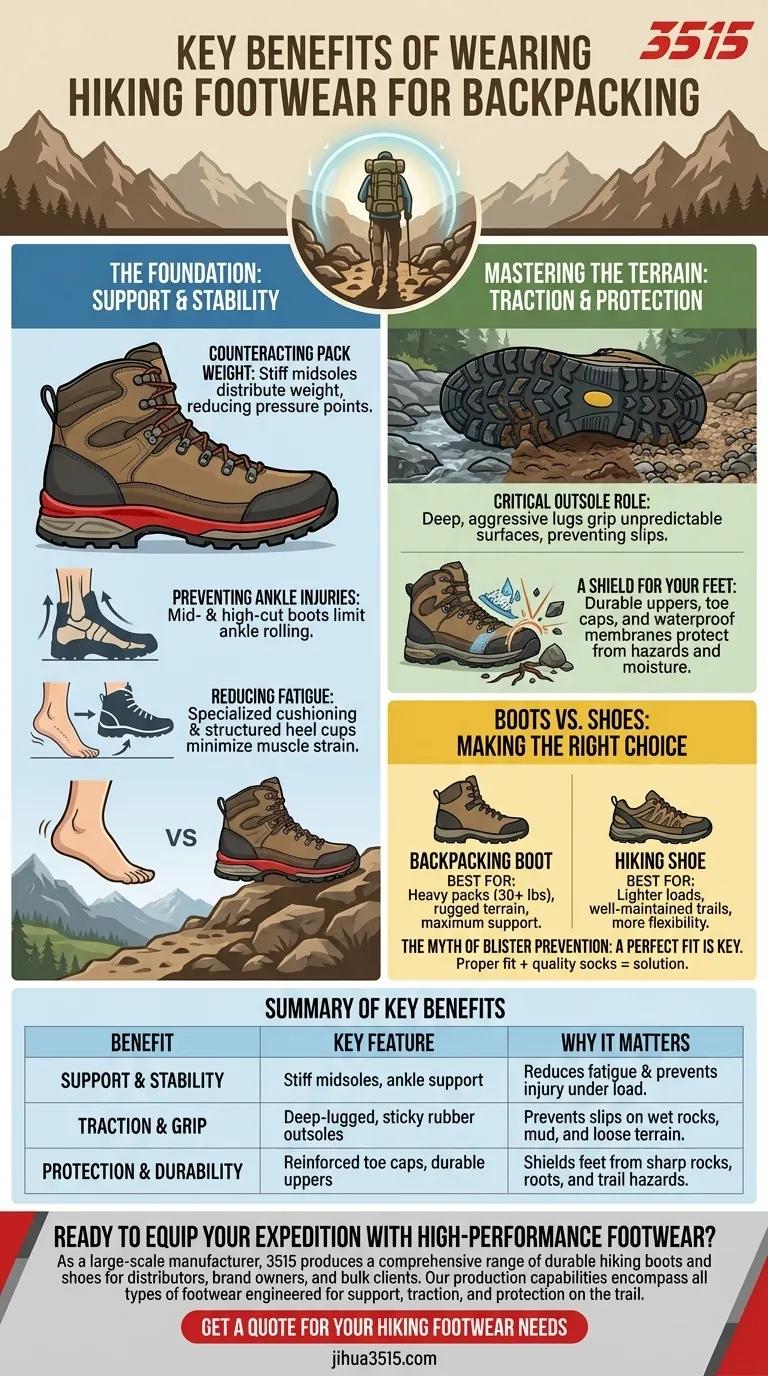
Counteracting the Weight of Your Pack
When you carry a heavy backpack, your entire body mechanics change. Hiking footwear is designed with stiffer midsoles that resist compression and torsion far better than flexible sneakers.
This stiffness helps distribute the combined weight of you and your pack more evenly across your entire foot, preventing localized pressure points and reducing stress on your arches, ankles, and knees.
Preventing Ankle Injuries
Backpacking often involves navigating uneven, rocky, or slippery surfaces where a misplaced step can easily lead to an ankle sprain.
Mid- and high-cut boots provide crucial mechanical support around the ankle joint, physically limiting its ability to roll. This feature is indispensable when carrying heavy loads that can compromise your natural balance.
Reducing Long-Term Foot Fatigue
Over the course of a multi-day hike, the cumulative impact on your feet is immense. The specialized cushioning and structured heel cups in hiking footwear are designed for endurance.
They absorb shock and hold your foot securely in place, which minimizes the micro-adjustments your muscles would otherwise have to make, significantly reducing overall fatigue.
Mastering the Terrain: Traction and Protection
The Critical Role of the Outsole
The sole of a hiking shoe is not just a piece of rubber; it's a high-traction tool. It features deep, aggressive lugs made from sticky rubber compounds.
This design provides a reliable grip on a wide variety of surfaces, from wet rock and slick mud to loose gravel, preventing the slips and falls that can be dangerous in the backcountry.
A Shield for Your Feet
Trails are full of sharp rocks, gnarled roots, and other hazards. The durable uppers and protective toe caps on hiking footwear act as a shield, preventing bruises and puncture injuries.
Furthermore, many hiking boots and shoes feature a waterproof membrane, which keeps your feet dry from external moisture like rain or stream crossings while still allowing sweat to escape.
Understanding the Trade-offs: Boots vs. Shoes
When to Choose a Backpacking Boot
A true backpacking boot, often with a mid or high cut, is the right choice when you are carrying a heavy pack (30+ lbs), traveling over rugged, off-trail terrain, or need maximum durability and ankle support for a long expedition. Their stiffness and protection are paramount.
When a Hiking Shoe is Sufficient
For shorter trips with lighter loads on well-maintained trails, a lower-cut hiking shoe can be a better option. They provide the necessary traction and protection but are lighter and more flexible than a full boot, which can feel more nimble and less fatiguing for some users.
The Myth of Blister Prevention
While hiking footwear is designed to reduce friction points, the most critical factor in preventing blisters is achieving a perfect fit. A shoe that is too loose or too tight will cause blisters regardless of its quality. Proper fit, combined with quality hiking socks, is the true solution.
Making the Right Choice for Your Trip
Your footwear choice should directly match the demands of your specific backpacking goal.
- If your primary focus is a multi-day backcountry expedition with a heavy pack: A mid or high-cut backpacking boot is essential for providing the necessary support and durability.
- If your primary focus is a weekend trip with a lighter pack on established trails: A low-cut hiking shoe offers a great balance of protection, traction, and reduced weight.
- If your primary focus is stability due to a history of ankle injuries: Opt for a mid-cut boot or shoe to gain crucial ankle support, even with a lighter load.
Ultimately, choosing the right footwear is the single most important gear decision you will make for a successful and enjoyable backpacking trip.
Summary Table:
| Benefit | Key Feature | Why It Matters for Backpacking |
|---|---|---|
| Support & Stability | Stiff midsoles, ankle support | Reduces fatigue & prevents injury under heavy pack weight |
| Traction & Grip | Deep-lugged, sticky rubber outsoles | Prevents slips on wet rocks, mud, and loose terrain |
| Protection & Durability | Reinforced toe caps, durable uppers | Shields feet from sharp rocks, roots, and trail hazards |
Ready to equip your next expedition with high-performance footwear?
As a large-scale manufacturer, 3515 produces a comprehensive range of durable hiking boots and shoes for distributors, brand owners, and bulk clients. Our production capabilities encompass all types of footwear engineered for support, traction, and protection on the trail.
Contact us today to discuss your specific needs and discover how we can provide the reliable footwear your customers depend on for their backpacking adventures.
Get a Quote for Your Hiking Footwear Needs
Visual Guide
Related Products
- Wholesale High-Traction Camo Boots - Custom Manufacturer for Brands
- Durable Rubber Sole Outdoor Shoes Wholesale & Custom Manufacturing
- Wholesale Lightweight Tactical Boots Custom Manufacturer for Desert & Combat Use
- Wholesale Waterproof Tactical Boots Custom Suede & High-Traction Soles
- Heavy-Duty Waterproof Nubuck Safety Boots Safety Shoes for Bulk Supply
People Also Ask
- What are the key features of the new line of camo boots? Built for Extreme Cold & Rugged Terrain
- Are camo boots necessary for hunting success? Prioritize Performance Over Pattern
- What is the technical logic behind using closed-eye testing for tactical boots? Unlocking Peak Footwear Stability
- How does the Rank Score Test identify the primary causes of premature failure in tactical and work boots? Key Insights
- What shoes to wear for a security job? Durable, Protective Footwear for Long Shifts



















