
Beyond basic comfort, the insole in a safety shoe is an active component engineered for stability, protection, and health. Its primary functions are to secure the foot to prevent slipping, provide crucial shock absorption, offer structural support, and manage moisture to maintain a healthy environment inside the shoe.
The insole is the direct interface between your foot and the shoe, designed to enhance stability and reduce fatigue. It works as part of a system with the midsole and outsole to deliver comprehensive protection and support.
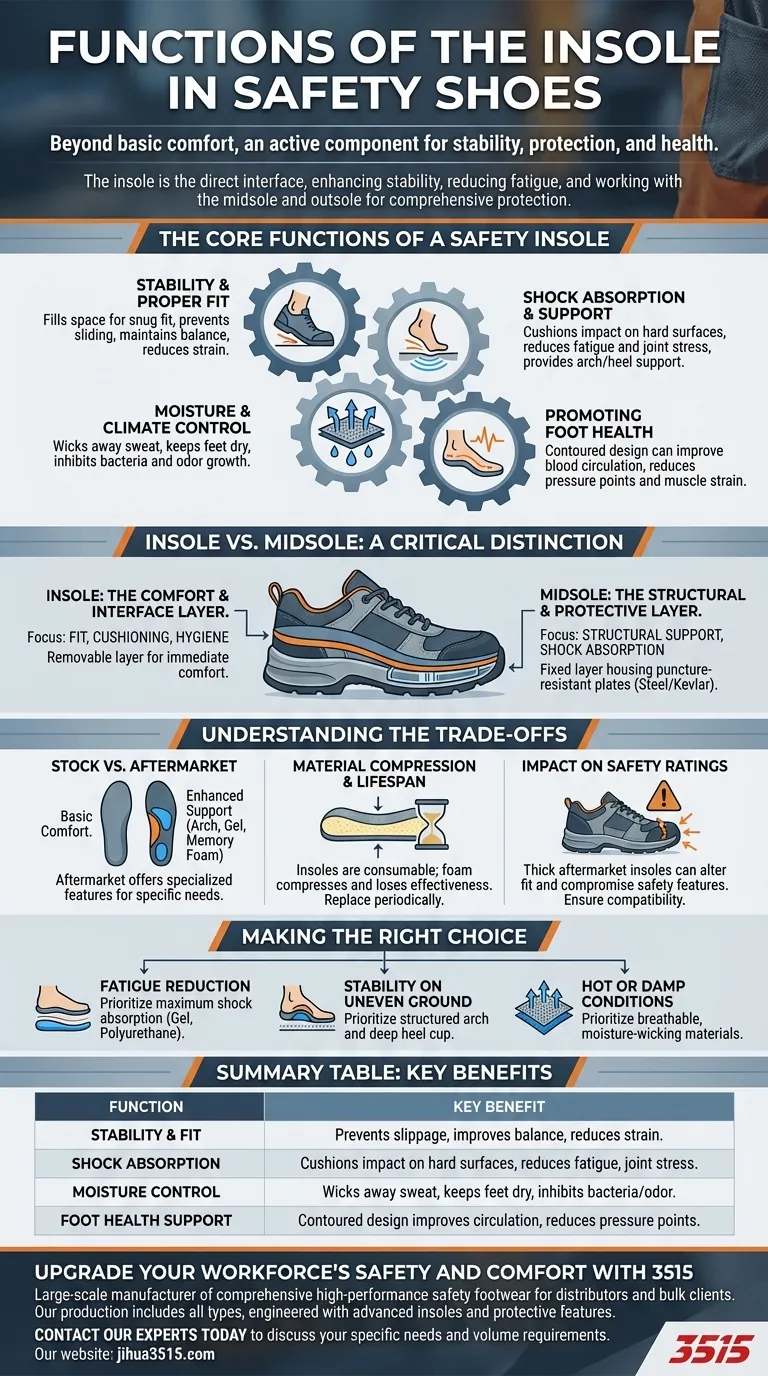
The Core Functions of a Safety Insole
While often overlooked, the insole performs several distinct jobs that are critical in demanding work environments. Each function contributes directly to your safety and well-being throughout the day.
Stability and Proper Fit
The insole's most fundamental role is to fill the space between your foot and the shoe's footbed. This creates a snug, secure fit that prevents your foot from sliding internally, which is crucial for maintaining balance and preventing unnatural walking patterns that can lead to strain.
Shock Absorption and Support
Standing for long hours on hard surfaces, like concrete, generates significant impact stress on your feet and joints. The insole provides the first layer of shock absorption, cushioning each step to reduce fatigue and prevent long-term stress-related injuries. It also helps provide stability to the arch and heel.
Moisture and Climate Control
A quality insole is made from breathable materials designed to wick moisture away from the foot. This keeps your feet drier and more comfortable, which is essential for inhibiting the growth of bacteria and fungi that can lead to odor and foot health issues.
Promoting Foot Health
Some specialized insoles are designed with contours that can help improve blood circulation. By providing targeted support, they reduce pressure points and muscle strain, contributing to overall foot health during long shifts.
Insole vs. Midsole: A Critical Distinction
It is easy to confuse the insole with the midsole, but they perform different and complementary jobs. Understanding this difference is key to appreciating the shoe's entire protective system.
The Insole: The Comfort and Interface Layer
The insole is the removable layer your foot rests on directly. Its focus is on fit, cushioning, and hygiene. It is the component most responsible for immediate, felt comfort.
The Midsole: The Structural and Protective Layer
The midsole is a fixed layer situated between the insole and the outer sole of the shoe. It provides the shoe's primary structural support and shock absorption. In safety footwear, this is also where you find critical protective features like puncture-resistant plates made of steel or Kevlar.
Understanding the Trade-offs
Not all insoles are created equal, and the one that comes with your shoe may not be the best for your specific needs.
Stock vs. Aftermarket Insoles
The insoles included with most safety shoes provide a basic level of comfort and support. However, aftermarket insoles offer specialized features, such as enhanced arch support, superior cushioning (gel or memory foam), or advanced moisture-wicking for specific foot types or work conditions.
Material Compression and Lifespan
Insole materials, particularly foam, compress over time with daily use. As they compact, they lose their ability to absorb shock and provide support effectively. An insole should be considered a consumable item that needs to be replaced periodically to maintain performance.
The Impact on Safety Ratings
Be aware that modifying your safety footwear with a thick, third-party insole could potentially alter the fit and positioning of protective features like the safety toe. Always ensure a replacement insole does not compromise the shoe's intended safety function.
Making the Right Choice for Your Goal
Selecting the right insole depends entirely on your daily tasks and personal needs.
- If your primary focus is fatigue reduction: Look for insoles with maximum shock absorption, often made from gel, polyurethane, or high-density foam.
- If your primary focus is stability on uneven ground: Prioritize insoles with a structured arch and a deep, supportive heel cup to prevent foot roll.
- If your primary focus is working in hot or damp conditions: Choose insoles made from breathable, moisture-wicking materials, often with an antimicrobial treatment.
Viewing the insole as an essential and customizable component of your safety gear is the first step toward greater comfort and protection.
Summary Table:
| Function | Key Benefit |
|---|---|
| Stability & Fit | Prevents foot slippage, improves balance and reduces strain. |
| Shock Absorption | Cushions impact on hard surfaces to reduce fatigue and joint stress. |
| Moisture Control | Wicks away sweat to keep feet dry and inhibit bacteria and odor. |
| Foot Health Support | Contoured design improves circulation and reduces pressure points. |
Upgrade Your Workforce's Safety and Comfort with 3515
As a large-scale manufacturer, 3515 produces a comprehensive range of high-performance safety footwear for distributors, brand owners, and bulk clients. Our production capabilities encompass all types of safety shoes and boots, engineered with advanced insoles and protective features to meet the demands of any work environment.
Let us help you equip your team with durable, comfortable, and compliant safety footwear. Contact our experts today to discuss your specific needs and volume requirements.
Visual Guide
Related Products
- Premium Safety Shoes with Rotating Buckle Safety Sneakers
- Premium Suede Sport Safety Shoes for Wholesale & Bulk Orders
- Advanced KPU Athletic Safety Shoe with Steel Toe Cap Anti-Slip Rotary Lacing System
- Premium Lightweight Safety Shoes for Wholesale & Bulk Orders
- Custom Safety Shoe Manufacturer for Wholesale & OEM Brands
People Also Ask
- How Specialized Footwear Impacts Side-Cutting Performance and Injury Risk Assessment
- How do I choose the best safety shoes? Match Certified Features to Your Hazards
- How do gait analysis algorithms ensure accuracy in footwear? Master Step Length Precision for Boots & Sneakers
- How do the 3R principles influence green footwear design? Master Sustainable Safety Shoe Manufacturing
- What industries have specific OSHA footwear requirements? Ensure Compliance & Protect Your Workforce















