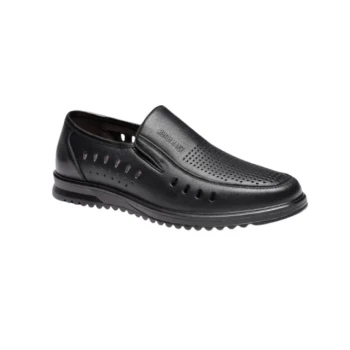
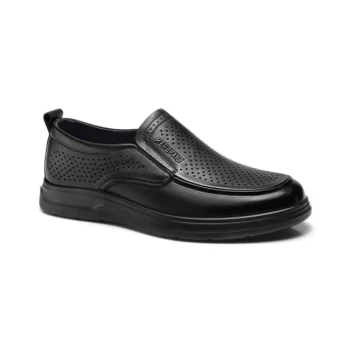
At their core, slip-on work shoes are defined by their laceless design, which prioritizes convenience and speed. Their primary feature is the ability to be put on and taken off quickly without the need for adjustment, making them highly efficient for certain work environments.
The central trade-off with slip-on work shoes is clear: you are exchanging the unparalleled convenience of a laceless design for the adjustable, secure fit of a traditional lace-up shoe. Understanding which of these factors is more critical for your specific job is the key to making the right choice.

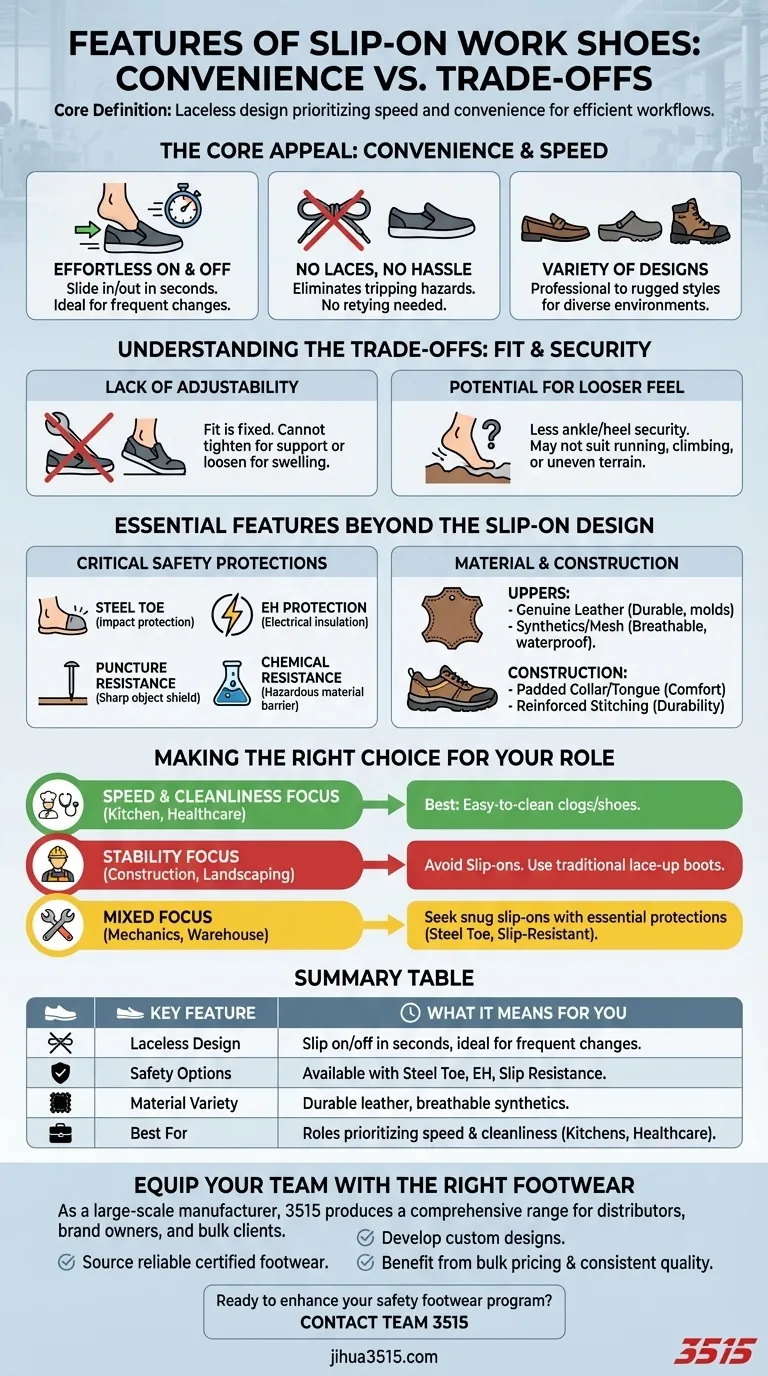
The Core Appeal: Convenience and Speed
The most significant advantage of slip-on footwear is its efficiency. This is not just a minor benefit; in many professions, it's a critical operational feature.
Effortless On and Off
The laceless construction, often featuring elastic side panels or a simple clog design, allows you to slide your foot in and out in seconds. This is ideal for roles that require frequent shoe changes.
No Laces, No Hassle
This design eliminates the risk of tripping over untied laces, a common workplace hazard. It also removes the need to stop work to retie or adjust your footwear throughout the day.
A Variety of Designs
Slip-on work shoes are not a single style. They come in many forms, from professional-looking loafers and clogs suitable for kitchens and healthcare to more rugged boot-like designs for workshops.
Understanding the Trade-offs: Fit and Security
While convenient, the slip-on design introduces limitations that are crucial to consider, particularly concerning fit and stability.
The Lack of Adjustability
The fit you get out of the box is the fit you will always have. Unlike lace-up shoes, you cannot tighten the shoe for more support during strenuous activity or loosen it to accommodate swelling.
Potential for a Looser Feel
Because they can't be cinched down, some users may feel that slip-on shoes offer less security around the ankle and heel. This can be a significant drawback in jobs that require running, climbing, or navigating uneven surfaces.
Essential Features Beyond the Slip-On Design
A shoe's laceless design is only one aspect. A true work shoe must incorporate materials and safety features appropriate for the environment.
Critical Safety Protections
Many high-quality slip-on models can be equipped with the same safety features as traditional boots.
- Steel Toe: Protects against impacts from heavy or falling objects.
- Electrical Hazard (EH) Protection: Insulates you from electrical circuits.
- Puncture Resistance: Shields the sole from sharp objects like nails.
- Chemical Resistance: Uses materials that withstand degradation from hazardous chemicals.
Material and Construction
The materials used dictate the shoe's comfort, durability, and suitability for different conditions.
- Uppers: Genuine leather offers durability and molds to your foot over time but requires maintenance. Synthetics and mesh offer breathability or waterproofing depending on the design.
- Comfort Elements: A padded collar and tongue are vital for preventing chafing and ensuring a comfortable fit around the ankle.
- Stitching: Look for reinforced stitching, which indicates a more durable construction that can withstand the rigors of a worksite.
Making the Right Choice for Your Role
Selecting the right footwear requires matching the shoe's features to your daily tasks.
- If your primary focus is speed and cleanliness (e.g., kitchen staff, healthcare workers): The convenience and easy-to-clean designs of slip-on clogs or shoes are an excellent choice.
- If your primary focus is stability on uneven ground (e.g., construction, landscaping): The lack of an adjustable, secure fit makes slip-ons less suitable; a traditional lace-up boot provides superior support.
- If your primary focus is a mix of convenience and safety (e.g., auto mechanics, warehouse personnel): Seek a slip-on model that offers a snug initial fit and includes essential protections like a steel toe and a slip-resistant outsole.
Ultimately, choosing the right work shoe means looking past a single feature to see how the entire system supports your safety and comfort on the job.
Summary Table:
| Key Feature | What It Means for You |
|---|---|
| Laceless Design | Slip on and off in seconds, ideal for frequent changes. |
| Safety Options | Available with steel toe, EH protection, and slip resistance. |
| Material Variety | Choose from durable leather, breathable synthetics, and more. |
| Best For | Roles prioritizing speed and cleanliness (e.g., kitchens, healthcare). |
Equip Your Team with the Right Footwear
As a large-scale manufacturer, 3515 produces a comprehensive range of slip-on work shoes and boots for distributors, brand owners, and bulk clients. Our production capabilities encompass all types of safety footwear, ensuring your team gets the perfect blend of convenience, protection, and durability.
We can help you:
- Source reliable footwear with the exact safety certifications you need.
- Develop custom designs tailored to your brand and workforce requirements.
- Benefit from bulk pricing and consistent quality for large-volume orders.
Ready to enhance your safety footwear program? Contact our team today to discuss your needs and request a quote.
Visual Guide
Related Products
- Customizable Slip-On Safety Shoes Direct from the Factory for Wholesale
- Wholesale Slip-On Safety Boots Manufacturer - Custom Puncture-Proof & Steel Toe
- Durable Leather Moc Toe Work Boots for Wholesale & Custom Manufacturing
- Durable Goodyear Welt Leather Work Boots for Wholesale & Private Label
- Wholesale Durable 6-Inch Work Boots | Custom & Private Label Manufacturer
People Also Ask
- What are Slip-Ons best used for? The Ultimate Guide to Effortless Casual Footwear
- What makes the Tecovas The Monterrey a good slip-on option? Unmatched Comfort & Style
- What features make slip-on shoes practical for retail workers or flight attendants? Unlock All-Day Comfort & Convenience
- What makes a safety shoe a safety shoe? Essential Protection for Hazardous Work
- What are the advantages of water-based polyurethane spray coatings for safety shoe slip resistance? Enhanced Traction