
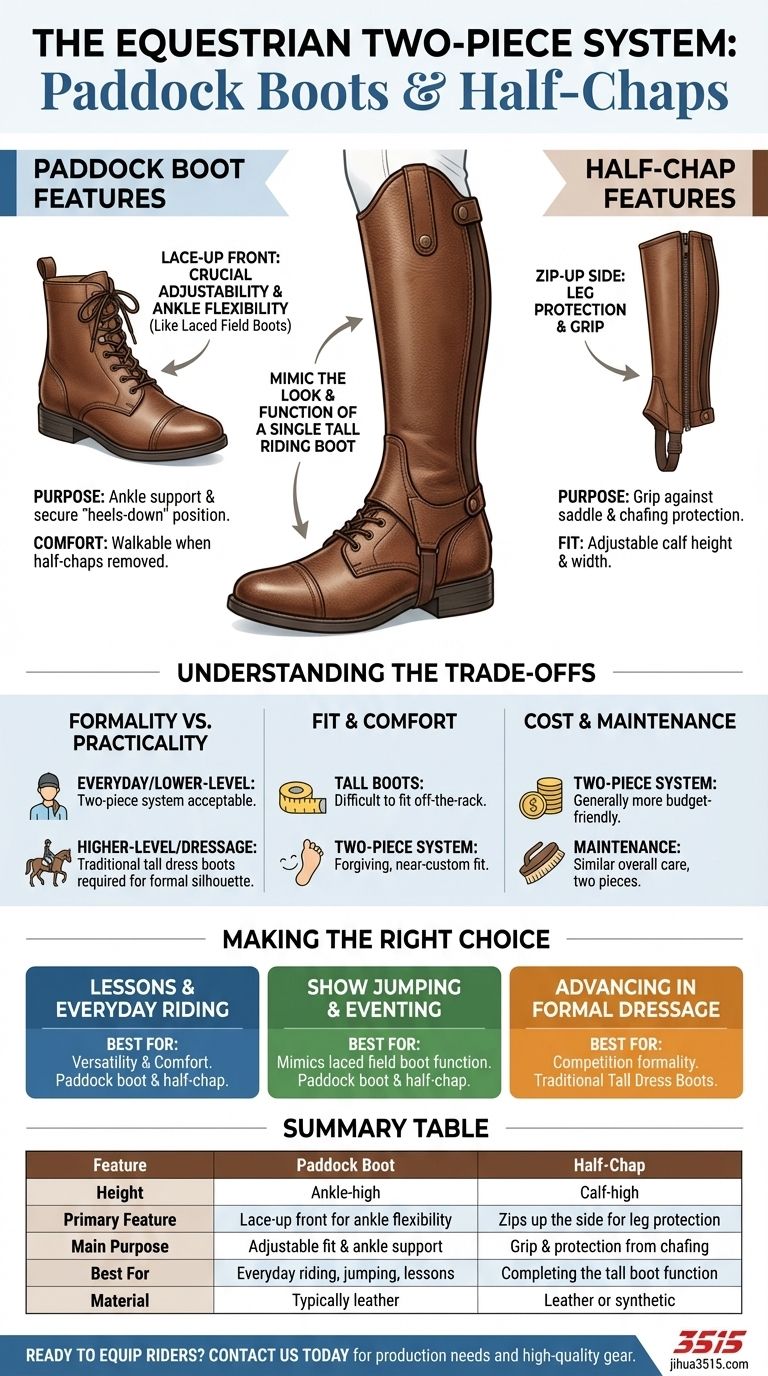
At their core, the boots typically worn with half-chaps are short, ankle-high boots known as paddock boots. Their most defining feature is a lace-up front, which provides crucial adjustability and flexibility for the rider's ankle. This combination is designed to mimic the look and function of a single tall riding boot.
The combination of a laced paddock boot and a half-chap is not just a style choice; it's a practical system designed to deliver the performance of a tall boot with superior flexibility and a more adaptable fit.
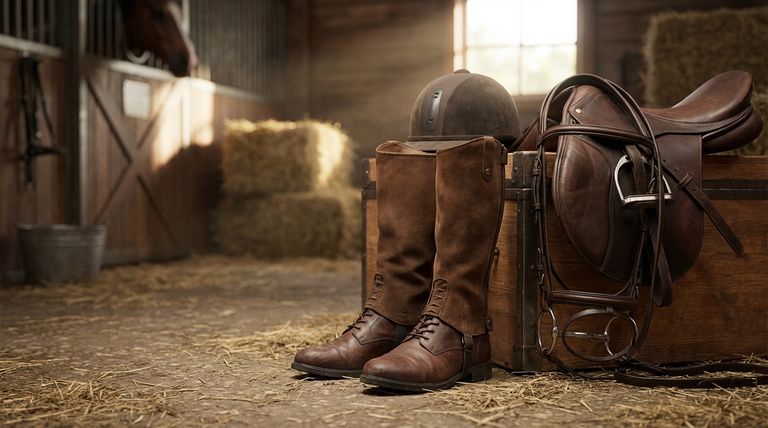
The Purpose of the Two-Piece System
Riders choose paddock boots and half-chaps for specific functional reasons. This system provides the leg protection and grip of a tall boot while offering benefits that a single boot cannot always match.
The Boot: Short and Functional
Paddock boots are ankle-height boots, typically made of leather. They are sturdy enough for barn work but primarily designed for riding.
Their short stature makes them comfortable for walking around when the half-chaps are removed, offering excellent versatility.
The Defining Feature: Laces for Ankle Flexibility
The laces at the front of the boot are its most important functional feature. They allow the rider to customize the fit around the instep and ankle.
This adjustability provides greater ankle flexibility, which is essential for maintaining a correct and secure "heels-down" position, particularly in disciplines like show jumping. The design principle is identical to that of laced field boots, a type of tall boot favored by jumpers for the same reason.
The Half-Chap: Completing the Leg
The half-chap is a leather or synthetic legging that zips up the side of the calf. It connects the top of the paddock boot to just below the rider's knee.
Its purpose is to provide grip against the saddle and protect the rider's leg from chafing, effectively creating the "shaft" of a tall boot.
Understanding the Trade-offs
While highly practical, the paddock boot and half-chap combination is not always the right choice. The decision depends on your discipline and level of competition.
Formality vs. Practicality
For everyday lessons, schooling, and lower-level competitions, this two-piece system is perfectly acceptable and widely used.
However, traditional, single-piece tall boots—especially formal dress boots—are required for higher levels of competition, particularly in disciplines like dressage, where they create a more polished and formal silhouette.
Fit and Comfort
Achieving a perfect fit with off-the-rack tall boots can be difficult, as calf and ankle measurements vary widely.
The boot and half-chap system is far more forgiving. It allows a rider to find a comfortable boot size and then select a half-chap that fits their specific calf height and width, resulting in a near-custom fit.
Cost and Maintenance
Generally, a quality pair of paddock boots and half-chaps is more budget-friendly than a comparable pair of tall boots.
While you have two separate pieces to clean and maintain, the overall care is similar. The versatility often outweighs the minor inconvenience of managing two items.
Making the Right Choice for Your Goal
Your riding discipline and ambitions should guide your decision.
- If your primary focus is lessons and everyday riding: The versatility and comfort of the paddock boot and half-chap combination are ideal.
- If your primary focus is show jumping or eventing: This system is an excellent choice, as it directly mimics the function of the preferred laced field boot.
- If your primary focus is advancing in formal dressage: Investing in a pair of well-fitted, traditional tall dress boots will be necessary for competition.
Ultimately, choosing the right footwear is about balancing function, tradition, and personal comfort to support your performance in the saddle.
Summary Table:
| Feature | Paddock Boot | Half-Chap |
|---|---|---|
| Height | Ankle-high | Calf-high |
| Primary Feature | Lace-up front for ankle flexibility | Zips up the side for leg protection |
| Main Purpose | Adjustable fit & ankle support | Grip & protection from chafing |
| Best For | Everyday riding, jumping, lessons | Completing the tall boot function |
| Material | Typically leather | Leather or synthetic |
Ready to equip riders with the perfect combination of paddock boots and half-chaps?
As a large-scale manufacturer, 3515 produces a comprehensive range of equestrian footwear for distributors, brand owners, and bulk clients. Our production capabilities encompass all types of riding boots, including durable paddock boots and perfectly matched half-chaps designed for superior performance and comfort.
Contact us today to discuss your production needs and leverage our expertise in creating high-quality riding gear that meets market demand.
Visual Guide
Related Products
- Wholesale Lightweight Tactical Boots Custom Manufacturer for Desert & Combat Use
- Wholesale Waterproof Tactical Boots Custom Suede & High-Traction Soles
- High-Traction Suede Tactical Boots Wholesale & Custom Manufacturing
- Durable Military Combat Boots with Water Drainage for Wholesale & OEM
- Wholesale High-Traction Camo Boots - Custom Manufacturer for Brands
People Also Ask
- What are the common types of combat boots? Find the Right Boot for Your Mission
- What specialized protections do tactical boots offer? Maximize Endurance with High-Performance Footwear
- How is the compatibility of polymer materials demonstrated in smart footwear? Enhancing Tactical & Training Performance
- How does additive manufacturing equipment reduce environmental risks? Sustainable Tactics for Modern Footwear Production
- What is the role of high-frequency acquisition hardware in technical skill analysis for outdoor and tactical boots?



















