At their core, paddock or jodhpur boots are short, ankle-high equestrian footwear designed for safety, support, and flexibility. Their defining features are a low, sturdy heel that prevents the foot from slipping through a stirrup and a height that covers the ankle without restricting movement.
The primary purpose of a paddock boot is to provide a safe and practical footwear option for everyday horse riding and stable work, serving as a versatile alternative to more specialized tall boots.
The Anatomy of a Paddock Boot
Paddock boots, also known as jodhpur boots, are purpose-built with specific features that cater directly to the needs of an equestrian.
Ankle-High Design
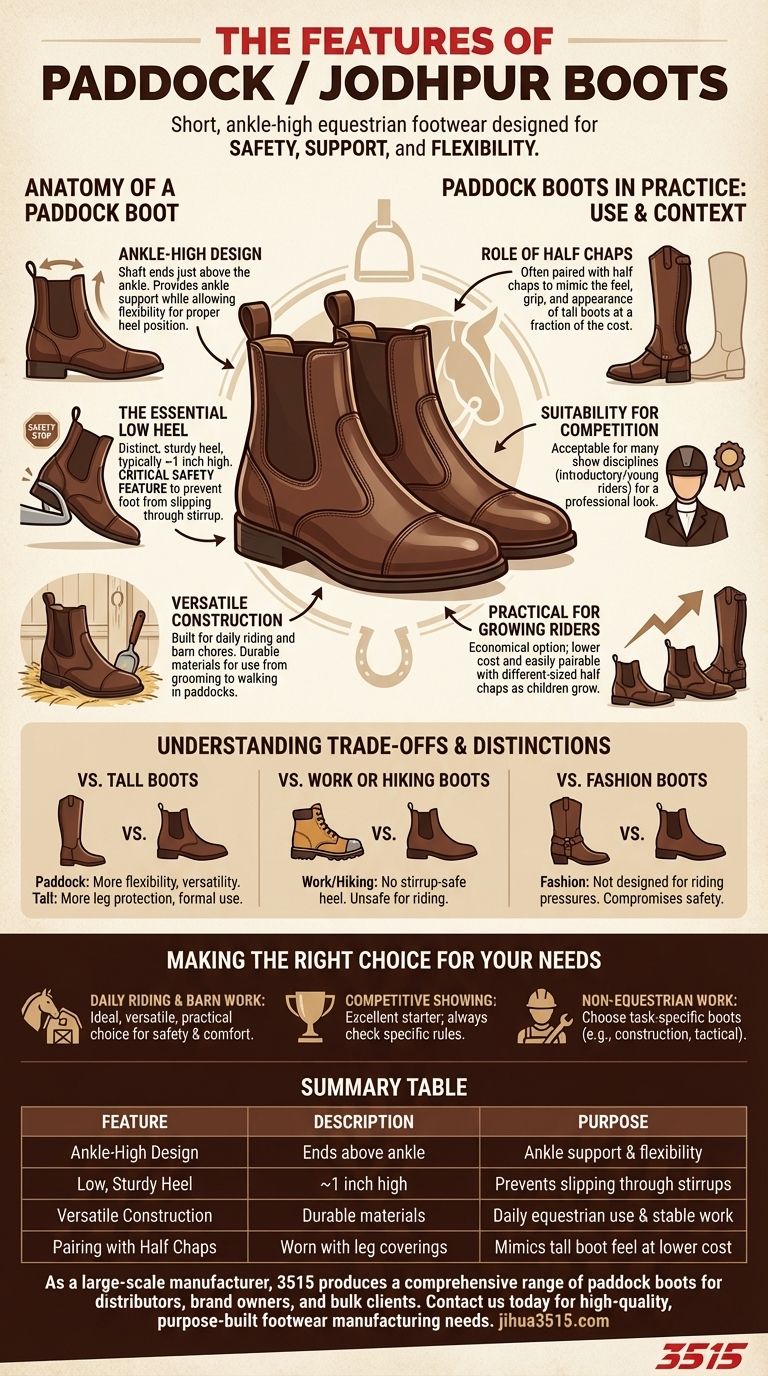
The boot's shaft is designed to end just above the ankle. This cut provides crucial support to the ankle joint while allowing the flexibility needed for proper heel position when riding.
The Essential Low Heel
Every paddock boot has a distinct, sturdy heel, typically about one inch high. This is not a stylistic choice; it's a critical safety feature designed to catch on the stirrup bar and prevent the rider's foot from sliding all the way through, which could be dangerous in a fall.
Versatile Construction
These boots are built for the rigors of both riding and barn chores. They are durable enough for daily use, from grooming a horse to walking through a paddock, making them the workhorse of equestrian footwear.
Paddock Boots in Practice: Use and Context
Understanding how paddock boots are used reveals why their design is so effective and popular within the equestrian community.
The Role of Half Chaps
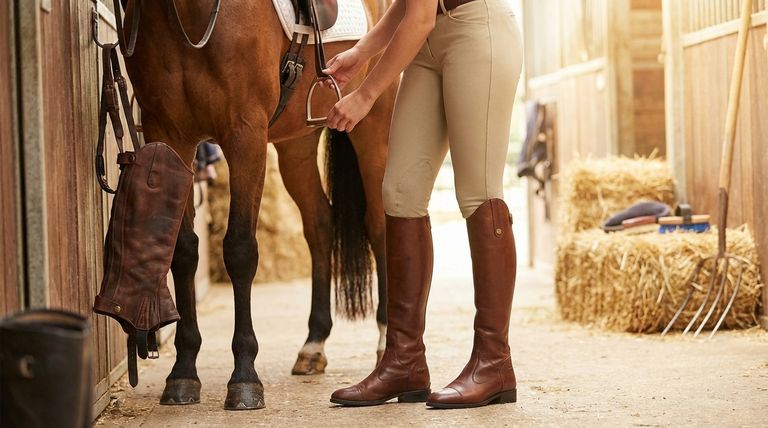
Riders frequently pair paddock boots with half chaps, which are leather or synthetic leggings that cover the lower leg from the ankle to the knee. This combination mimics the feel, grip, and appearance of a tall boot at a fraction of the cost.
Suitability for Competition
For many show disciplines, especially at introductory levels or for younger riders, a clean, sleek pair of paddock boots paired with matching half chaps is perfectly acceptable competition attire. They offer a professional look without the investment of tall boots.
A Practical Choice for Growing Riders
Paddock boots are particularly popular for children. Their lower cost and the ability to pair them with different-sized half chaps make them a more economical option for growing feet and legs compared to expensive, quickly outgrown tall boots.
Understanding the Trade-offs and Distinctions
While versatile, paddock boots are specialized. Confusing them with other types of ankle boots can lead to unsafe or uncomfortable situations.
Paddock Boots vs. Tall Boots
The primary trade-off is between versatility and formal protection. Paddock boots offer more flexibility for walking and groundwork, while tall boots provide more comprehensive leg protection and are often required for higher levels of competition.
Paddock Boots vs. Work or Hiking Boots
Work boots are designed for foot protection with features like steel toes and heavy lug soles. Hiking boots prioritize ankle support for uneven terrain. Neither has the specific heel shape required for safe stirrup placement, making them unsuitable and unsafe for riding.
Paddock Boots vs. Fashion Boots
Many fashion boots, like harness or engineer boots, may have a heel, but the sole, fit, and construction are not designed for the specific pressures of riding. Using them can compromise both rider safety and effective communication with the horse.
Making the Right Choice for Your Needs
Selecting the correct footwear is fundamental to safety and performance in any activity.
- If your primary focus is daily riding and barn work: The paddock boot is the ideal, versatile, and most practical choice for its blend of safety and comfort.
- If your primary focus is competitive showing: Paddock boots with half chaps are an excellent and affordable starting point, but always verify the specific rules for your discipline, as tall boots may be required.
- If your primary focus is non-equestrian work or recreation: Choose a boot specifically designed for that task, such as a work boot for construction or a tactical boot for patrol, as they possess the correct safety and support features.
Ultimately, choosing the right boot means matching the tool to the task, ensuring your safety and effectiveness in the saddle and on the ground.
Summary Table:
| Feature | Description | Purpose |
|---|---|---|
| Ankle-High Design | Shaft ends just above the ankle. | Provides ankle support and flexibility for riding. |
| Low, Sturdy Heel | Typically ~1 inch high. | Prevents foot from slipping through stirrups for safety. |
| Versatile Construction | Durable materials for riding and barn chores. | Built for daily equestrian use and stable work. |
| Pairing with Half Chaps | Often worn with leg coverings. | Mimics tall boot feel and grip at a lower cost. |
As a large-scale manufacturer, 3515 produces a comprehensive range of paddock boots for distributors, brand owners, and bulk clients. Our production capabilities ensure high-quality, durable footwear designed for safety and performance. Whether you need custom designs or bulk orders, we deliver footwear that meets the demands of equestrians. Contact us today to discuss your manufacturing needs and elevate your product line with reliable, purpose-built boots. Get in touch with our team now!
Visual Guide
Related Products
- Wholesale Lightweight Tactical Boots Custom Manufacturer for Desert & Combat Use
- High-Traction Suede Tactical Boots Wholesale & Custom Manufacturing
- Durable Waterproof Rain Boots | Custom Manufacturer for Wholesale & Brands
- Durable Leather Tactical Boots Wholesale & Custom Manufacturing for Brands
- Durable Mid-Cut Tactical Boots for Wholesale & Private Label
People Also Ask
- What are the common types of combat boots? Find the Right Boot for Your Mission
- What specialized protections do tactical boots offer? Maximize Endurance with High-Performance Footwear
- How does additive manufacturing equipment reduce environmental risks? Sustainable Tactics for Modern Footwear Production
- What are the main construction similarities between tactical boots and tactical sneakers? Built for Performance & Durability
- What are the different types of tactical boots available? Find the Right Boot for Your Mission