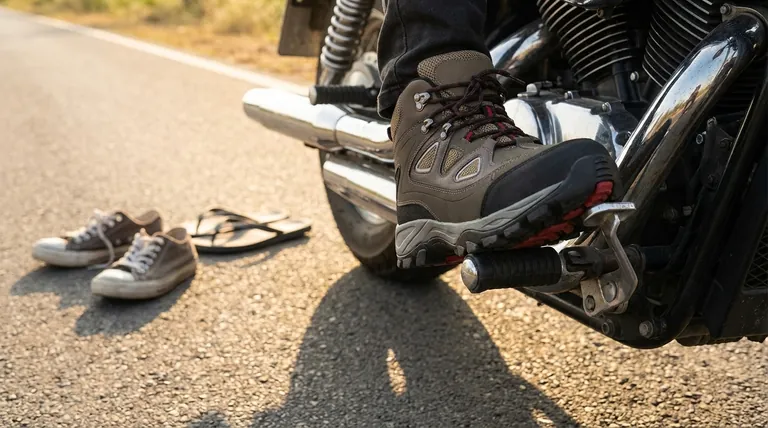
The short answer is clear: wearing flip-flops or tennis shoes while riding a motorcycle is exceptionally dangerous. This type of footwear fails to provide the three critical functions required for safe riding: impact and abrasion protection, sufficient grip on the bike’s controls and the road, and the ankle support needed to prevent serious injury.
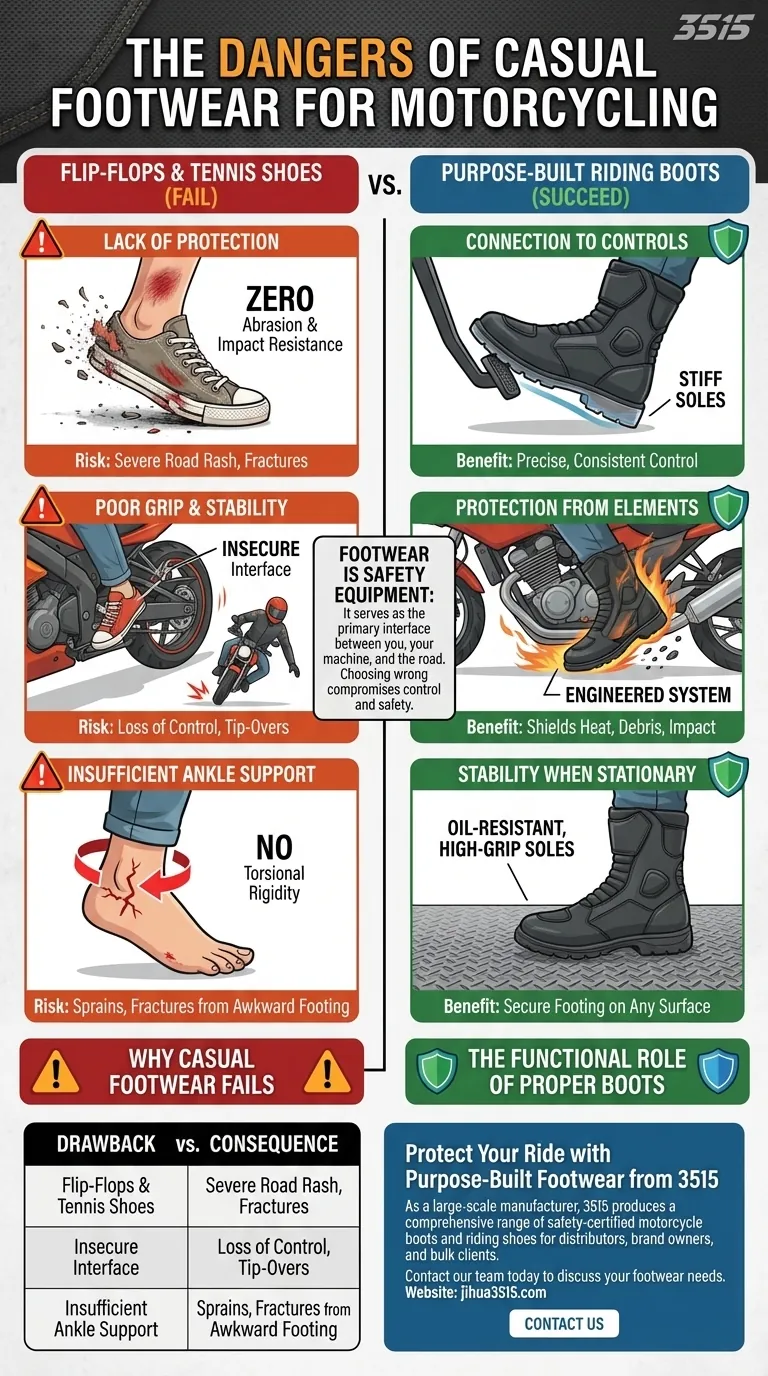
Your footwear is not just an accessory; it is a functional piece of safety equipment. It serves as the primary interface between you, your machine's controls, and the road surface, and choosing the wrong type fundamentally compromises your control and safety.
Why Casual Footwear Fails on a Motorcycle
To understand the risks, you must first appreciate the jobs your feet are doing. They operate the rear brake and gear shifter, and they support the entire weight of you and your bike at a stop. Casual shoes are simply not designed for these forces.
The Critical Lack of Protection
The most obvious failure of sneakers and flip-flops is their complete lack of protection. In even a minor, low-speed fall, your feet are highly vulnerable to impact and abrasion.
Canvas, mesh, and foam offer virtually zero resistance against asphalt. They will disintegrate almost instantly, leaving your skin, flesh, and bone exposed to the road surface. Flip-flops are barely better than being barefoot.
The Failure of Grip and Stability
Proper control of a motorcycle relies on a stable connection between your feet and the bike. The soft, flexible soles of tennis shoes and the smooth surface of flip-flops create a dangerously insecure interface.
This lack of grip can cause your foot to slip off the pegs while riding or, more commonly, slip off the brake or shifter when you need them most. It also presents a serious hazard at stoplights, where a poor grip on the pavement can easily lead to a tip-over.
Insufficient Ankle Support
Your ankles are complex joints that are not designed to support hundreds of pounds of lateral force. Standard footwear offers no torsional rigidity or support.
In a fall, or even just by putting your foot down awkwardly at a stop, an unsupported ankle can easily be twisted, sprained, or fractured. Motorcycle boots are built to resist these forces and protect the ankle from injury.
The Functional Role of Proper Riding Boots
Purpose-built motorcycle boots are designed to succeed where casual shoes fail. They are engineered as a complete system to ensure control and safety.
Connection to Your Controls
Motorcycle boots feature stiff soles that do not flex under pressure. This rigidity allows you to apply precise, consistent input to the gear shifter and rear brake without the sole bending or absorbing the force.
Protection from the Elements
Beyond a crash, your feet need protection from the motorcycle itself and the road environment. A sturdy boot shields your feet from engine heat, exhaust pipes, and debris kicked up from the road.
Stability When Stationary
The oil-resistant, high-grip soles on riding boots are designed to provide a secure footing on various surfaces. This ensures you can confidently plant your feet and support the motorcycle when you come to a stop, even on uneven or slick pavement.
Common Pitfalls to Avoid
Choosing the right footwear involves understanding common compromises and misconceptions.
The "Anything is Better Than Nothing" Fallacy
While a sneaker is technically better than a flip-flop, it still represents a significant and unnecessary risk. Skateboard shoes, canvas sneakers, and other casual footwear lack the fundamental construction needed for safe riding.
The Work Boot Compromise
Sturdy, over-the-ankle leather work boots can be a viable minimum for casual riding. They offer better abrasion resistance and ankle support than sneakers.
However, they typically lack specific safety features found in motorcycle boots, such as reinforced ankle armor, shifter pads, and impact-absorbing materials.
Not All Boots Are Created Equal
Beware of "fashion" combat boots or cheap alternatives. These often use weak materials and poor construction, providing a false sense of security while offering little genuine protection in a crash.
Making the Right Choice for Your Safety
Your choice of footwear should always be determined by an honest assessment of risk.
- If your primary focus is maximum safety: Always choose purpose-built motorcycle boots that are certified for impact and abrasion resistance.
- If you need a practical minimum for a casual ride: Sturdy, over-the-ankle leather work boots are the absolute lowest level of acceptable protection.
- If you are considering anything else: Do not ride. Footwear like sneakers, sandals, flip-flops, or fashion boots is unsuitable and exposes you to severe and preventable injury.
Ultimately, proper gear is a non-negotiable part of managing the inherent risks of motorcycling.
Summary Table:
| Drawback | Risk | Consequence |
|---|---|---|
| Lack of Protection | No abrasion/impact resistance | Severe road rash, fractures in a fall |
| Poor Grip & Stability | Foot slips off pegs/controls | Loss of control, tip-overs at stops |
| Insufficient Ankle Support | Ankle twists under bike weight | Sprains, fractures from awkward footing |
| Inadequate Sole Rigidity | Inconsistent brake/shifter input | Compromised control and reaction time |
Protect your ride with purpose-built footwear from 3515.
As a large-scale manufacturer, 3515 produces a comprehensive range of safety-certified motorcycle boots and riding shoes for distributors, brand owners, and bulk clients. Our production capabilities ensure every pair is engineered for maximum protection, grip, and ankle support.
Don't compromise on safety. Contact our team today to discuss your footwear needs and discover how 3515 can enhance rider safety for your customers.
Visual Guide
Related Products
- Advanced KPU Athletic Safety Shoe with Steel Toe Cap Anti-Slip Rotary Lacing System
- Wholesale Durable Camouflage Canvas Shoes with High-Traction Cleated Rubber Sole
- Wholesale Durable Camo Canvas Shoes with High-Traction Rubber Soles
- Premium Suede Sport Safety Shoes for Wholesale & Bulk Orders
- Premium KPU Athletic Safety Shoes for Wholesale
People Also Ask
- What are the key differences between steel toe and composite toe caps? Choose the Right Safety for Your Job
- What impact do steel toe caps have on toe skin health? Prevent Friction and Pressure in Your Safety Shoes
- What are the primary protective functions of safety shoes with steel toes in the automotive repair industry?
- What type of safety shoe is recommended for workers exposed to heavy machinery? Steel Toe Boots for Ultimate Protection
- How does defining specific friction interface models in FEA assist in predicting safety shoe toe cap failure modes?