
At its core, a cowboy boot is defined by three key features: a tall shaft, an angled heel, and a distinct toe shape. These elements are not merely stylistic; they are rooted in the practical demands of a rider on horseback, creating a piece of functional equipment that has evolved into a cultural icon.
The design of a cowboy boot tells a story about its intended purpose. By understanding the function of its shaft, heel, and sole, you can move beyond style and choose a boot perfectly suited to your specific needs, whether that's riding, working, or walking.
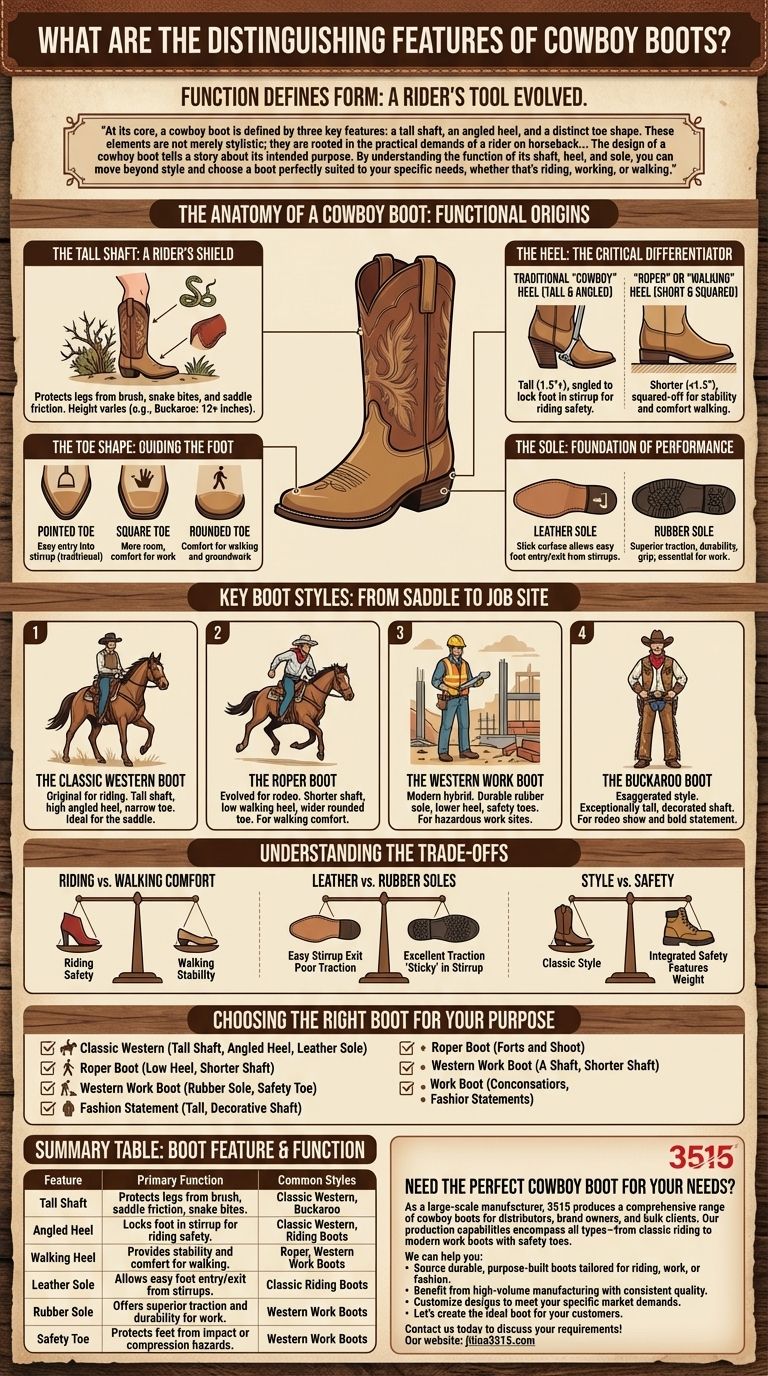
The Anatomy of a Cowboy Boot: Function Defines Form
Every classic feature of a cowboy boot originated as a solution to a problem faced by riders. The boot's silhouette is a direct result of its equestrian heritage.
The Tall Shaft: A Rider's Shield
The most visible feature is the tall shaft, which typically rises to at least mid-calf. Its primary purpose is to protect the rider's legs from thorny brush, snake bites, and the friction of the saddle and stirrup leathers.
The height varies by style. Buckaroo boots, designed for show and rodeo, feature even taller shafts (12+ inches) that provide maximum protection and a canvas for elaborate decorative stitching.
The Heel: The Most Critical Differentiator
The heel is arguably the most important functional component. There are two main types.
The traditional "cowboy" or "riding" heel is tall (often 1.5 inches or more) and distinctly angled. This design helps lock the rider's foot in place and prevents it from accidentally slipping through the stirrup, a critical safety feature.
The "roper" or "walking" heel is much shorter and squared-off, usually under 1.5 inches. This lower profile provides significantly more stability and comfort for walking, making it ideal for groundwork or everyday wear.
The Toe Shape: Guiding the Foot
Traditionally, cowboy boots featured a pointed toe. This narrow shape was designed to help a rider easily guide their foot into the stirrup.
Over time, toe shapes have diversified for comfort and style. Square toes and rounded toes offer more room for the foot to spread, making them popular choices for work boots and styles designed for walking.
The Sole: The Foundation of Performance
The sole dictates how the boot interacts with the ground and the stirrup. Classic boots feature a smooth, leather sole. This slick surface allows the foot to slide in and out of the stirrup without catching.
Modern Western work boots almost always use a rubber sole. This provides far superior traction, durability, and grip on various surfaces, a necessary feature for labor.
From the Saddle to the Job Site: Key Boot Styles
Understanding the core anatomy allows you to easily distinguish between the major categories of Western boots. Each style is a unique combination of features tailored for a specific task.
The Classic Western Boot
This is the original design for horseback riding. It combines a tall shaft, a high angled heel, and a relatively narrow toe to create the ideal tool for a person in the saddle.
The Roper Boot
The Roper evolved from the needs of rodeo cowboys who had to quickly dismount, rope a calf, and run on foot. It features a shorter shaft, a low "walking" heel, and often a wider, rounded toe for greater comfort and agility.
The Western Work Boot
This is a modern hybrid that blends classic Western style with the demands of a hazardous job site. It features a durable rubber sole, a lower heel for stability, and often includes integrated safety toes (steel, composite, or alloy) for protection.
The Buckaroo Boot
The Buckaroo is the most expressive and dramatic style. It is an exaggerated version of the classic riding boot, with an exceptionally tall and highly decorated shaft designed for both rodeo protection and making a bold statement.
Understanding the Trade-offs
Choosing a cowboy boot involves balancing its traditional design features against modern comfort and safety needs. No single boot is perfect for every situation.
Riding vs. Walking Comfort
There is a direct trade-off between a boot built for the stirrup and one built for the pavement. The high, angled heel of a classic boot is a safety tool for riding but can become uncomfortable during long periods of walking. Conversely, a Roper's low, flat heel is stable for walking but offers less security in the stirrup.
Leather vs. Rubber Soles
A slick leather sole is essential for quickly entering and exiting a stirrup without snagging. However, it offers very poor traction on wet or smooth surfaces. A rubber sole provides excellent grip for work but can be "sticky" in a stirrup, posing a potential safety issue for some riders.
Style vs. Safety
Western work boots successfully integrate critical safety features like reinforced toes and puncture-resistant soles. However, these additions invariably add weight and can create a bulkier silhouette compared to a sleek, traditional leather boot.
Choosing the Right Boot for Your Purpose
By focusing on your primary activity, you can easily select the boot with the right features to serve you best.
- If your primary focus is horseback riding: You need a Classic Western boot with a tall shaft, a slick leather sole, and a high, angled heel for safety in the stirrup.
- If your primary focus is all-day walking comfort and versatility: A Roper boot, with its low walking heel and shorter shaft, is the ideal choice.
- If your primary focus is manual labor or job site safety: A Western Work boot with a rubber sole and a certified safety toe is non-negotiable.
- If your primary focus is making a bold fashion statement: The tall, decorative shaft of a Buckaroo boot offers the most dramatic and eye-catching style.
Understanding these core features transforms you from a casual buyer into an informed owner who can select the perfect boot for any task.
Summary Table:
| Boot Feature | Primary Function | Common Styles |
|---|---|---|
| Tall Shaft | Protects legs from brush, saddle friction, and snake bites. | Classic Western, Buckaroo |
| Angled Heel | Locks foot in stirrup for riding safety. | Classic Western, Riding Boots |
| Walking Heel | Provides stability and comfort for walking. | Roper, Western Work Boots |
| Leather Sole | Allows easy foot entry/exit from stirrups. | Classic Riding Boots |
| Rubber Sole | Offers superior traction and durability for work. | Western Work Boots |
| Safety Toe | Protects feet from impact or compression hazards. | Western Work Boots |
Need the Perfect Cowboy Boot for Your Needs?
As a large-scale manufacturer, 3515 produces a comprehensive range of cowboy boots for distributors, brand owners, and bulk clients. Our production capabilities encompass all types of boots—from classic riding styles to modern work boots with safety toes.
We can help you:
- Source durable, purpose-built boots tailored for riding, work, or fashion.
- Benefit from high-volume manufacturing with consistent quality.
- Customize designs to meet your specific market demands.
Let’s create the ideal boot for your customers. Contact us today to discuss your requirements!
Visual Guide
Related Products
- High-Traction Suede Tactical Boots Wholesale & Custom Manufacturing
- Wholesale High-Traction Camo Boots - Custom Manufacturer for Brands
- Wholesale Lightweight Tactical Boots Custom Manufacturer for Desert & Combat Use
- Durable Leather Tactical Boots Wholesale & Custom Manufacturing for Brands
- Wholesale Durable Mid-Cut Tactical Boots for Custom & Private Label Brands
People Also Ask
- Why is sequential analysis utilized to evaluate tactical boots? Master Dynamic Boot Development and Ergonomic Performance
- How does the material of tactical boots affect their performance? Choose the Right Material for Your Mission
- How do tactical boots differ from regular boots? Performance, Durability & Design Explained
- How do military uniforms and tactical boots impact the prediction of thermal risk? Essential Safety Insights
- What are the benefits of integrating FES and sEMG into tactical boots? Safety, Reliability & Field-Ready Performance


















