
While built for extreme durability, military boots present several distinct disadvantages for hiking. Compared to their modern counterparts, they are often significantly heavier, less breathable, and much stiffer, which can lead to fatigue, discomfort, and a higher risk of blisters over long distances. They also typically require a lengthy and unforgiving break-in period.
The central issue is one of design philosophy: military boots are engineered for maximum durability and foot protection in combat environments, while dedicated hiking boots are engineered for comfort, support, and energy efficiency during long-duration trekking.
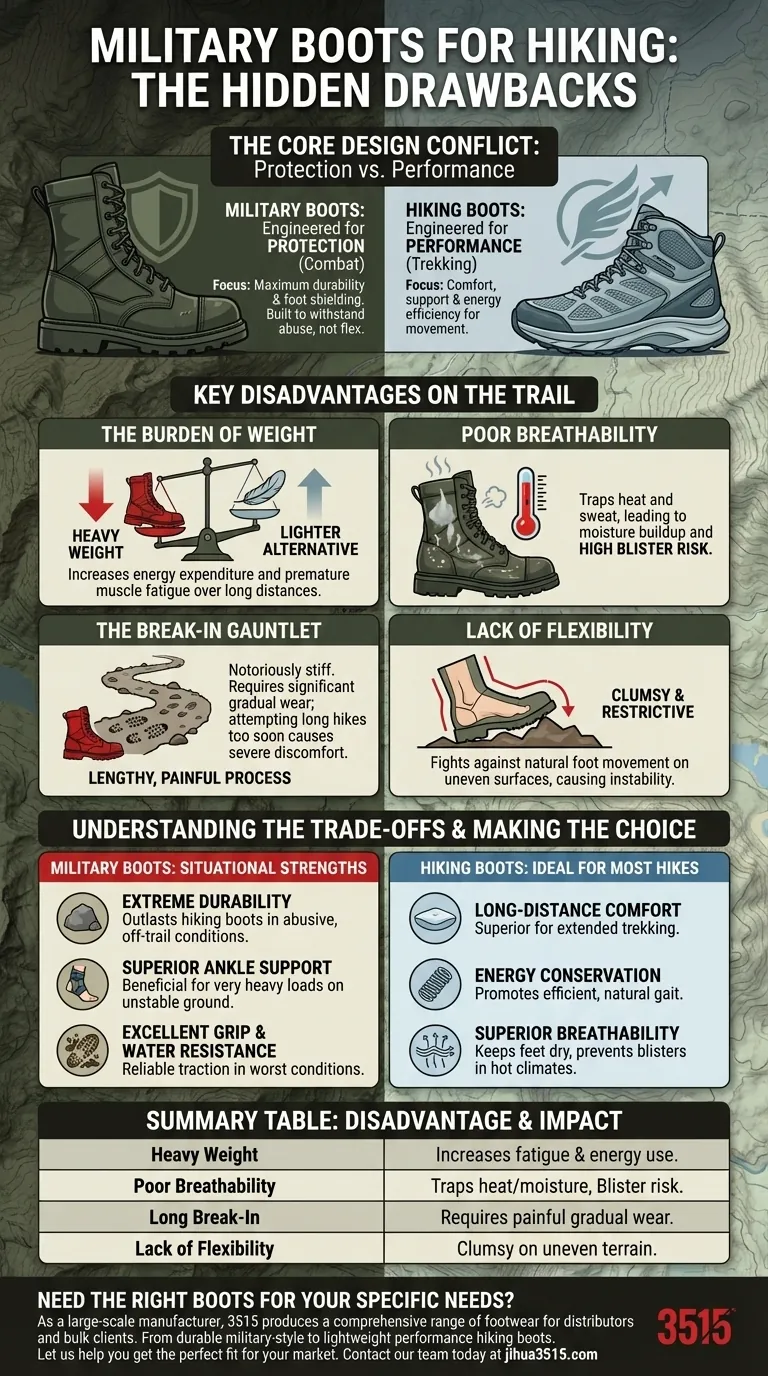
The Core Design Conflict: Protection vs. Performance
The fundamental differences between military and hiking boots stem from their intended purposes. Understanding this context is key to choosing the right footwear.
Engineered for a Different Mission
Military boots are a piece of protective equipment. Their design prioritizes shielding the foot from impacts, punctures, and harsh conditions above all else.
This means construction focuses on thick leather, reinforced toe boxes, and stiff soles designed to withstand abuse, not necessarily to flex naturally with the foot over miles of trail.
Hiking Boots: Engineered for Movement
Modern hiking boots are performance-oriented tools. They are specifically designed to support the foot during the repetitive motion of walking over varied terrain for extended periods.
This results in the use of lighter materials, strategic cushioning, and soles designed with a "rocker" shape to promote an efficient, natural gait and conserve the hiker's energy.
Key Disadvantages on the Trail
When a military boot's design is applied to a recreational hiking scenario, several drawbacks become immediately apparent.
The Burden of Weight
A few extra ounces per boot may seem trivial, but this weight is lifted with every single step.
Over a multi-mile hike consisting of thousands of steps, this additional weight translates directly into increased energy expenditure and premature muscle fatigue.
The Problem of Breathability
The thick, durable materials used in many military boots, especially older leather designs, do not breathe well.
In warm or strenuous conditions, this traps heat and sweat, leading to moisture buildup. Wet feet are the primary cause of friction blisters, a hiker's worst enemy.
The Break-In Gauntlet
Many military-style boots, particularly those made of full-grain leather, are notoriously stiff out of the box.
They require a significant "break-in" period of gradual wear to conform to your feet. Attempting a long hike before they are properly broken in is a common and painful mistake that often results in severe blisters.
A Lack of Flexibility
While stiffness provides excellent ankle support on flat surfaces, it can be a hindrance on the trail.
Hiking often requires your ankle to flex as you navigate rocks, roots, and inclines. A boot that is too rigid can feel clumsy and fight against the natural movement of your foot, causing discomfort and instability.
Understanding the Trade-offs
Military boots are not inherently "bad," but their strengths are highly situational and come with clear compromises for the average hiker.
When Durability is Paramount
There is no question that a quality military boot is exceptionally tough. It will outlast many lighter hiking boots when subjected to extreme abuse.
For rugged, off-trail bushwhacking or travel through exceptionally abrasive terrain, this durability can be a significant advantage.
Superior Ankle Support
The high, stiff construction of military boots offers a level of ankle support that can be beneficial for preventing sprains, especially for users carrying very heavy packs over unstable ground.
Excellent Grip and Water Resistance
Military boots are designed for performance in the worst conditions. They typically feature aggressive outsoles that provide reliable traction in mud, snow, and loose scree, along with robust water resistance.
Making the Right Choice for Your Hike
To select the appropriate footwear, you must first define the primary demand of your intended activity.
- If your primary focus is long-distance comfort and energy conservation: A dedicated, modern hiking boot is almost always the superior choice.
- If your primary focus is maximum durability and foot protection for rugged, off-trail use: A properly broken-in military boot can be a viable, albeit heavy, option.
- If you hike primarily in hot or temperate climates: Prioritize the superior breathability of a modern hiking boot to keep your feet dry and prevent blisters.
Ultimately, selecting the right footwear means matching the tool to the specific demands of your trail.
Summary Table:
| Disadvantage | Impact on Hiking |
|---|---|
| Heavy Weight | Increases fatigue and energy expenditure over long distances. |
| Poor Breathability | Traps heat and moisture, leading to blisters. |
| Long Break-In Period | Requires gradual wear to avoid pain and blisters. |
| Lack of Flexibility | Can feel clumsy and fight natural foot movement on uneven terrain. |
Need the right boots for your specific needs? As a large-scale manufacturer, 3515 produces a comprehensive range of footwear for distributors, brand owners, and bulk clients. Whether you need durable military-style boots or lightweight, performance-driven hiking boots, our production capabilities encompass all types of shoes and boots. Let us help you get the perfect fit for your market. Contact our team today to discuss your requirements!
Visual Guide
Related Products
- Durable Military Combat Boots with Water Drainage for Wholesale & OEM
- High-Traction Suede Tactical Boots Wholesale & Custom Manufacturing
- Durable High-Ankle Tactical Boots for Wholesale & Custom Manufacturing
- Durable Mid-Cut Tactical Boots for Wholesale & Private Label
- Wholesale Waterproof Tactical Boots Custom Suede & High-Traction Soles
People Also Ask
- Why must gait validation for military applications be conducted in combat boots? Ensure Data Accuracy for Soldiers
- What are the common types of combat boots? Find the Right Boot for Your Mission
- What factors should be considered when choosing military boots for hiking? Durability vs. Weight for Your Terrain
- What are the key considerations when choosing military boots? Prioritize Compliance, Environment & Fit
- How should the midfoot and heel fit in military boots? Achieve a Snug, Secure Fit for Blister Prevention



















