
While an excellent alternative to leather, the primary disadvantages of microfibre in safety shoes are its comparatively lower breathability and the risk of discoloration in lower-quality variants when exposed to sunlight. As a synthetic material, it does not possess the natural pores of genuine leather, which can lead to increased heat and moisture retention inside the shoe during prolonged wear.
The core trade-off with microfibre is clear: you gain exceptional water resistance and ease of maintenance but sacrifice the natural breathability inherent to genuine leather. The choice depends entirely on your work environment and priorities.
Deconstructing Microfibre's Limitations
Microfibre is an engineered material, a form of imitation leather made from tightly woven synthetic fibres. While this construction provides many benefits, it also creates specific drawbacks you must understand before making a choice.
The Breathability Challenge
As a non-porous synthetic material, microfibre's structure does not naturally allow for air exchange. This is its most significant functional disadvantage compared to high-quality leather.
This lack of airflow can trap heat and sweat within the shoe, especially in warm environments or during physically demanding tasks. Over time, this may lead to discomfort and the development of odours.
Risk of Material Discoloration
A known issue, particularly with lower-quality microfibre, is its susceptibility to discoloration.
Prolonged and direct exposure to UV radiation from sunlight can cause the material's colour to fade or change. This is primarily an aesthetic concern but reflects the quality of the material used.
The "Feel" and Aging Process
While modern microfibres are soft and comfortable, they do not "break in" or age in the same way as genuine leather.
Leather develops a unique patina and molds to the wearer's foot over time. Microfibre maintains a more consistent feel and appearance, which some users may perceive as less premium or personalized.
Understanding the Trade-offs: Microfibre vs. Leather
Neither material is universally superior. The right choice comes from weighing their inherent strengths and weaknesses against the demands of your job.
Maintenance and Cleaning
Microfibre is superior in this regard. Its smooth, non-porous surface is highly resistant to liquids and easy to wipe clean with simple soap and water.
Leather is demanding. It is a natural skin that can dry out, crack, or stain. It requires regular cleaning and conditioning to maintain its flexibility and protective qualities.
Resistance to Elements
Microfibre offers excellent resistance to water and many common chemicals, making it ideal for wet or messy work environments.
Leather is naturally absorbent. While it can be treated for water resistance, it is far more susceptible to saturation and staining, which can degrade the material over time.
Durability and Wear
High-quality microfibre is very durable and resistant to abrasion and scuffs. Its synthetic nature ensures consistency.
Leather is also extremely durable but can be prone to cuts and gouges. Its primary advantage is its potential longevity and ability to be repaired and restored with proper care.
Making the Right Choice for Your Work Environment
Your daily tasks and environment are the ultimate guide to selecting the right material for your safety footwear.
- If your primary focus is working in wet or messy conditions: Microfibre is the logical choice for its superior water resistance and effortless cleaning.
- If your primary focus is all-day comfort in a hot, dry climate: Premium, breathable leather may provide better heat and moisture management.
- If your primary focus is balancing durability with minimal maintenance: A high-quality microfibre shoe offers a robust and practical solution that doesn't require conditioning.
Ultimately, choosing the right material is about aligning the tool's properties with the specific demands of the job.
Summary Table:
| Disadvantage | Key Detail |
|---|---|
| Breathability | Lower than leather; can trap heat and moisture. |
| UV Discoloration | Lower-quality variants may fade in sunlight. |
| Aging Process | Does not develop a patina like leather. |
| Best For | Wet environments where easy cleaning is a priority. |
Need help selecting the perfect safety footwear for your team?
As a large-scale manufacturer, 3515 produces a comprehensive range of footwear for distributors, brand owners, and bulk clients. Whether your priority is the water resistance of microfibre or the breathability of premium leather, we have the production capabilities and expertise to deliver the right safety solution for your specific work environment.
Contact our experts today for a consultation and let us help you equip your workforce with optimal safety and comfort.
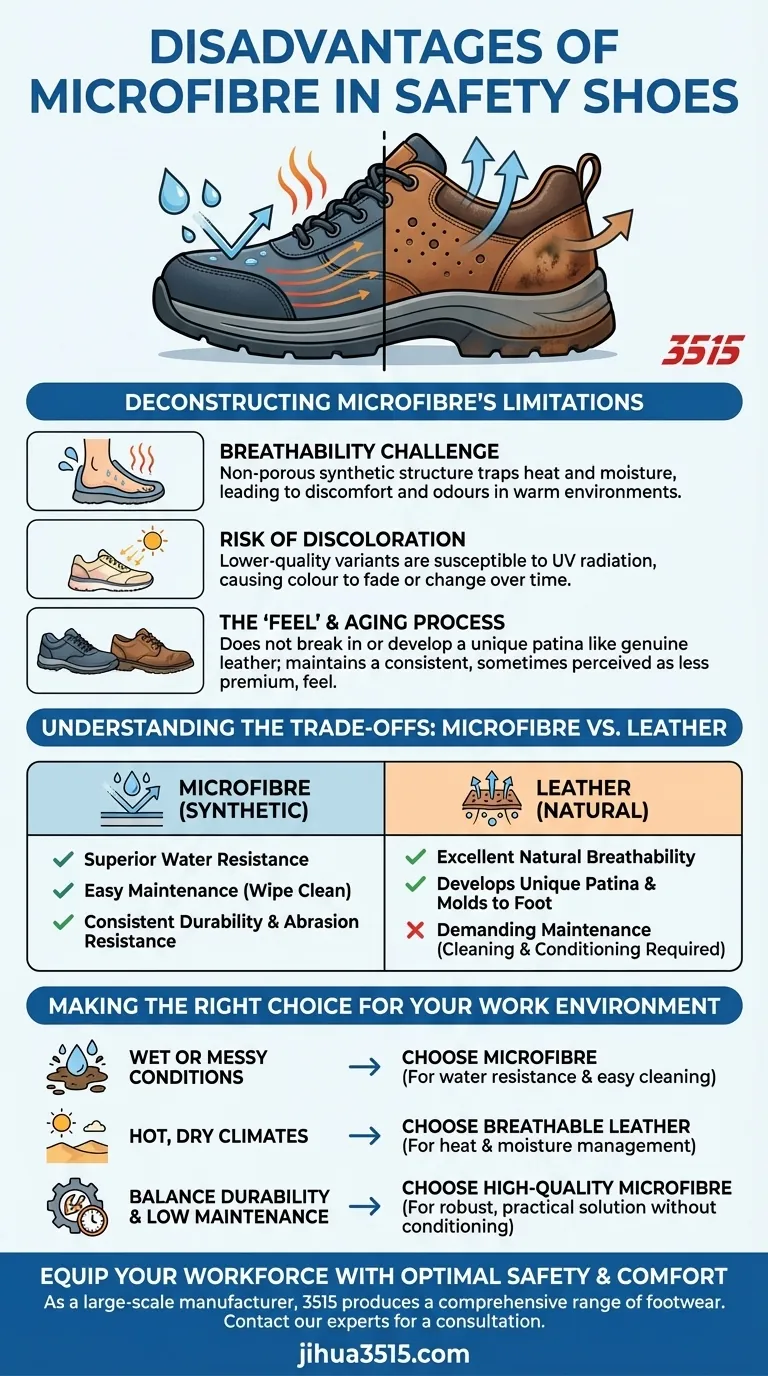
Visual Guide
Related Products
- Premium KPU Athletic Safety Shoes for Wholesale
- Premium Lightweight Safety Shoes for Wholesale & Bulk Orders
- Premium Suede Sport Safety Shoes for Wholesale & Bulk Orders
- Premium Safety Shoes with Rotating Buckle Safety Sneakers
- Premium Wholesale Tactical Style Safety Shoes Boots with Quick Lacing
People Also Ask
- What is a recommended alternative to using hairspray for slip resistance? Ditch Unreliable Hacks for Real Safety
- How is the absence of PPE (safety shoes & helmets) categorized in construction motion data labeling? Unlock Real-Time Safety Insights!
- What workplace hazards indicate the need for safety shoes? Identify risks to protect your workforce.
- What role does blockchain play in footwear supply chain transparency? Enhance Safety Shoe Traceability and Verification
- What role do specialized safety shoes play in preventing falls? Engineering Stability in Industrial Environments



















