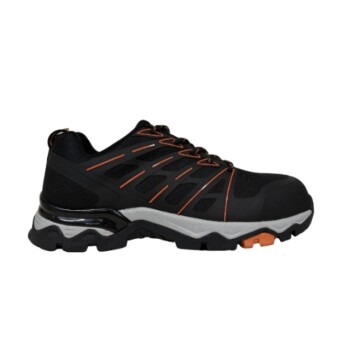
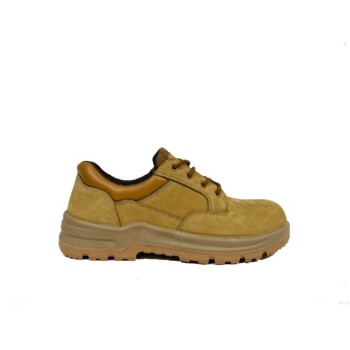
While "safety shoes" is the correct technical term, they are most commonly known in everyday language as steel-toe boots or simply work boots. These general names, however, only scratch the surface of how protective footwear is categorized and selected for specific professional environments.
The specific name for a safety shoe is less important than its function. True differentiation comes from its physical style (like a boot or a clog) and its official safety classification (such as S1 or S3), which define its suitability for a particular workplace hazard.
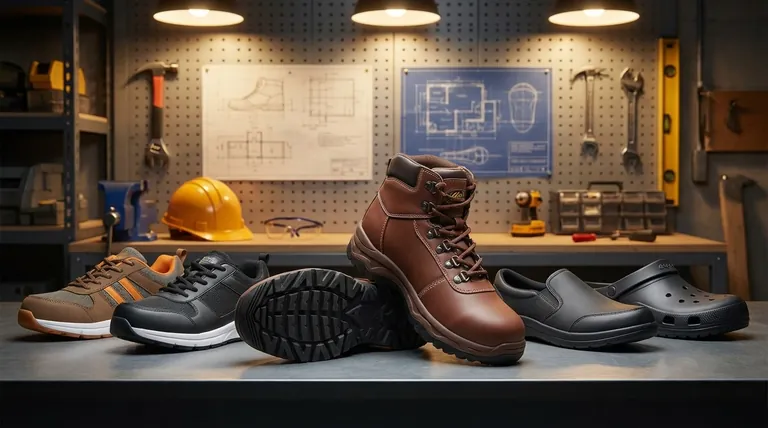
Beyond a Name: The Real Categories of Protective Footwear
Relying on generic terms like "work boots" can lead to selecting the wrong type of protection. The key is to understand the two primary ways these shoes are distinguished: by their physical form and their certified safety rating.
Differentiation by Style
The design or style of a safety shoe is tailored to the physical demands of a job. Each form offers a distinct advantage for a specific type of work environment.
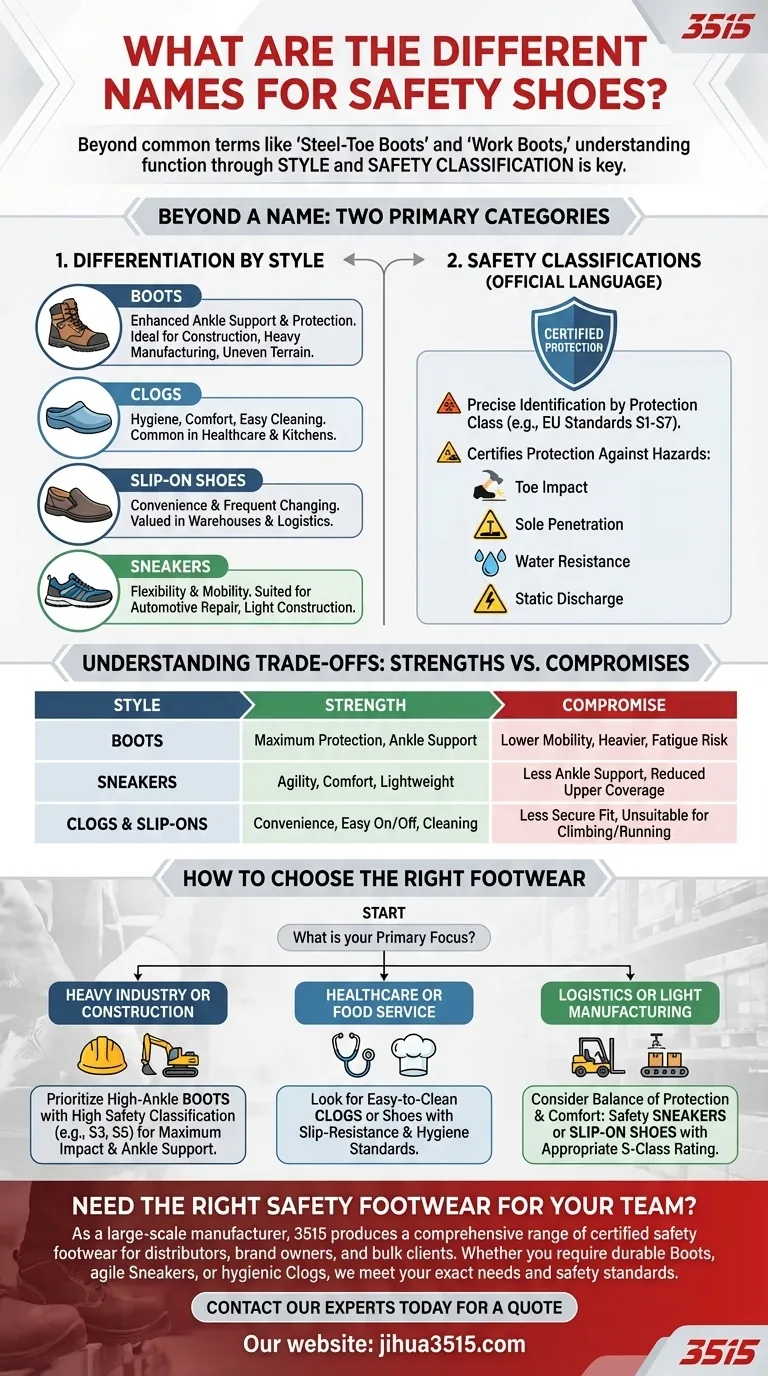
- Boots: This classic style provides enhanced ankle support, making it ideal for construction, heavy manufacturing, and work on uneven terrain.
- Clogs: Often used in healthcare and kitchens, clogs are designed for hygiene, comfort during long periods of standing, and ease of cleaning.
- Slip-on Shoes: Valued for convenience, these are common in warehouses and logistics where workers may need to change shoes frequently.
- Sneakers: This style provides greater flexibility and mobility, suiting roles in automotive repair or light construction where agility is key.
The Official Language: Safety Classifications
The most precise way to identify a safety shoe is by its official protection class. European standards, for example, use codes like S1 through S7 to certify the specific protective features a shoe offers.
These classifications definitively state what hazards a shoe protects against, such as toe impact, sole penetration, water resistance, or static discharge. This is the language that safety professionals use.
Understanding the Trade-offs of Each Style
Choosing one style of safety footwear often means compromising on a feature offered by another. Understanding these inherent trade-offs is critical to making an informed decision.
Boots: Maximum Protection, Lower Mobility
High-cut safety boots offer the best protection against impact and ankle sprains. However, their robust construction can make them heavier and less flexible, potentially causing fatigue over a long shift.
Sneakers: Agility at the Cost of Coverage
Safety sneakers provide excellent freedom of movement and are often lighter and more comfortable than boots. This agility comes at the cost of ankle support and protection from hazards above the foot.
Clogs and Slip-ons: Convenience vs. Secure Fit
The primary benefit of clogs and slip-on styles is how easy they are to put on, take off, and clean. Their downside is a less secure fit, which makes them unsuitable for running, climbing, or navigating uneven surfaces.
How to Choose the Right Footwear for Your Goal
Selecting the correct footwear requires matching the shoe's features to your environment's specific risks.
- If your primary focus is heavy industry or construction: Prioritize high-ankle boots with a high safety classification (e.g., S3 or S5) for maximum impact resistance and ankle support.
- If your primary focus is healthcare or food service: Look for easy-to-clean clogs or shoes that meet official slip-resistance and hygiene standards.
- If your primary focus is logistics or light manufacturing: Consider the balance of protection and all-day comfort offered by safety sneakers or slip-on shoes with the appropriate S-class rating.
Ultimately, understanding these distinctions ensures you select footwear based on certified protection, not just its common name.
Summary Table:
| Category | Key Types | Primary Use Case |
|---|---|---|
| By Style | Boots, Sneakers, Clogs, Slip-ons | Matches physical job demands (e.g., ankle support, agility, hygiene). |
| By Safety Class | S1, S3, S5, etc. (EU Standards) | Certifies protection against specific hazards (impact, penetration, water). |
Need the Right Safety Footwear for Your Team?
As a large-scale manufacturer, 3515 produces a comprehensive range of certified safety footwear for distributors, brand owners, and bulk clients. Whether you require durable boots for construction, agile sneakers for logistics, or hygienic clogs for healthcare, we have the production capabilities to meet your exact needs and safety standards.
Let us help you equip your workforce with the perfect fit and protection. Contact our experts today for a quote
Visual Guide
Related Products
- Premium Suede Sport Safety Shoes for Wholesale & Bulk Orders
- Premium Lightweight Safety Shoes for Wholesale & Bulk Orders
- Wholesale Anti-Smash & Puncture-Proof Safety Shoes Custom Manufacturing for Brands
- Premium KPU Injection Athletic Style Safety Shoes
- Premium Safety Shoes with Rotating Buckle Safety Sneakers
People Also Ask
- What are the primary functions of professional safety shoes? Maximize Safety in Water Supply Confined Spaces
- What industries have specific OSHA footwear requirements? Ensure Compliance & Protect Your Workforce
- What role do specialized safety shoes play in preventing falls? Engineering Stability in Industrial Environments
- How does professional industrial cleaning equipment maintain the performance stability of safety shoes? Pro Maintenance
- How do I choose the best safety shoes? Match Certified Features to Your Hazards