
The fundamental difference between vulcanized and cupsole skate shoes lies in their construction, which creates a direct trade-off between board feel and impact protection. Vulcanized shoes are heated and bonded for flexibility and superior board feel, while cupsole shoes feature a thicker, pre-molded sole that is stitched on for durability and cushioning.
Your choice between a vulcanized shoe and a cupsole is the most critical gear decision you'll make, as it forces you to prioritize one of two things: feeling your board for technical control or protecting your feet for high-impact skating.
The Construction: How Each Sole is Made
The names "vulcanized" and "cupsole" refer directly to the manufacturing process used to attach the rubber outsole to the shoe's upper. This engineering difference dictates how the shoe performs.
The Vulcanization Process
Vulcanized shoes are built using a specific heating method. A flat rubber outsole is glued to the shoe's upper.
This assembly is then wrapped with a layer of rubber known as foxing tape, which you can see running around the perimeter of the shoe.
The entire shoe is then heated in a special oven, a process called vulcanization. This melts the rubber components together, creating a single, flexible, and cohesive unit.
The Cupsole Construction
A cupsole is exactly what it sounds like: a single, pre-molded piece of rubber shaped like a cup that your foot sits inside.
This durable rubber "cup" is then attached to the upper, typically with a combination of strong glue and stitching for maximum durability.
This method results in a sturdier, thicker, and more supportive sole compared to the vulcanized alternative.
The Impact on Your Skating
The construction method directly translates to how the shoe feels and functions under your feet. Each design offers distinct advantages for different styles of skateboarding.
Board Feel and Flexibility
Vulcanized shoes excel here. Their thin, bonded soles are incredibly flexible right out of the box, requiring almost no break-in time.
This thinness allows you to feel the concave and edges of your board with precision, offering maximum control for technical tricks, flips, and transition skating. It's the closest feeling to skating barefoot.
Durability and Impact Protection
Cupsoles are the clear winner in this category. The thicker, molded rubber provides significantly more cushioning and support.
This construction is designed to absorb the shock from landing on concrete after dropping down stairs or over large gaps, protecting your heels and joints from impact.
Grip and Control
While both offer excellent grip, vulcanized soles often have an edge. The softer, more pliable rubber conforms easily to the grip tape.
This makes them a preferred choice for skaters who perform a lot of rail tricks or intricate maneuvers where a secure connection to the board is critical.
Understanding the Trade-offs
Neither construction method is perfect; choosing one means accepting the inherent compromises of the design. Understanding these limitations is key to preventing disappointment.
The Downsides of Vulcanized Soles
The main weakness of a vulcanized shoe is its lack of impact protection. The thin sole transfers much of the landing shock directly to your foot, increasing the risk of bruised heels.
They also tend to wear out faster due to the thinner rubber and less robust construction.
The Downsides of Cupsole Soles
The primary drawback of cupsoles is reduced board feel. The thick, stiff sole creates a barrier between your foot and the board, making it harder to sense its position for technical tricks.
They also require a longer break-in period to gain flexibility, feeling stiff and sometimes bulky when brand new.
Making the Right Choice for Your Style
Your decision should be based entirely on your personal skating style and what you demand from your equipment.
- If your primary focus is technical tricks and board control: A vulcanized shoe will provide the superior flexibility and feel you need for flip tricks, ledges, and transition skating.
- If your primary focus is skating large gaps, stairs, or high-impact spots: A cupsole is essential for providing the durability and cushioning required to protect your feet.
- If you are an all-around skater or value longevity: A cupsole offers a more durable, supportive shoe that can handle a wider variety of terrains over a longer period.
Ultimately, understanding this core difference empowers you to choose the right tool for your specific needs on a skateboard.
Summary Table:
| Feature | Vulcanized Sole | Cupsole |
|---|---|---|
| Construction | Heated & bonded sole with foxing tape | Pre-molded, stitched-on rubber cup |
| Board Feel | Superior, flexible, thin profile | Reduced, thicker, more rigid |
| Impact Protection | Lower | Higher, better cushioning |
| Durability | Less durable | More durable |
| Best For | Technical tricks, board control | Stairs, gaps, high-impact skating |
Ready to manufacture the perfect skate shoe for your brand or retail needs?
As a large-scale manufacturer, 3515 produces a comprehensive range of footwear for distributors, brand owners, and bulk clients. Whether you need high-performance vulcanized soles for superior board feel or durable cupsoles for maximum impact protection, our production capabilities encompass all types of shoes and boots.
Contact us today to discuss your custom skate shoe project and get a quote!
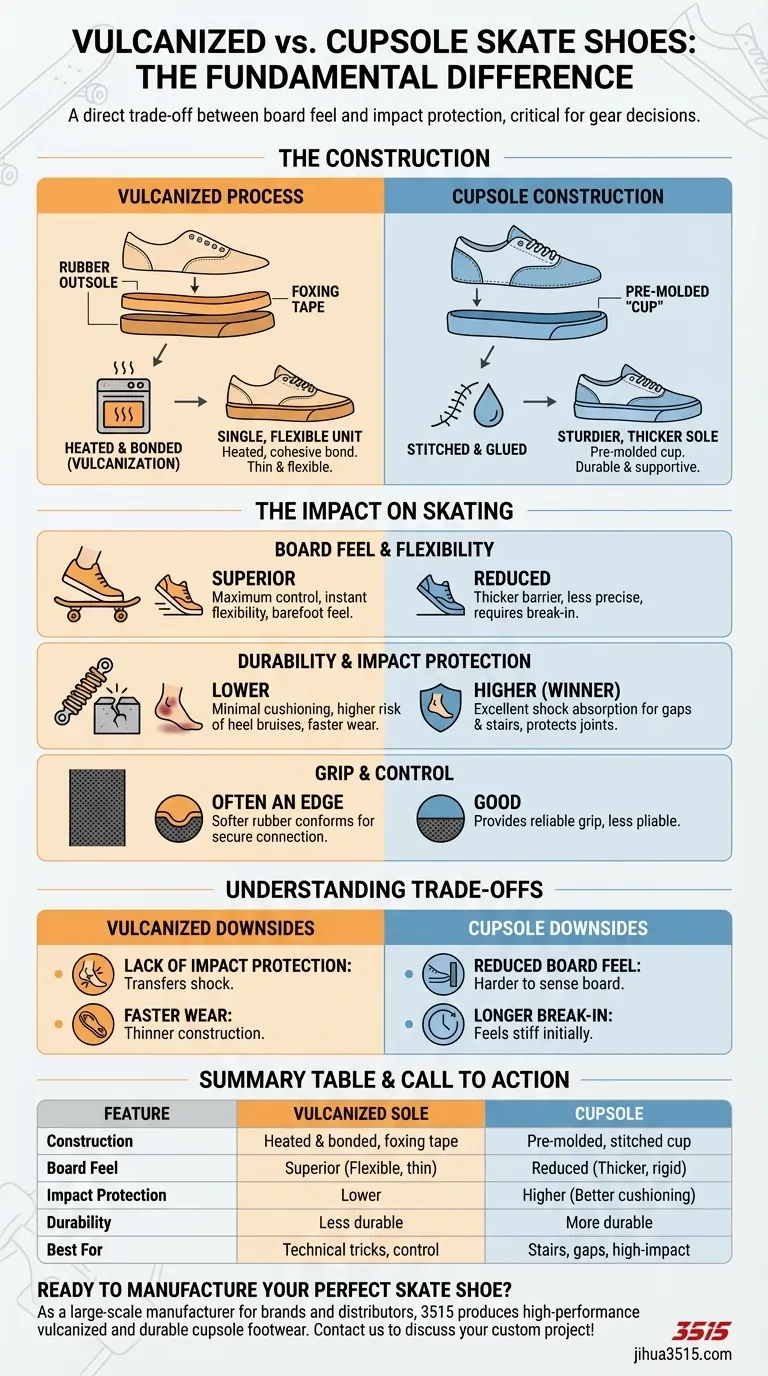
Visual Guide
Related Products
- Advanced KPU Athletic Safety Shoe with Steel Toe Cap Anti-Slip Rotary Lacing System
- Wholesale Durable Camouflage Canvas Shoes with High-Traction Cleated Rubber Sole
- Premium Suede Sport Safety Shoes for Wholesale & Bulk Orders
- Wholesale Durable & Breathable Training Shoes for Custom Brands
- Wholesale Breathable Training Shoes Custom Athletic Footwear Manufacturer
People Also Ask
- What are the key differences between steel toe and composite toe caps? Choose the Right Safety for Your Job
- What impact do steel toe caps have on toe skin health? Prevent Friction and Pressure in Your Safety Shoes
- What are the primary protective functions of safety shoes with steel toes in the automotive repair industry?
- What type of safety shoe is recommended for workers exposed to heavy machinery? Steel Toe Boots for Ultimate Protection
- How does defining specific friction interface models in FEA assist in predicting safety shoe toe cap failure modes?



















