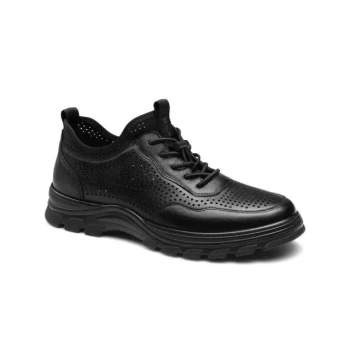
Designing a 5 mm outsole requires a calculated balance between material durability and sensory feedback. At this specific thickness, the primary objective is to provide sufficient puncture and abrasion resistance without isolating the foot from the ground. This allows for natural gait mechanics while ensuring the wearer remains protected during daily use.
The 5 mm profile is a strategic threshold in additive manufacturing. It offers just enough material to protect the foot while remaining thin enough to stimulate plantar mechanoreceptors, promoting natural movement and core muscle development.
The Biomechanical Balance: Protection vs. Proprioception
When implementing a 5 mm design, you are not simply creating a barrier; you are engineering an interface between the body and the environment.
Preserving Sensory Input
The defining characteristic of a 5 mm outsole is its ability to facilitate proprioception. By keeping the sole thin, the design allows plantar mechanoreceptors to perceive ground feedback effectively.
Encouraging Natural Movement
Unlike thicker, cushioned soles that dampen impact, a 5 mm profile mimics the experience of being barefoot. This feedback loop induces more natural gait patterns, forcing the body to adjust its mechanics rather than relying on artificial stability.
Strengthening Foot Structure
Because the foot receives direct sensory input, the small, core muscles of the foot are forced to engage. This design consideration actively promotes the development of core foot muscles, turning the shoe into a tool for strengthening rather than just covering.
Leveraging Additive Manufacturing for Precision
Achieving a functional 5 mm outsole requires the precision of industrial-grade additive manufacturing (3D printing).
Handling Functional Density
Standard molding techniques often struggle with thin, consistent walls that retain strength. Industrial 3D printing allows you to manipulate material density, ensuring the outsole remains tough enough to resist abrasion while maintaining the flexibility required for natural movement.
Rapid Development Cycles
This technology drastically shortens the timeline from design concept to finished product. This is particularly valuable for high-end customization, where complex geometric structures must be tested and iterated upon quickly without the need for expensive new molds.
Integrating Personalization Data
A 5 mm outsole offers less room for error regarding fit. Therefore, relying on generic sizing is often insufficient.
Utilizing Foot Scan Data
Designers must utilize precise scan data to match the outsole perimeter to the user’s specific foot shape. This includes accommodating distinct foot types, such as Egyptian or Roman foot shapes, ensuring the thin sole covers the exact footprint of the user.
Arch and Geometry Customization
The customization process allows for the precise matching of unique arch structures. By aligning the printed sole with the user’s anatomy, manufacturers enhance both the fit and comfort, which is critical when the cushioning layer is minimal.
Understanding the Trade-offs
While a 5 mm outsole offers biomechanical benefits, it introduces specific challenges that must be managed during the design phase.
Reduced Cushioning
The most immediate trade-off is the lack of shock absorption. This design prioritizes ground feel over impact dampening, which may be uncomfortable for users accustomed to maximalist footwear or those walking on exclusively hard surfaces for long periods.
Durability vs. Thickness
Maintaining puncture and abrasion resistance at only 5 mm is a material challenge. The additive manufacturing process must utilize high-performance materials to ensure the sole does not wear through prematurely, as there is very little sacrificial material compared to a standard sneaker.
Making the Right Choice for Your Goal
Whether a 5 mm outsole is the correct design choice depends heavily on the intended utility of the footwear.
- If your primary focus is biomechanical training: Prioritize the thin profile to maximize mechanoreceptor stimulation and muscle development.
- If your primary focus is high-precision fit: Leverage foot scan data to ensure the minimal outsole perfectly tracks the user's unique foot shape and arch structure.
Ultimately, a 5 mm outsole is a precision tool that trades passive cushioning for active engagement, leveraging advanced manufacturing to reconnect the foot with the ground.
Summary Table:
| Design Aspect | Consideration for 5mm Outsole | Benefit |
|---|---|---|
| Proprioception | High sensory feedback threshold | Promotes natural gait and muscle development |
| Manufacturing | Industrial 3D Printing | Precise material density and rapid iteration |
| Customization | Anatomical foot scan data | Perfect fit for Egyptian or Roman foot shapes |
| Durability | High-performance polymer selection | Resists abrasion despite minimal thickness |
| Biometrics | Arch and geometry alignment | Enhances stability without heavy cushioning |
Partner with 3515 for Advanced Footwear Solutions
As a premier large-scale manufacturer serving global distributors and brand owners, 3515 leverages decades of expertise and industrial-grade production capabilities to bring complex designs to life. From high-precision Safety Shoes and tactical boots to customized 3D-printed sneakers and formal dress shoes, we provide the technical foundation your brand needs to scale.
Our Value to You:
- Comprehensive Portfolio: Expertise in work, outdoor, training, and dress footwear.
- Precision Manufacturing: Advanced technology for thin-profile outsoles and ergonomic customization.
- Bulk Scalability: Tailored production cycles designed for distributors and large-scale brand requirements.
Ready to elevate your footwear line with cutting-edge outsole technology? Contact us today to discuss your project.
References
- Alexandra Allen, Catherine Willems. Walking with individualized 3D-printed minimal footwear increases foot strength and produces subtle changes in unroll pattern. DOI: 10.3389/fevo.2023.1270253
This article is also based on technical information from 3515 Knowledge Base .
Related Products
- Wholesale Durable Camouflage Canvas Shoes with High-Traction Cleated Rubber Sole
- Wholesale Modern Perforated Leather Derby Shoes with Chunky Sole for Custom Branding
- Durable Rubber Sole Outdoor Shoes Wholesale & Custom Manufacturing
- Wholesale Breathable Training Shoes Custom Athletic Footwear Manufacturer
- Wholesale Waterproof Tactical Boots Custom Suede & High-Traction Soles
People Also Ask
- Why is the selection of high-strength fabric materials necessary in the production of canvas shoes and training shoes?
- What are the properties of canvas as a shoe material? A Guide to Lightweight Comfort & Style
- Can canvas shoes be worn in rainy conditions? The Truth About Water Resistance
- What are some examples of vulcanized shoes? Discover the Flexibility and Board Feel of Classic Sneakers
- What are the characteristics of canvas as a shoe material? A Guide to Lightweight, Breathable Footwear