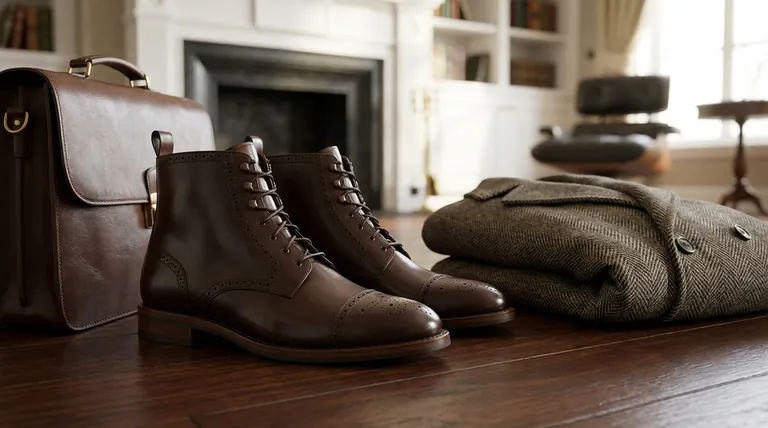
At their core, dress boots are a hybrid category of footwear, skillfully blending the elegant silhouette and refined materials of a formal dress shoe with the ankle-high structure of a boot. They are defined by features like smooth leather, thin leather or rubber soles, and fine laces, often incorporating stylistic details like cap toes or brogue perforations for a sophisticated finish.
The essential purpose of a dress boot is to bridge the gap between formal footwear and casual boots. It offers a more substantial and seasonally appropriate alternative to a dress shoe without sacrificing aesthetic refinement for rugged utility.
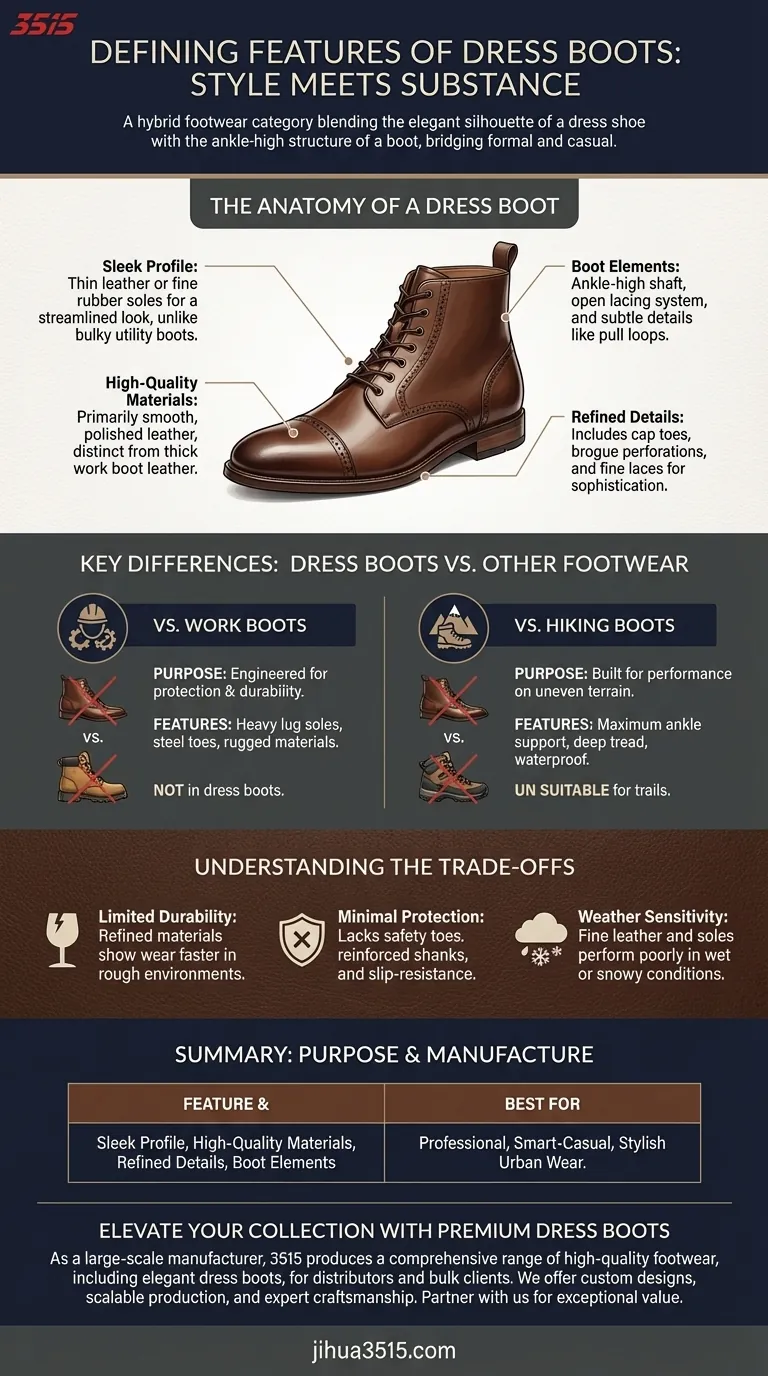
The Anatomy of a Dress Boot
A dress boot’s identity comes from a specific combination of features that prioritize style and a sleek appearance over pure function or durability.
The Sleek Profile
Unlike the bulky silhouette of work or hiking boots, a dress boot features a much slimmer, more streamlined profile. This is largely achieved through its thin leather or fine rubber soles, which mimic the construction of a traditional dress shoe.
High-Quality Materials
The primary material is almost always a smooth, often polished leather. This contrasts sharply with the thick, heavily-oiled, or textured leathers used in work boots, which are chosen for durability and weather resistance.
Refined Details
Many dress boots borrow their design cues directly from classic dress shoes. You will often find decorative elements like:
- Cap Toes: A stitched line across the toe box.
- Brogue Perforations: Small, decorative holes punched into the leather.
- Fine Laces: Thin, often waxed laces that contribute to a more formal look.
The "Boot" Elements
While elegant, these are still boots. Their defining boot features include an ankle-high shaft and often an open lacing system with multiple eyelets. Some styles may include subtle, casual details like pull loops or small metal speed hooks at the top of the laces.
How Dress Boots Differ from Other Footwear
Understanding what a dress boot is becomes clearer when you see what it is not. Its purpose is fundamentally different from that of more utilitarian boots.
vs. Work Boots
The primary difference is purpose. Work boots are engineered for protection and durability. They feature heavy lug soles for traction, reinforced or steel safety toes, and thick, rugged materials to withstand harsh conditions. Dress boots offer none of these protective features.
vs. Hiking Boots
Hiking boots are built for performance on uneven terrain. They provide maximum ankle support, deep-treaded soles for grip, and are often made with waterproof, breathable materials. A dress boot’s thin, smooth sole would be unsuitable and unsafe on a trail.
Common Styles: Chukka and Chelsea
Two of the most popular dress boot styles are the Chukka and the Chelsea boot.
- Chukka Boots are ankle-high and minimalist, typically featuring two or three pairs of eyelets.
- Chelsea Boots are laceless, defined by the elastic side panels that allow them to be pulled on easily.
Understanding the Trade-offs
The elegance of a dress boot comes with clear functional compromises. It is a specialized tool for style, not a do-it-all piece of footwear.
Limited Durability
The materials that make a dress boot look refined—thin leather soles and smooth upper leather—are not designed for abuse. They will show wear and tear much faster than a work boot if exposed to rough environments.
Minimal Protection
Dress boots offer no significant protection beyond covering your foot. They lack the safety toes, reinforced shanks, and slip-resistant soles required for manual labor or hazardous conditions.
Weather Sensitivity
Fine leather and especially leather soles perform poorly in wet or snowy conditions. They can be easily damaged by water and salt, and they offer very little traction on slippery surfaces.
Making the Right Choice for Your Needs
Selecting the correct boot is about matching its design to your specific goal.
- If your primary focus is professional or smart-casual style: A dress boot is the perfect choice for elevating outfits with trousers, chinos, or dark denim.
- If your primary focus is safety and job-site performance: You need a dedicated work boot with certified features like a safety toe and non-slip sole.
- If your primary focus is outdoor recreation: Opt for a purpose-built hiking boot that provides the necessary ankle support, traction, and weather resistance.
Choosing the right boot begins with understanding its intended purpose, and the dress boot is built for style, not the trail or the job site.
Summary Table:
| Feature | Description |
|---|---|
| Sleek Profile | Slim silhouette with thin leather or fine rubber soles. |
| High-Quality Materials | Smooth, polished leather uppers for a refined look. |
| Refined Details | Cap toes, brogue perforations, and fine laces for sophistication. |
| Boot Elements | Ankle-high shaft with open lacing, pull loops, or speed hooks. |
| Best For | Professional, smart-casual, and stylish urban wear. |
Ready to Elevate Your Footwear Collection with Premium Dress Boots?
As a large-scale manufacturer, 3515 produces a comprehensive range of high-quality footwear for distributors, brand owners, and bulk clients. Our production capabilities encompass all types of shoes and boots, including elegant dress boots crafted from the finest materials.
We offer:
- Custom designs tailored to your brand and market needs.
- Scalable production to meet any order volume, ensuring timely delivery.
- Expert craftsmanship that combines style with durability.
Whether you're looking to source reliable dress boots or develop a custom line, partner with us to deliver exceptional value to your customers.
Contact us today to discuss your manufacturing needs and request a quote!
Visual Guide
Related Products
- Wholesale Comfort Dress Shoes with Dial Closure for Custom Manufacturing
- Wholesale Perforated Comfort Dress Shoes | Custom Derby Shoe Manufacturer
- Custom Manufactured Air Cushion Leather Business Shoes for Wholesale
- Wholesale Classic Leather Lace-Up Ankle Boots for Brand Manufacturing
- Wholesale Tactical Boots High-Traction & Reflective for Bulk & Brand Orders
People Also Ask
- How do comfort dress shoes differ from traditional dress shoes? Discover the Ergonomic Advantage
- Which dress shoe styles are suitable for wearing with jeans? A Guide to Smart-Casual Style
- What features make dress shoes suitable for standing all day? Achieve All-Day Comfort with Anatomical Design
- What are the benefits of resoling dress shoes? Extend Life & Boost Comfort
- What recent trends have influenced traditional dress shoe designs? The Shift to Modern Comfort