
At its core, a chukka is a study in minimalism. A true chukka boot is defined by three non-negotiable features: an ankle-high cut, an open lacing system with only two or three pairs of eyelets, and a simple construction typically made from two single pieces of leather.
While many ankle boots exist, the chukka is distinguished by its specific, minimalist design constraints. Understanding these features reveals its purpose as a uniquely versatile bridge between a formal shoe and a rugged boot.
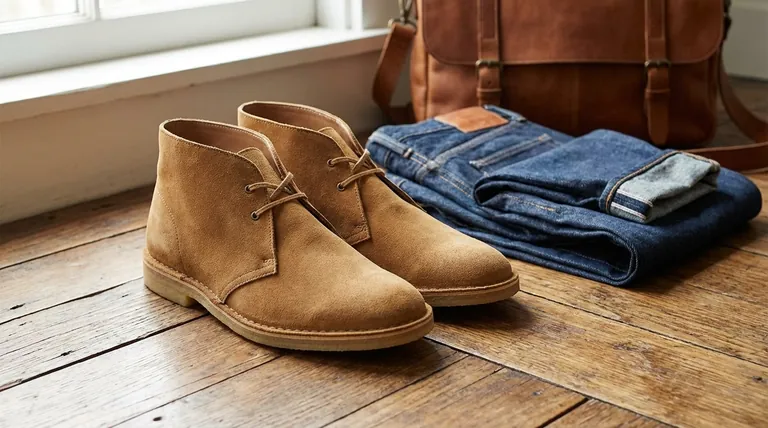
The Anatomy of a True Chukka Boot
To identify a chukka, you must look past general similarities and focus on its specific construction details. These elements are what give the boot its signature character and timeless appeal.
The Unmistakable Lacing System
The most telling feature of a chukka is its lacing. It uses an open lacing system, where the quarters (the side pieces containing the eyelets) are sewn on top of the vamp (the front part of the boot).
Crucially, it has only two or three pairs of eyelets. Any more than this, and it is simply a different style of ankle boot. This minimal lacing is fundamental to its clean aesthetic.
A Precise Ankle-High Cut
Chukka boots are defined by their height. They rise to the ankle and no higher, providing coverage without the bulk or restriction of a taller boot.
This specific cut makes them feel less like a traditional, heavy boot and more like a substantial shoe, contributing to their comfort and versatility.
Minimalist Two-Piece Construction
Traditionally, a chukka boot's upper is constructed from just two parts, each cut from a single piece of leather. This simple design avoids unnecessary seams and panels.
This construction method is key to its unstructured, clean-lined silhouette. Many classic chukkas are also unlined, which enhances their flexibility and lightweight feel.
The Foundation: Thin Soles
The final key identifier is a thin sole. Classic chukkas feature thin leather soles, which grant them a sleek profile that pairs well with smarter trousers.
Modern variations often use rubber for better traction and durability, but the sole remains proportionally thin to maintain the boot's refined character.
Understanding the Trade-offs
The chukka's minimalist design is its greatest strength, but it also creates specific limitations that are important to understand.
Support vs. Flexibility
The unlined construction and simple design make chukka boots exceptionally comfortable and flexible right out of the box.
However, this comes at the cost of support. They offer significantly less ankle support and underfoot cushioning than work boots or hiking boots, making them unsuitable for strenuous activity.
Versatility vs. Formality
Chukkas are masters of "smart casual." They can easily be dressed up with chinos or dressed down with denim.
Their inherent simplicity, however, places a ceiling on their formality. A chukka boot is rarely an appropriate substitute for a true dress shoe in a business formal or black-tie setting.
Making the Right Choice for Your Goal
Selecting the right chukka depends entirely on its intended use. The material and sole are the most important variables to consider.
- If your primary focus is classic versatility: Choose a brown suede chukka with a thin leather or crepe sole for the most iconic and adaptable look.
- If your primary focus is bridging casual and business-casual: Opt for a chukka in a dark brown or black calfskin with a slim leather sole.
- If your primary focus is all-weather comfort: Look for a chukka with a durable rubber sole and a weather-resistant leather upper.
By adhering to a few simple rules, the chukka boot achieves a timeless and exceptionally versatile design.
Summary Table:
| Feature | Description | Purpose |
|---|---|---|
| Open Lacing (2-3 Eyelets) | Quarters sewn on top of the vamp with minimal eyelets. | Creates a clean, minimalist aesthetic. |
| Ankle-High Cut | Rises precisely to the ankle bone, no higher. | Provides coverage without bulk, enhancing comfort and versatility. |
| Two-Piece Construction | Upper made from just two pieces of leather, often unlined. | Ensures a lightweight, flexible, and unstructured silhouette. |
| Thin Sole | Features thin leather or proportionally slim rubber soles. | Maintains a sleek profile suitable for smart-casual wear. |
Ready to Source Premium Chukka Boots for Your Market?
As a large-scale manufacturer, 3515 produces a comprehensive range of footwear for distributors, brand owners, and bulk clients. Our production capabilities encompass all types of shoes and boots, including classic and modern chukkas built to your exact specifications—from material selection to sole construction.
We help you deliver quality and style. Let's discuss your production needs.
Contact us today for a consultation
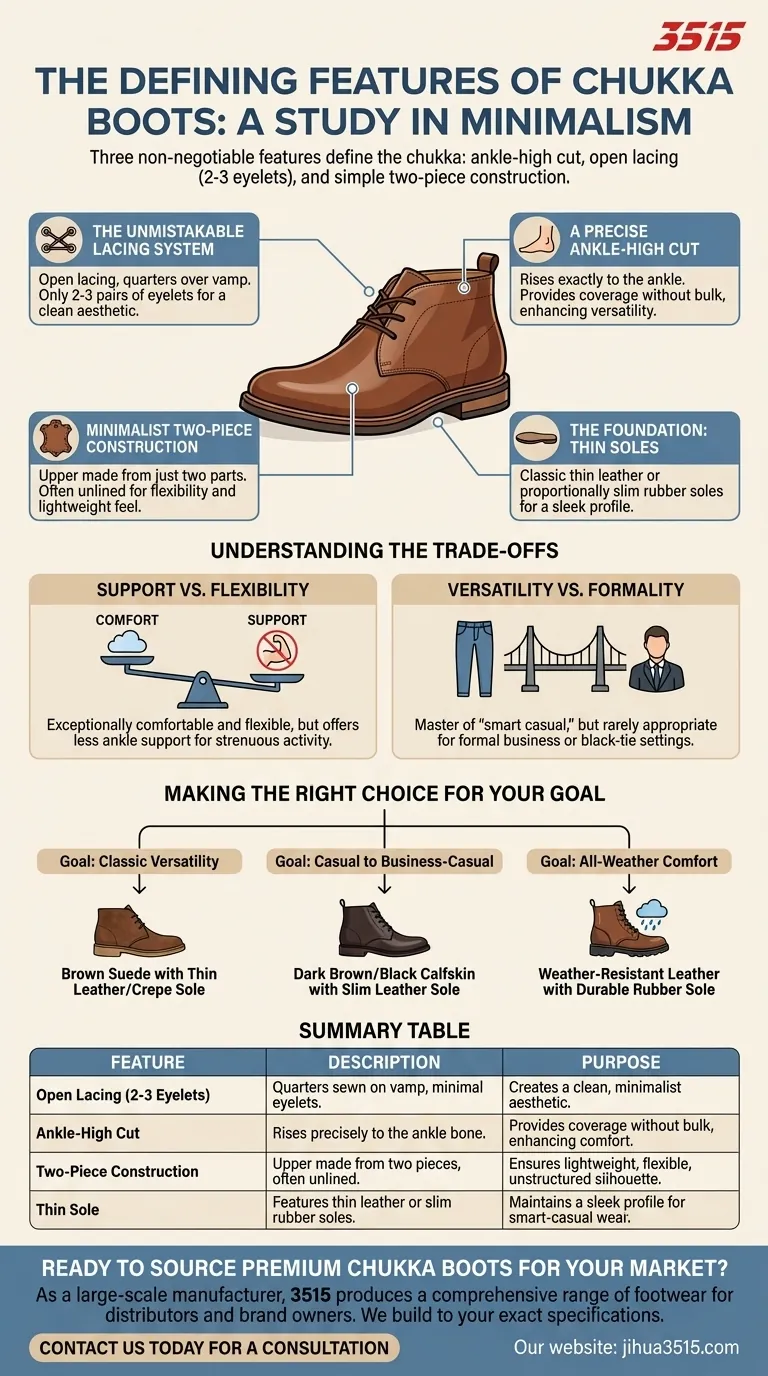
Visual Guide
Related Products
- Durable Leather High-Ankle Tactical Boots for Wholesale & Custom Manufacturing
- High-Traction Suede Tactical Boots Wholesale & Custom Manufacturing
- Durable Leather Tactical Boots Wholesale & Custom Manufacturing for Brands
- Premium Wholesale Tactical Style Safety Shoes Boots with Quick Lacing
- Factory Direct Wholesale Rain Boots Durable Waterproof & Fully Customizable
People Also Ask
- How do military uniforms and tactical boots impact the prediction of thermal risk? Essential Safety Insights
- How does the material of tactical boots affect their performance? Choose the Right Material for Your Mission
- Why is sequential analysis utilized to evaluate tactical boots? Master Dynamic Boot Development and Ergonomic Performance
- How do tactical boots differ from regular boots? Performance, Durability & Design Explained
- What are the primary differences between tactical boots and combat boots? Choose the Right Boot for Your Mission

















