
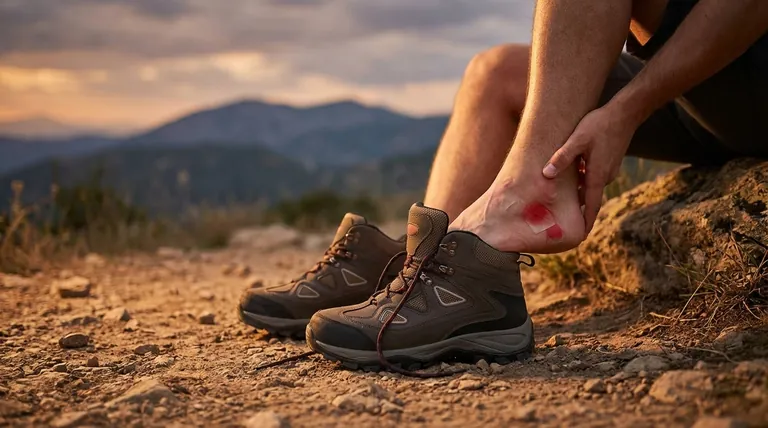
Ignoring boot size and width charts is a direct path to foot injury. The immediate consequences are often painful blisters and numbness, but the long-term effects are far more serious, leading to chronic conditions like plantar fasciitis, nerve compression, and even permanent changes to your foot's structure.
The core issue is that an incorrect boot fit creates a constant, low-grade conflict between your foot and your footwear. This conflict manifests first as surface-level pain and ultimately leads to deeper, structural damage that can impact your mobility and quality of life.
The Immediate Consequences: Skin and Soft Tissue
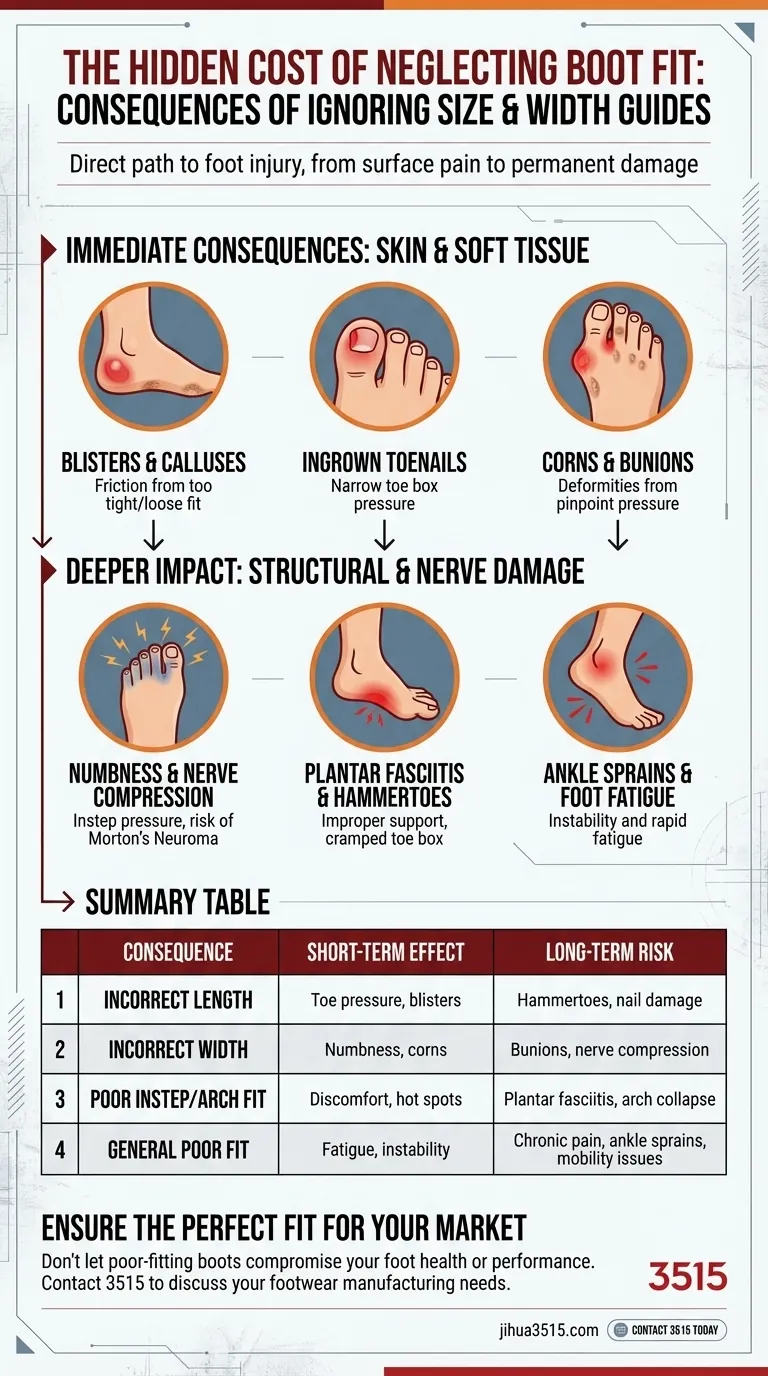
When a boot doesn't match the dimensions of your foot, the first signs of trouble appear on the surface. Your skin and soft tissues bear the initial brunt of the poor fit.
Blisters and Calluses
Friction is the primary enemy. A boot that is too tight creates constant pressure points, while a boot that is too loose allows your foot to slide. Both scenarios cause chafing that results in painful blisters and the body's defensive response: thick, hardened calluses.
Ingrown Toenails
A toe box that is too narrow or shallow is a major cause of ingrown toenails. This constant pressure squeezes the toes together, forcing the edge of the toenail to grow directly into the surrounding skin.
Corns and Bunions
These are not just cosmetic issues; they are structural deformities. Corns are small, concentrated areas of hard skin caused by pinpoint pressure, while bunions are painful, bony bumps that form at the base of the big toe when a narrow boot pushes it out of alignment.
The Deeper Impact: Structural and Nerve Damage
Over time, the problems caused by a poor fit move beyond the skin and begin to affect your foot's underlying architecture, including its nerves, ligaments, and bones.
Numbness and Nerve Compression
If you experience tingling or numbness in your toes, the boot is likely too tight across the instep or forefoot. This pressure can compress critical nerves, cutting off sensation and potentially leading to conditions like Morton's Neuroma.
Plantar Fasciitis and Hammertoes
A boot with improper length or width fails to support your arch correctly. This misalignment puts immense strain on the plantar fascia—the ligament running along the bottom of your foot—causing inflammation and sharp heel pain. Simultaneously, a cramped toe box can force toes into a bent, claw-like position known as hammertoes.
Ankle Sprains and Foot Fatigue
When a boot is too wide or long, your foot is not secure. This instability forces the small muscles in your feet and ankles to work overtime just to keep you balanced, leading to rapid fatigue and a much higher risk of twists and sprains.
Common Pitfalls to Avoid
Trusting the label on the box is a common but critical mistake. Understanding the nuances of fit is essential to avoid the consequences listed above.
The Myth of "Breaking In"
A quality boot should feel supportive and comfortable from the start. While the materials will soften slightly, the "break-in" period should never be painful. Pain is a clear signal that the boot's shape does not match your foot's anatomy.
Ignoring Width for Length
Many people with wide feet mistakenly buy a longer boot to gain more room. This is a flawed strategy. It creates an incorrect flex point for the boot, misaligns the arch support, and often leads to excessive heel slip, causing blisters and instability.
Forgetting About Foot Swell
Your feet naturally swell throughout the day, especially during physical activity like hiking or working. A boot that fits perfectly in the morning can become painfully restrictive by the afternoon. Always measure your feet at the end of the day for the most accurate sizing.
Making the Right Choice for Your Goal
Selecting the right boot requires aligning its fit with your specific needs. Use these principles as your guide.
- If your primary focus is preventing immediate pain (blisters, corns): Ensure the width is correct and there is no rubbing in the heel or pressure on your toes.
- If your primary focus is avoiding long-term injury (plantar fasciitis, nerve issues): Confirm the boot's arch support matches your own and that its flex point aligns with the natural bend of your foot.
- If your primary focus is performance and stability (hiking, work): Prioritize a secure fit with zero heel lift, which is the foundation for preventing fatigue and ankle sprains on uneven terrain.
A proper fit is the non-negotiable foundation for foot health, comfort, and performance.
Summary Table:
| Consequence | Short-Term Effect | Long-Term Risk |
|---|---|---|
| Incorrect Length | Toe pressure, blisters | Hammertoes, nail damage |
| Incorrect Width | Numbness, corns | Bunions, nerve compression (Morton's Neuroma) |
| Poor Instep/Arch Fit | Discomfort, hot spots | Plantar fasciitis, arch collapse |
| General Poor Fit | Fatigue, instability | Chronic pain, ankle sprains, mobility issues |
Don't let poor-fitting boots compromise your foot health or performance. As a large-scale manufacturer, 3515 produces a comprehensive range of footwear for distributors, brand owners, and bulk clients. Our production capabilities encompass all types of shoes and boots, ensuring every pair is built on a foundation of proper fit and support. We help you provide your customers with the comfort and safety they need.
Contact 3515 today to discuss your footwear manufacturing needs and ensure a perfect fit for your market.
Visual Guide
Related Products
- Premium Wholesale Tactical Style Safety Shoes Boots with Quick Lacing
- High Performance Fire-Retardant Waterproof Safety Boots
- Premium Waterproof High-Cut Industrial Safety Boots for Wholesale and Bulk Orders
- Durable Leather Work Boots for Wholesale & Custom Manufacturing
- Durable Leather Work Boots for Wholesale & Custom OEM Manufacturing
People Also Ask
- How are gait analysis research findings applied to the functional design of safety shoes and tactical boots?
- Why is the synchronization of craftsmanship and UX development emphasized for bulk customization of safety shoes?
- How does anthropomorphic design influence material selection? Enhance Footwear Performance through Biological Alignment
- How do quality certification standards for safety shoes reduce perceived risk? Buy Online with Technical Certainty
- How can specialized footwear mitigate safety risks? High-Volume OEM/ODM Solutions since 1951



















