
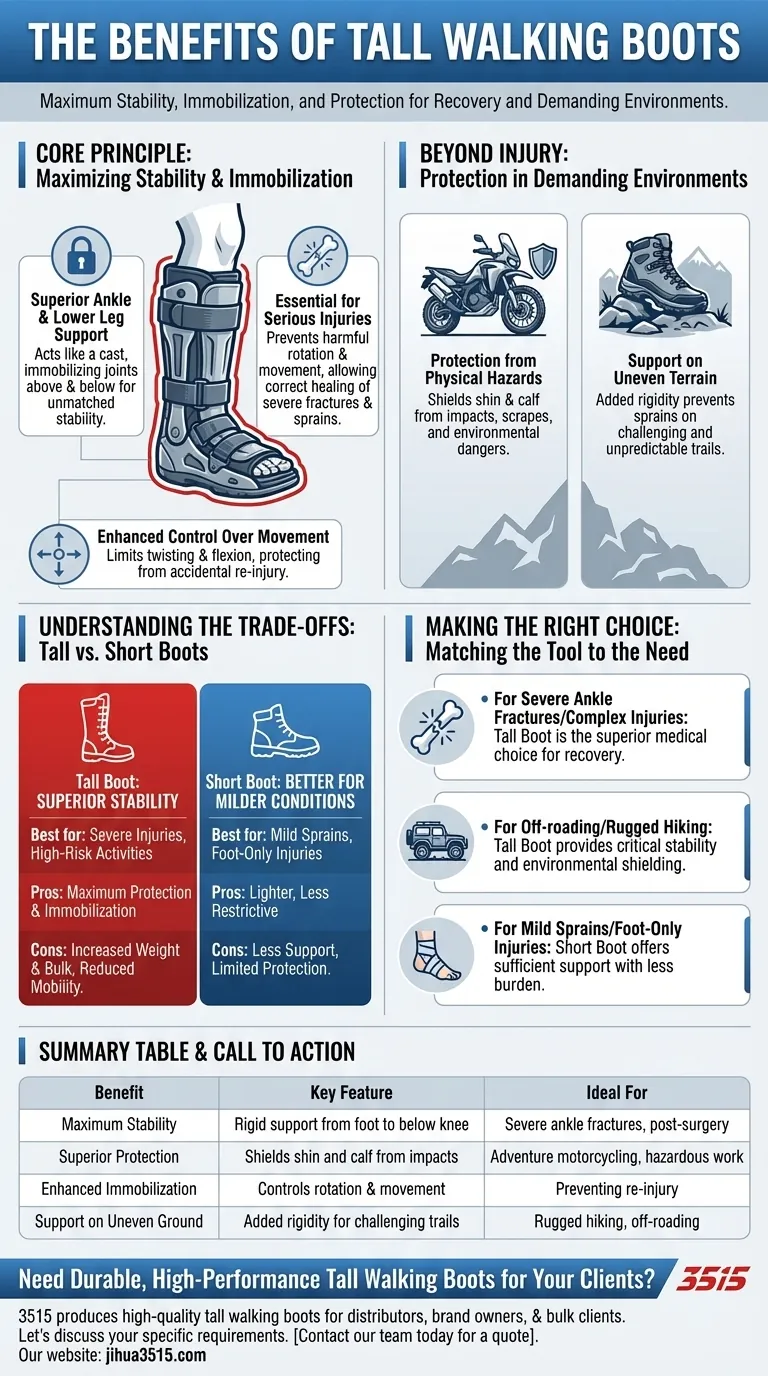
In short, tall walking boots offer maximum stability, immobilization, and protection. Their primary benefits stem from their height, which extends support from the foot well up the lower leg to control movement, secure serious injuries, and shield the calf and shin from harm.
The decision to use a tall walking boot is fundamentally a trade-off. You are choosing superior stability and protection for a serious injury or demanding environment at the cost of increased weight, bulk, and reduced mobility compared to a shorter boot.
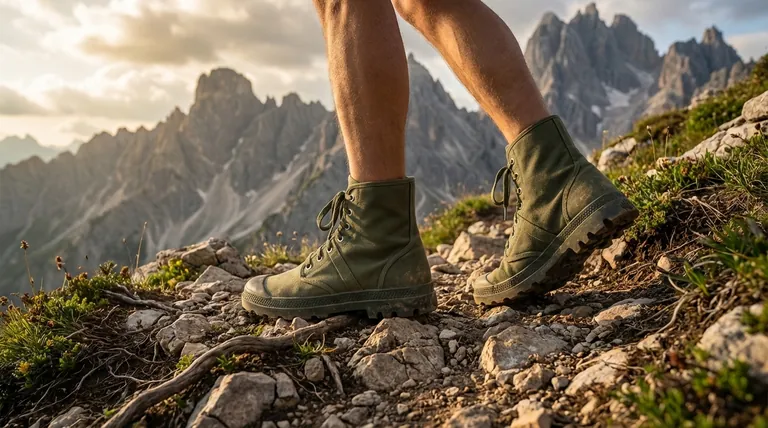
The Core Principle: Maximizing Stability and Immobilization
The defining feature of a tall walking boot is its ability to rigidly control the entire ankle and lower leg complex. This is critical in specific medical and environmental contexts.
Superior Ankle and Lower Leg Support
A tall boot, which typically extends to just below the knee, acts like a cast for your entire lower leg.
By immobilizing the joints above and below an injury, it provides a level of stability that a shorter boot simply cannot match. This is the cornerstone of its design.
Essential for Serious Injuries
For severe ankle sprains, fractures, or significant post-surgical recovery, immobilizing the area is non-negotiable.
The tall boot's structure prevents harmful rotation and movement, allowing bones and ligaments to heal correctly without being subjected to disruptive stress.
Enhanced Control Over Movement
The extended frame of a tall boot significantly limits rotational forces (twisting) and flexion at the ankle. This control is crucial for protecting a healing injury from accidental re-injury during daily activities.
Beyond Injury: Protection in Demanding Environments
While often associated with medical recovery, the protective benefits of tall boots are also valuable in specific high-risk activities.
Protection from Physical Hazards
Tall boots provide a physical shield for the shin and calf area.
For activities like adventure motorcycling or work in hazardous terrain, this protects the leg from impacts, scrapes, hot exhaust pipes, and other environmental dangers.
Support on Uneven Terrain
In the context of adventure or hiking boots, the tall design offers exceptional ankle support on challenging and unpredictable trails.
This added rigidity helps prevent the very sprains and injuries that might otherwise require a medical walking boot.
Understanding the Trade-offs: Tall vs. Short Boots
Choosing the right boot height requires an objective look at the downsides. More is not always better.
The Cost of Stability: Weight and Bulk
The primary drawback of a tall boot is its increased weight and bulkiness.
This can make walking more strenuous and cumbersome, which may be a significant factor depending on your mobility and the duration of use.
When a Short Boot is the Better Choice
A short boot, which ends at the mid-calf, is a superior choice for less severe conditions.
For milder ankle sprains or injuries confined to the foot, a short boot provides adequate support while being significantly lighter and less restrictive.
Making the Right Choice for Your Needs
Selecting the correct boot is about matching the tool to the specific problem. Consider your primary goal to make an informed decision.
- If your primary focus is recovery from a severe ankle fracture or complex lower leg injury: The superior immobilization of a tall boot is almost certainly the correct medical choice.
- If your primary focus is protection for activities like off-roading or rugged hiking: A tall boot provides critical stability and a physical shield against environmental hazards.
- If your primary focus is recovery from a mild ankle sprain or a foot-only injury: A shorter boot offers sufficient support without the unnecessary weight and bulk of a tall model.
Ultimately, the right boot is the one that provides the precise level of support your situation demands without adding unnecessary burden.
Summary Table:
| Benefit | Key Feature | Ideal For |
|---|---|---|
| Maximum Stability | Rigid support from foot to below knee | Severe ankle fractures, post-surgery recovery |
| Superior Protection | Shields shin and calf from impacts | Adventure motorcycling, hazardous work terrain |
| Enhanced Immobilization | Controls rotation & movement of ankle/lower leg | Preventing re-injury during daily activities |
| Support on Uneven Ground | Added rigidity for challenging trails | Rugged hiking, off-roading |
Need Durable, High-Performance Tall Walking Boots for Your Clients?
As a large-scale manufacturer, 3515 produces a comprehensive range of high-quality tall walking boots designed for distributors, brand owners, and bulk clients. Our production capabilities ensure superior support, protection, and durability—exactly what your customers need for medical recovery or demanding outdoor activities.
Let's discuss your specific requirements and how we can support your business.
Contact our team today for a quote
Visual Guide
Related Products
- Durable High-Ankle Tactical Boots Wholesale Manufacturer for Custom & Bulk Orders
- Durable High-Ankle Tactical Boots for Wholesale & Custom Manufacturing
- Durable Leather High-Ankle Tactical Boots for Wholesale & Custom Manufacturing
- Wholesale High-Traction Camo Boots - Custom Manufacturer for Brands
- Wholesale Tactical Boots High-Traction & Reflective for Bulk & Brand Orders
People Also Ask
- What specialized protections do tactical boots offer? Maximize Endurance with High-Performance Footwear
- How do tactical boots protect against injuries? Discover the Integrated Safety System
- What are the ideal use cases for tactical boots? Empower Your Performance in Demanding Scenarios
- Can tactical boots be stylish for everyday wear? Yes, with the right styling and features.
- What are the primary benefits of wearing tactical boots for everyday use? Get All-Day Comfort & Durability


















