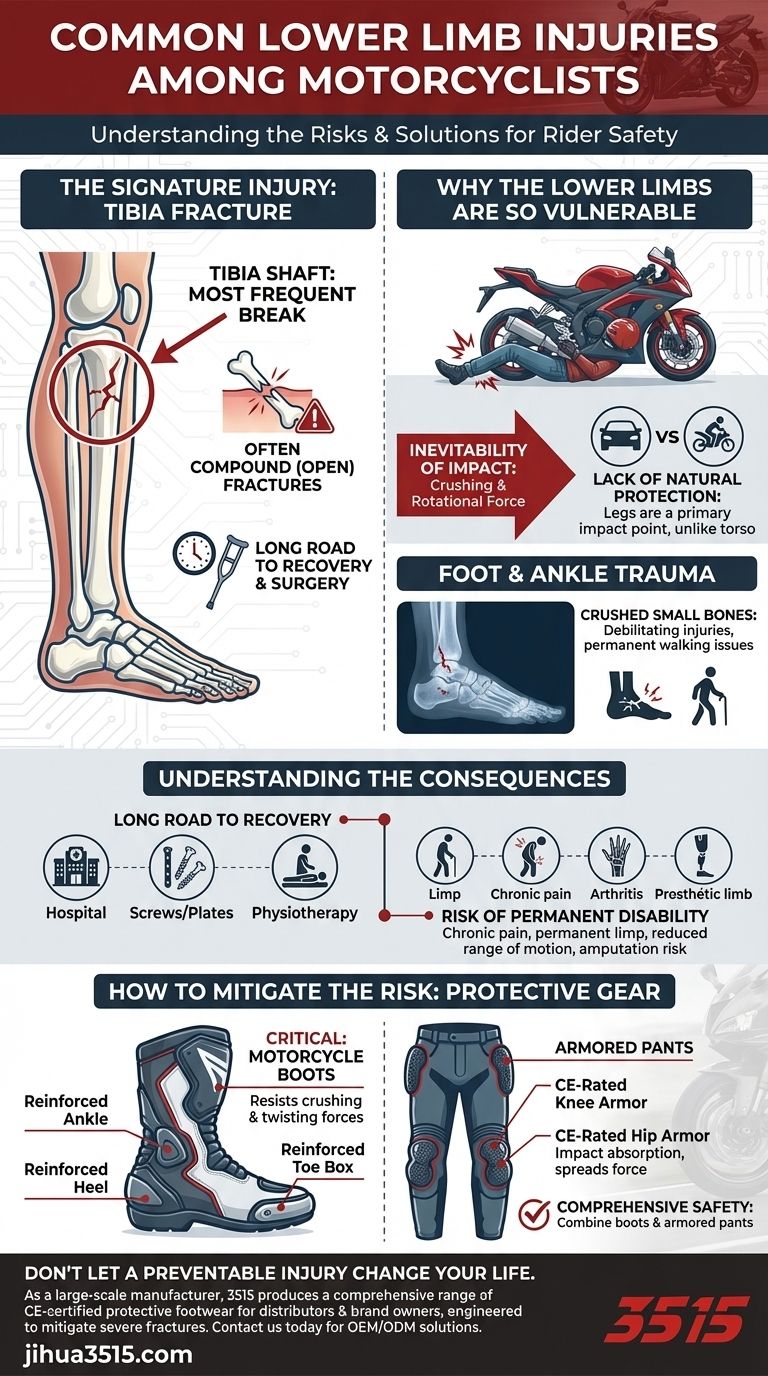
For motorcyclists, the most common lower limb injuries are bone fractures, with the shaft of the tibia—the large bone in your lower leg or shin—being the single most frequently injured location. These are not minor incidents; they often involve complex breaks that require significant medical intervention and can result in permanent, life-altering disability.
A rider's legs are fundamentally the most vulnerable part of their body in a crash. The data consistently shows that lower limb injuries, particularly severe fractures of the shin bone, represent the most frequent and debilitating risk a motorcyclist faces.
Why the Lower Limbs Are So Vulnerable
Understanding why legs are so frequently injured comes down to physics and exposure. Unlike a car driver encased in a steel cage, a rider's body is the first line of defense.
The Inevitability of Impact
In many common crash scenarios, such as a "low-side" where the bike falls on its side, the rider's leg is often pinned between the motorcycle and the road surface. This creates an immense crushing and rotational force.
Lack of Natural Protection
Your torso is protected by your rib cage and the natural bulk of your body. Your head is (or should be) protected by a helmet. Your legs, however, have minimal natural protection and are positioned in a way that makes them a primary point of impact.
The Anatomy of a Rider's Leg Injury
While scrapes and soft tissue damage are common, the most serious and defining injuries to a rider's lower limbs are fractures.
The Tibia Fracture: The Signature Injury
The tibia, or shin bone, is the most commonly fractured bone for motorcyclists. It is a large, weight-bearing bone, and due to its location with little surrounding muscle, fractures are often severe.
These breaks are frequently compound (or open) fractures, where the broken bone pierces the skin. This dramatically increases the risk of infection and complicates the healing process significantly.
Foot and Ankle Trauma
The feet and ankles are also at extreme risk. The complex arrangement of small bones can be easily crushed by the weight of the motorcycle, leading to debilitating injuries that can permanently affect a person's ability to walk normally.
Understanding the Consequences
The phrase "extensive medical treatment" barely captures the reality of recovering from a severe lower limb fracture.
The Long Road to Recovery
A serious tibia fracture almost always requires surgery. This often involves implanting metal rods, plates, and screws to hold the bone together. The recovery period is long, measured in many months, and almost always requires intensive physical therapy to regain strength and mobility.
The Risk of Permanent Disability
This is the most critical factor to understand. A successful surgery does not always mean a full return to normal function. Riders can be left with chronic pain, a permanent limp, reduced range of motion, or arthritis. In the most severe cases, complications can lead to amputation.
How to Mitigate the Risk
While no gear can make you invincible, specific personal protective equipment (PPE) is designed to address these exact injury patterns.
The Critical Role of Motorcycle Boots
Proper, over-the-ankle motorcycle boots are the single most important piece of gear for lower limb protection. They are engineered with reinforced ankle, heel, and toe boxes to resist the crushing and twisting forces that cause fractures and severe sprains.
The Importance of Armored Pants
Riding pants or overpants with CE-rated armor at the knees and hips provide crucial impact absorption. This armor is designed to spread the force of an impact over a larger area, which can be the difference between a severe bruise and a shattered kneecap or fractured tibia.
Making the Right Choice for Your Safety
Your gear choices directly correlate to your level of protection against the most common and severe injuries you can face.
- If your primary focus is a baseline of protection: Never ride without proper, over-the-ankle, purpose-built motorcycle boots.
- If your primary focus is comprehensive safety: Combine high-quality motorcycle boots with riding pants that contain CE-certified armor in the knees and hips.
Understanding this specific risk allows you to make an informed decision about the gear you wear on every single ride.
Summary Table:
| Common Lower Limb Injury | Description | Key Risk Factors |
|---|---|---|
| Tibia (Shin Bone) Fracture | Most frequent severe injury; often compound/open fractures. | Leg pinned between bike and road; crushing/rotational force. |
| Foot & Ankle Trauma | Crushing of small bones; leads to permanent walking issues. | Direct impact from motorcycle weight; lack of protective gear. |
| Soft Tissue Damage | Bruises, sprains, and abrasions. | Initial impact; sliding on pavement. |
Don't let a preventable injury change your life. As a large-scale manufacturer, 3515 produces a comprehensive range of CE-certified protective footwear for distributors, brand owners, and bulk clients. Our production capabilities encompass all types of safety boots and motorcycle boots engineered with reinforced ankle, heel, and toe protection to mitigate the severe fractures detailed above. Contact us today to explore our OEM/ODM solutions and equip riders with the safety they deserve.
Visual Guide
Related Products
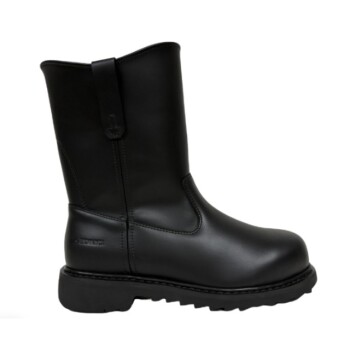
- Heavy-Duty Goodyear Welted Pull-On Safety Rigger Boot
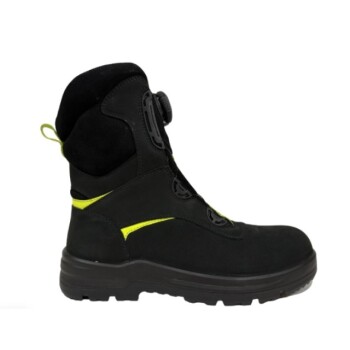
- High Performance Fire-Retardant Waterproof Safety Boots
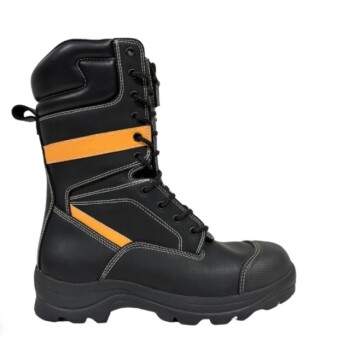
- Premium High-Cut Waterproof Safety Boots Manufacturing & Wholesale Solutions
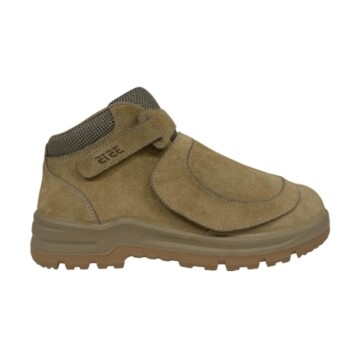
- Heavy-Duty Waterproof Nubuck Safety Boots Safety Shoes for Bulk Supply
- Premium Flame-Retardant Waterproof Safety Boots and Shoes
People Also Ask
- What are the key elements of quality boot construction? Ensure Longevity & Performance
- Are Goodyear welted boots worth it? The Ultimate Guide to Lifelong Footwear
- What is a Goodyear welt on a boot? The Secret to Durable, Repairable Footwear
- What makes Goodyear Welt boots suitable for harsh environments? Unmatched Durability & Repairability
- What additional high-quality materials are used in Goodyear Welt boots? A Guide to Advanced Components