
At its core, a Western boot is a specialized tool for horseback riding, defined by a high, angled heel, a tall shaft, a pointed or rounded toe, and a distinct lack of laces. These features are not merely stylistic; each element was developed to enhance a rider's safety and efficiency in the saddle.
The design of a traditional Western boot is a masterclass in functional engineering. Every characteristic, from the heel to the toe, is optimized for the specific task of mounting, riding, and safely dismounting a horse.
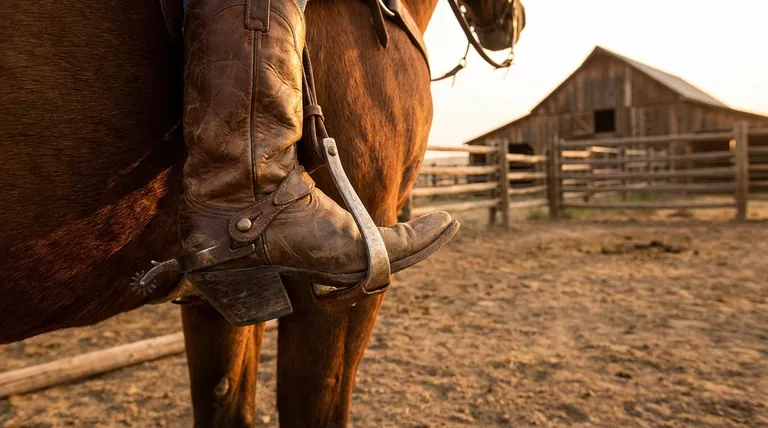
The Anatomy of a Boot Built for the Saddle
To understand the Western boot, you must understand the problems it solves for a rider. Its unique silhouette is a direct response to the demands of working from horseback.
The Angled, High Heel
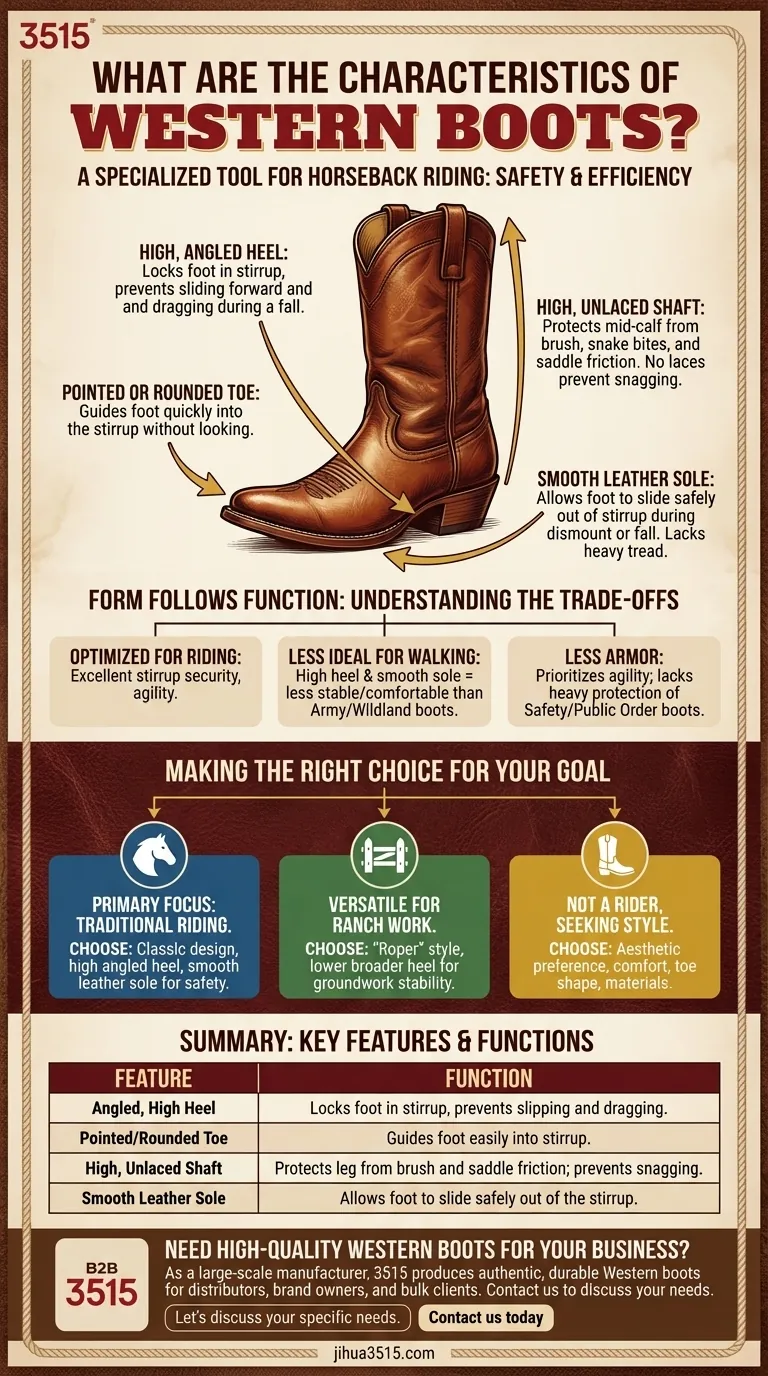
The most critical safety feature of a cowboy boot is its high, angled heel. This design allows the heel to catch the back of the stirrup, preventing the rider's foot from sliding too far forward.
This lock-in effect is crucial. It ensures a stable footing while riding and, more importantly, can prevent a rider from being dragged if they fall from the horse, as the boot is less likely to become trapped.
The Pointed or Rounded Toe
The narrow, often pointed toe of a Western boot acts as a guide. It is designed to help the rider find the stirrup and slide their foot into it quickly and effortlessly, even without looking down.
While traditional boots have a pointed toe, many modern variations feature a more rounded or squared-off shape for added comfort during groundwork.
The High, Unlaced Shaft
The boot's shaft, typically rising to mid-calf, serves as a protective shield. It guards the rider's leg against thorny brush, snake bites, and the constant friction of the saddle's leather fenders.
Crucially, these boots do not have laces. This is an intentional design choice to prevent the boot from snagging on branches, fences, or the saddle itself, which could be extremely dangerous for a rider.
The Smooth Leather Sole
Traditional Western boots feature a smooth, often leather, sole. This lack of heavy tread is another safety feature. It allows the foot to slide easily out of the stirrup when the rider needs to dismount, either intentionally or during a fall.
Understanding the Trade-offs: Form Follows Function
The Western boot is a highly specialized piece of footwear. Its strengths in the saddle create distinct limitations in other environments when compared to different types of functional boots.
Optimized for Riding, Not Walking
The high heel and smooth sole, perfect for stirrup security, make the boot less than ideal for extensive walking or hiking. Unlike an Army boot or Wildland boot designed for durability over rough terrain, the Western boot can be less stable and comfortable on foot.
Prioritizing Agility Over Armor
A Western boot's protection is geared toward environmental hazards. It lacks the heavy, reinforced armor of a Racing boot or the steel-toe protection found in Public Order or Safety boots. The design prioritizes the agility needed to get in and out of a stirrup over protection from high-impact forces.
The Classic Design vs. Modern Variations
The classic boot described here is the archetypal riding boot. However, many variations exist for different needs. "Roper" style boots, for instance, feature a lower, broader heel that is better for groundwork, representing a compromise between riding safety and walking stability.
Making the Right Choice for Your Goal
Selecting a Western boot depends entirely on its intended use. The original design remains the standard for safety and performance while riding.
- If your primary focus is traditional Western riding: Choose a classic design with a high, angled heel and a smooth leather sole for maximum safety in the stirrup.
- If you need a versatile boot for ranch work: Consider a "roper" style with a lower, broader heel that provides better stability for tasks on the ground.
- If you are not a rider and seek the style: Your choice is purely aesthetic, allowing you to prioritize toe shape, materials, and overall comfort for daily wear.
Understanding the purpose behind each feature allows you to appreciate the Western boot not just as a cultural icon, but as a masterfully designed piece of functional equipment.
Summary Table:
| Feature | Function |
|---|---|
| Angled, High Heel | Locks foot in stirrup, prevents slipping and dragging. |
| Pointed/Rounded Toe | Guides foot easily into stirrup. |
| High, Unlaced Shaft | Protects leg from brush and saddle friction; prevents snagging. |
| Smooth Leather Sole | Allows foot to slide safely out of the stirrup. |
Need High-Quality Western Boots for Your Business?
As a large-scale manufacturer, 3515 produces a comprehensive range of authentic and durable Western boots for distributors, brand owners, and bulk clients. Our production capabilities ensure every pair meets the highest standards of functional design and craftsmanship.
Let's discuss your specific needs. Contact us today to explore how we can partner to supply the perfect boots for your market.
Visual Guide
Related Products
- Durable Goodyear Welt Leather Work Boots for Wholesale & Private Label
- Durable Military Combat Boots with Water Drainage for Wholesale & OEM
- High-Traction Suede Tactical Boots Wholesale & Custom Manufacturing
- Durable Leather Tactical Boots Wholesale & Custom Manufacturing for Brands
- Durable Waterproof Rain Boots | Custom Manufacturer for Wholesale & Brands
People Also Ask
- What is the difference between full-grain and top-grain leather? Premium Material Guide for Boot Manufacturers
- What are the advantages of leather as an upper material for work boots? Unmatched Durability & Custom Comfort
- Why is it important to waterproof leather work boots? Protect Your Investment and Performance
- How should new leather work boots be broken in? A Guide to Comfort and Durability
- What are the advantages of leather uppers in work boots? Unmatched Durability & Protection















