3D digital inkjet printing technology is transforming textile manufacturing by fundamentally decoupling design from physical tooling. It enables the direct application of digital designs onto fabric substrates, eliminating the need for traditional screens or plates and significantly compressing production timelines.
By removing the constraints of traditional setups, this technology shifts the industry standard from rigid mass production to an agile, cost-effective model capable of rapid customization and complex functional integration.
Revolutionizing Efficiency and Economics
The Elimination of Physical Tooling
Traditional textile printing relies on the manufacturing of screens and plates, a process that is both costly and slow.
3D digital inkjet printing bypasses this requirement entirely. It transfers data directly from a digital file to the fabric, removing the most significant bottleneck in the pre-production phase.
Economic Viability for Small Batches
Historically, the high setup costs of analog printing made small production runs financially impractical.
Because this digital method removes those setup costs, it dramatically reduces the price per unit for small-batch orders. This makes customized production and limited-edition runs profitable rather than prohibitive.
Accelerating Market Response
The reduction in steps leads to significantly shortened product lead times.
Manufacturers can move from a design concept to a finished physical product much faster. This agility allows brands to respond to trends and consumer demands in near real-time.
Unlocking Design Freedom
Precision and Complexity
Designers are often limited by the resolution and color separation capabilities of physical screens.
Digital inkjet technology offers high design flexibility, enabling the creation of complex patterns with precise color rendering. It allows for gradients and intricate details that are difficult to achieve with traditional methods.
Rapid Prototyping and Iteration
The digital nature of the workflow facilitates rapid iteration.
Designers can tweak a pattern file and print a new sample immediately. This creates a feedback loop that improves final product quality without the waste associated with re-creating physical screens.
Versatility Beyond Apparel
The application of this technology extends well beyond standard garments.
It is increasingly critical for the production of banners and electronic textiles (e-textiles). This capability to print on diverse substrates opens new avenues for integrating technology directly into fabrics.
Understanding the Trade-offs
Volume Considerations
While this technology excels at short runs and customization, it operates differently than high-speed rotary screen printing used for massive volumes.
The advantage here is flexibility, not raw throughput for identical commodity items. It is a solution optimized for variety and speed-to-market rather than purely for volume.
Digital Infrastructure Requirements
Adopting this technology requires a shift in workflow management.
Operators move away from mechanical setup expertise toward digital file management and color profiling. Success depends on maintaining high-quality digital assets to ensure the output matches the screen.
Strategic Application for Your Production
If your primary focus is Speed to Market: Leverage this technology to bypass tooling delays, allowing you to launch reactive designs weeks ahead of competitors using analog methods.
If your primary focus is Customization: Utilize the zero-setup nature of the process to offer personalized garments or small-batch collections without incurring prohibitive startup costs.
If your primary focus is Innovation: Exploit the precise deposition capabilities to explore new product categories, such as conductive electronic textiles and functional smart fabrics.
This technology represents a move away from inventory-heavy manufacturing toward a lean, responsive production model.
Summary Table:
| Feature | Traditional Analog Printing | 3D Digital Inkjet Printing |
|---|---|---|
| Setup Requirement | Physical screens and plates | Digital files only |
| Lead Time | Weeks (long pre-production) | Days (rapid prototyping) |
| Batch Viability | High-volume only | Profitable for small batches |
| Design Complexity | Limited by color separation | High precision & gradients |
| Market Model | Inventory-heavy mass production | Agile, lean, and responsive |
Elevate Your Global Supply Chain with 3515
As a large-scale manufacturer serving distributors and brand owners, 3515 offers comprehensive production capabilities for all footwear types, anchored by our flagship Safety Shoes series. Our extensive portfolio covers work and tactical boots, outdoor shoes, training shoes, and sneakers, as well as Dress & Formal shoes to meet diverse bulk requirements.
Whether you are looking to integrate advanced printing technologies into your textile accessories or require high-performance footwear manufacturing at scale, 3515 delivers the precision and volume you need. We help our partners reduce lead times and maximize market agility through our state-of-the-art facilities.
Ready to scale your production with a reliable manufacturing partner? Contact 3515 Today to Discuss Your Requirements
References
- Marko Špiler, BORIS JEVTIĆ. Investments in digital technology advances in textiles. DOI: 10.35530/it.074.01.202287
This article is also based on technical information from 3515 Knowledge Base .
Related Products
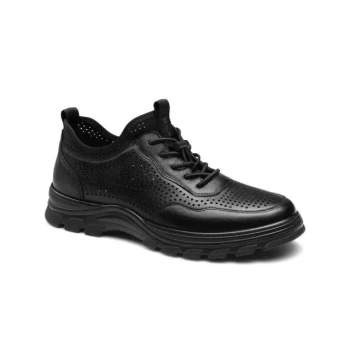
- Lightweight Breathable Sneakers with Wet-Traction Grip for Wholesale & Private Label
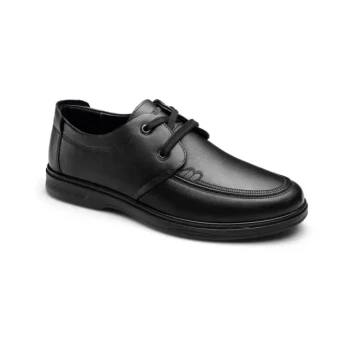
- Wholesale Comfortable Business Casual Shoes Custom Manufacturing
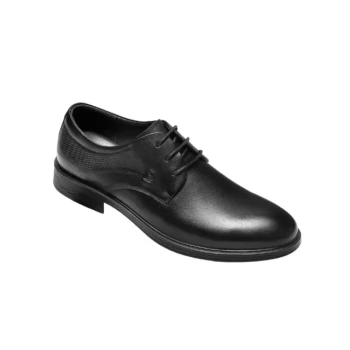
- Wholesale Leather Apron Toe Derby Shoes Custom Factory Production
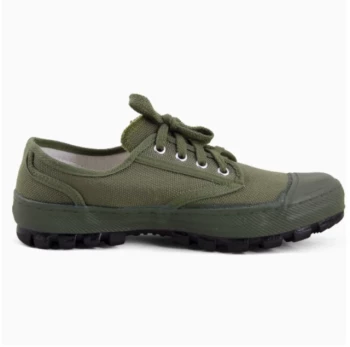
- Wholesale Durable Camo Canvas Shoes with High-Traction Rubber Soles
- Lightweight Breathable Training Shoes for Wholesale & Custom OEM Manufacturing
People Also Ask
- Why are breathable sneakers necessary for tropical commuting? Stay Cool and Dry in High Humidity
- What role do lightweight training shoes play in urban traffic? Boost Agility and Reaction for Safer City Navigation
- How do lightweight shoes provide support? The Science of Efficient Cushioning & Stability
- What are the style advantages of lightweight shoes? Sleek, Versatile & Modern Comfort
- How do lightweight shoes contribute to healthier feet? Reduce Fatigue & Prevent Foot Problems