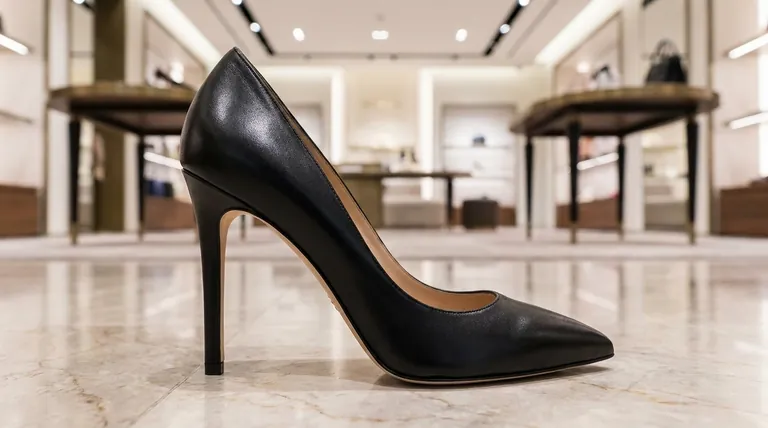
At its core, the stiletto is defined by a single, dramatic characteristic. It is a type of shoe with a very high, very thin heel. This minimalist design is engineered to create a powerful aesthetic effect, altering the wearer's posture and elongating the leg line to convey an air of sophistication and formality.
The stiletto's defining feature—its thin, narrow heel—is the source of both its celebrated visual elegance and its notorious practical instability. Understanding this fundamental trade-off is the key to knowing when and how to wear it effectively.
The Defining Structural Characteristics
A shoe is only a stiletto if its heel meets specific structural criteria. These elements distinguish it from other high heels like block heels, wedges, or kitten heels.
The Heel Shaft and Tip
The most crucial identifier is the extreme thinness of the heel. A true stiletto heel has a very small diameter, often tapering to a point that is less than half an inch wide where it meets the ground. This creates a sharp, blade-like silhouette.
The Internal Reinforcement
The name "stiletto" comes from the Italian word for a small dagger. This is a direct reference to its construction. To support the wearer's weight on such a narrow point, the heel must be reinforced with a solid metal rod running through its core.
The Factor of Height
While not strictly defined by height, stilettos are almost exclusively high heels, typically starting at 2 inches and often extending to 4 inches or more. This height is essential to achieving the characteristic postural change and visual effect.
The Aesthetic and Postural Impact
The stiletto's structure is not arbitrary; it is purposefully designed to physically alter the way the wearer stands and walks, which in turn creates a distinct visual impression.
Elongating the Silhouette
By forcing the foot into a steep angle, the stiletto makes the calf muscles contract and appear more defined. This extends the visual line of the leg, making the wearer appear significantly taller and leaner.
Shifting the Center of Gravity
The high, narrow heel pushes the wearer's center of gravity forward. To compensate and remain balanced, the wearer must push their hips and chest out, slightly arching the back. This results in a more pronounced, swaying gait.
A Signal of Formality
Due to its sleek design and the confidence required to wear it, the stiletto is overwhelmingly associated with dress shoes and formal occasions. It signals a departure from the practical and a focus on polished, intentional style.
Understanding the Trade-offs: Elegance vs. Ergonomics
The very features that give the stiletto its power are also the source of its significant drawbacks. The design is a constant battle between form and function.
The Physics of Instability
All of the wearer's body weight is concentrated onto two tiny points of contact with the ground. This creates immense pressure per square inch, making it difficult to balance and causing the heels to sink easily into soft surfaces like grass, dirt, or thick carpet.
The High Cost of Discomfort
The steep, unnatural angle of the foot places extreme pressure on the ball of the foot and the toes. Prolonged wear can lead to significant pain and contribute to long-term foot, ankle, and even back problems.
Vulnerability to Damage
The thin heel is fragile. It is highly susceptible to getting caught in pavement cracks, sidewalk grates, and escalators, which can easily cause the heel to snap or the wearer to fall, leading to injury.
Making the Right Choice for Your Goal
Deciding whether a stiletto is appropriate depends entirely on the environment and the demands of the event.
- If your primary focus is creating a powerful, elegant silhouette for a formal event: The stiletto is unparalleled, provided there will be minimal walking on uneven or soft surfaces.
- If your primary focus is all-day comfort and stability in a professional setting: Consider a block heel or a lower, thicker heel as a more practical and sustainable alternative.
- If your primary focus is navigating varied or outdoor terrain: Actively avoid the stiletto in favor of a wedge or flat to prevent sinking, shoe damage, and potential injury.
Understanding the stiletto's design is the key to leveraging its aesthetic power without succumbing to its practical limitations.
Summary Table:
| Characteristic | Description |
|---|---|
| Heel Type | Very high, very thin heel (often <0.5" at tip) |
| Core Structure | Internally reinforced with a solid metal rod |
| Primary Effect | Elongates legs, alters posture, conveys formality |
| Key Trade-off | Superior aesthetics vs. significant instability and discomfort |
Need to source high-quality stiletto heels in bulk?
As a large-scale manufacturer, 3515 produces a comprehensive range of footwear for distributors, brand owners, and bulk clients. Our production capabilities encompass all types of formal shoes and boots, including stilettos, ensuring the structural integrity and aesthetic appeal your customers demand.
Contact us today to discuss your production needs and elevate your footwear collection.
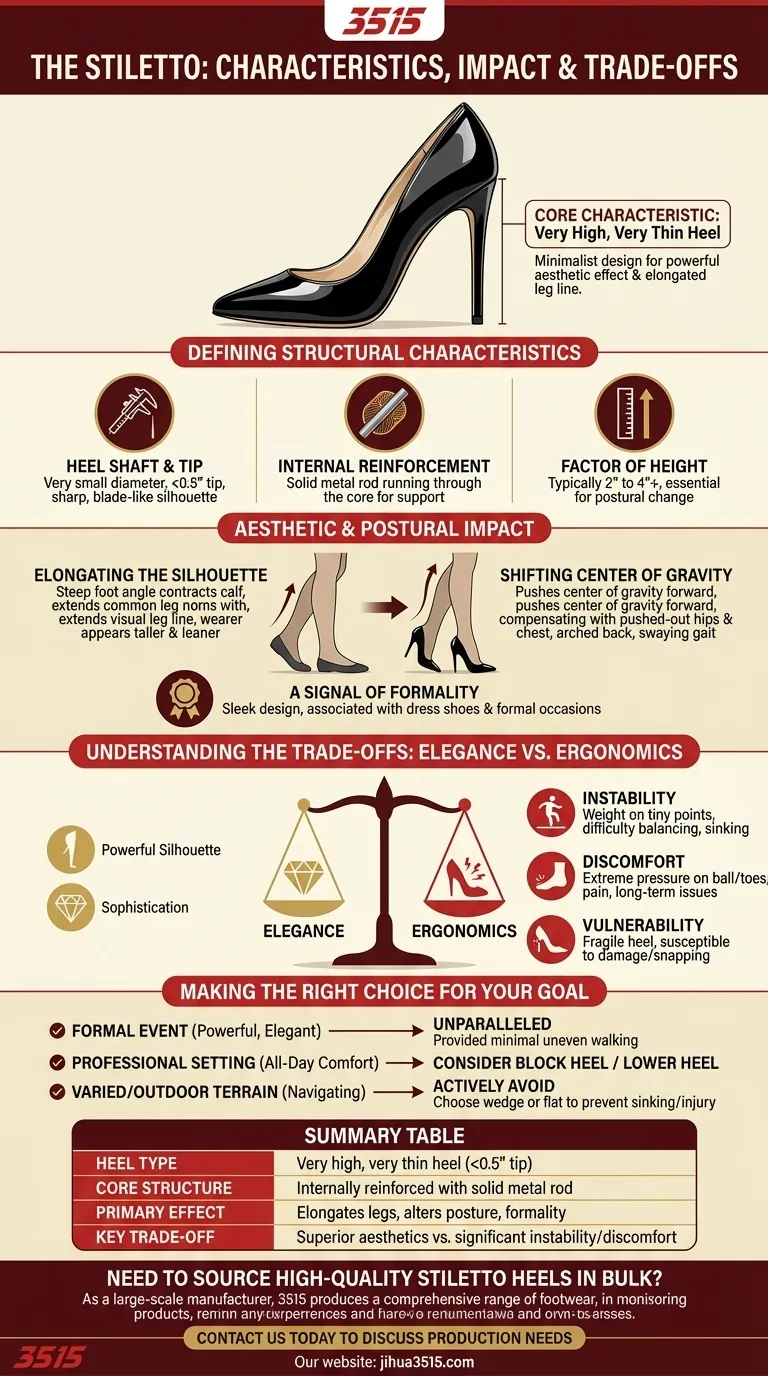
Visual Guide
Related Products
- Custom Safety Shoe Manufacturer for Wholesale & OEM Brands
- Durable Leather High-Ankle Tactical Boots for Wholesale & Custom Manufacturing
- Premium Suede Sport Safety Shoes for Wholesale & Bulk Orders
- Wholesale Mesh Steel Toe Safety Shoes with Dial Closure Factory Production
- Durable High-Ankle Tactical Boots Wholesale Manufacturer for Custom & Bulk Orders
People Also Ask
- What are the advantages of water-based polyurethane spray coatings for safety shoe slip resistance? Enhanced Traction
- What makes a safety shoe a safety shoe? Essential Protection for Hazardous Work
- What additional features can a good safety shoe offer? Maximize Protection and Comfort
- What type of safety shoe is recommended for workers exposed to heavy machinery? Steel Toe Boots for Ultimate Protection
- What are the main materials used in steel toe safety shoes? A Guide to Protective Footwear Construction