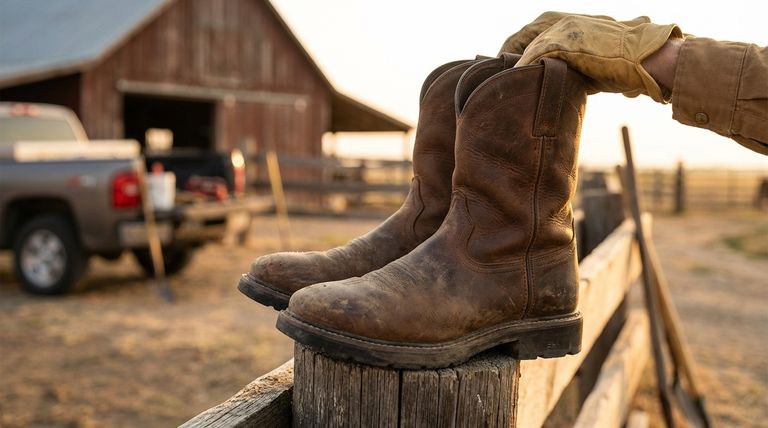
At its core, a cowboy work boot is a hybrid. It merges the iconic Western silhouette with the functional, protective features of a modern work boot. They are characterized by a durable cowhide construction, a low block heel for stability, and a high-traction rubber sole designed for job site safety and all-day comfort.
A true cowboy work boot is not a fashion item; it is purpose-built footwear. It answers the need for a durable, safe, and comfortable boot that upholds a traditional aesthetic, bridging the gap between classic Western style and modern workplace demands.
The Anatomy of a Cowboy Work Boot
To understand what sets these boots apart, we must look at the specific features that adapt a classic design for a working environment.
The Foundation: Sole and Heel
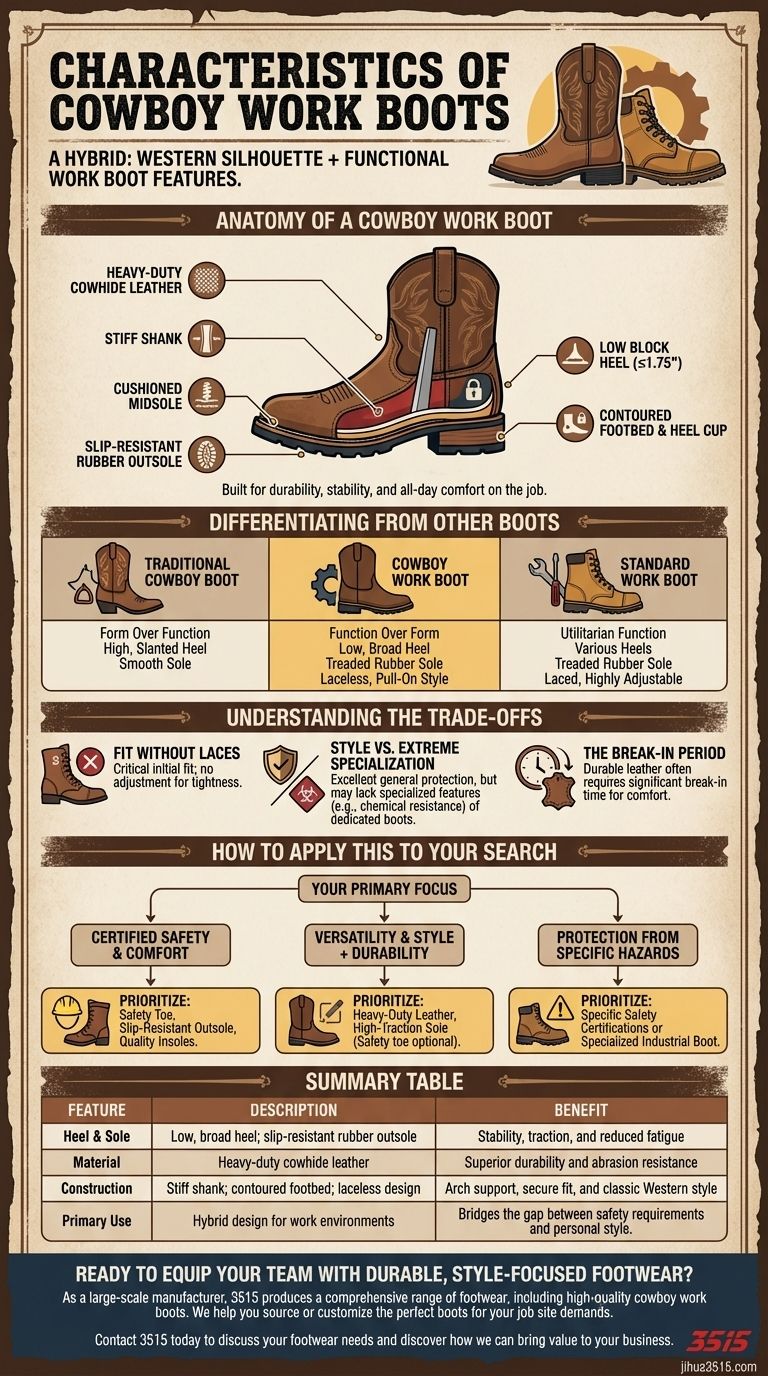
The most significant modification is in the boot's foundation. Unlike the slanted, higher heel of a traditional riding boot, a work version features a short, broad heel, typically 1.75 inches or lower. This provides a stable base for walking and standing for long periods.
The outsole is made of slip-resistant rubber for reliable traction on various surfaces, a stark contrast to the smooth leather soles of dress cowboy boots. Many also include a cushioned midsole to absorb shock and reduce fatigue.
Construction and Materials
These boots are built for durability. They are typically crafted from heavy-duty cowhide leather designed to withstand the abrasions and stresses of a demanding job. The overall construction is more rugged and reinforced than that of a standard cowboy boot.
Internal Structure and Support
Because they lack laces, the internal fit is critical. A quality cowboy work boot features a stiff shank between the insole and outsole to provide arch support and maintain the boot's shape.
A well-designed heel cup and contoured footbed are also essential. These components work together to lock your foot in place, preventing excessive movement and providing the support you would otherwise get from laces.
Differentiating From Other Boots
The cowboy work boot occupies a unique space. Understanding how it compares to other types of boots clarifies its specific purpose.
Cowboy Work Boot vs. Traditional Cowboy Boot
The primary difference is function over form. Traditional boots are designed for riding, with a high, slanted heel to catch a stirrup and a smooth sole. Work versions are re-engineered for walking, with a low heel for stability and a treaded rubber sole for grip.
Cowboy Work Boot vs. Standard Work Boot
While both prioritize safety and support, the key difference is style and construction. Standard work boots are purely utilitarian, often featuring laces for a highly adjustable fit. Cowboy work boots offer the same protective features, such as reinforced toes, but in a distinct, laceless, pull-on style.
Understanding the Trade-offs
While highly versatile, this hybrid design comes with specific considerations.
Fit Without Laces
The most critical factor is achieving a perfect fit from the start. Without laces, you cannot adjust the boot's tightness. A poor fit can lead to significant heel slippage or uncomfortable pressure points.
Style vs. Extreme Specialization
While many cowboy work boots offer excellent protection, they may not have the highly specialized features of boots built for a single, extreme purpose. For example, a dedicated EMS boot offers superior puncture and chemical resistance, while a tactical boot prioritizes minimal weight above all else.
The Break-in Period
The same heavy-duty leather that makes these boots so durable also means they often require a significant break-in period. Be prepared for some initial stiffness before the leather conforms to your foot.
How to Apply This to Your Search
Your ideal boot depends entirely on the demands of your environment.
- If your primary focus is certified safety and all-day comfort: Prioritize models with a defined safety toe (steel or composite), a slip-resistant rubber outsole, and high-quality cushioned insoles.
- If your primary focus is versatility and style with added durability: A boot with a heavy-duty leather build and a high-traction sole may be sufficient, even without a certified safety toe for less hazardous work.
- If your primary focus is protection from specific hazards like punctures or chemicals: Ensure the boot has the specific safety certifications required for your job, or consider a more specialized industrial boot.
By blending robust protection with a timeless design, the right cowboy work boot allows you to meet the demands of your job without sacrificing your personal style.
Summary Table:
| Feature | Description | Benefit |
|---|---|---|
| Heel & Sole | Low, broad heel; slip-resistant rubber outsole | Stability, traction, and reduced fatigue |
| Material | Heavy-duty cowhide leather | Superior durability and abrasion resistance |
| Construction | Stiff shank; contoured footbed; laceless design | Arch support, secure fit, and classic Western style |
| Primary Use | Hybrid design for work environments | Bridges the gap between safety requirements and personal style |
Ready to Equip Your Team with Durable, Style-Focused Footwear?
As a large-scale manufacturer, 3515 produces a comprehensive range of footwear for distributors, brand owners, and bulk clients. Our production capabilities encompass all types of shoes and boots, including high-quality cowboy work boots built for safety and comfort.
We can help you source or customize the perfect boots to meet your specific job site demands and brand aesthetic.
Contact 3515 today to discuss your footwear needs and discover how we can bring value to your business.
Visual Guide
Related Products
- Durable Leather Work Boots for Wholesale & Custom OEM Manufacturing
- Durable Leather Moc Toe Work Boots for Wholesale & Custom Manufacturing
- Durable Leather Work Boots for Wholesale & Custom Manufacturing
- Durable Leather Work Boots Wholesale Manufacturer & Custom Factory
- Durable Moc-Toe Wedge Work Boots | Wholesale Manufacturing for Brands
People Also Ask
- What is the difference between full-grain and top-grain leather? Premium Material Guide for Boot Manufacturers
- What features distinguish work boots from other types of cowboy boots? A Guide to Safety vs. Riding Performance
- What are the key benefits of high-quality work boots? Unlock Safety, Comfort & Long-Term Value
- Why perform macrofoam swab sampling on work boots? Ensure Site Safety & Prevent Hazardous Cross-Contamination
- What should you do when your work boots no longer serve their purpose? Don't Gamble with Your Safety