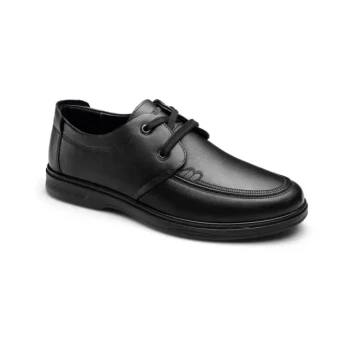
In the world of quality shoemaking, the Blake stitch is a method that prioritizes flexibility and a sleek, elegant profile above all else. Originating in Italy, this construction technique involves a single stitch that runs directly from the insole through the upper and into the outsole, creating a shoe that is immediately comfortable and distinctly refined.
The core trade-off of a Blake-stitched shoe is its construction: it sacrifices the robust, water-resistant build of a welted shoe for superior flexibility and a significantly more elegant, close-trimmed silhouette.
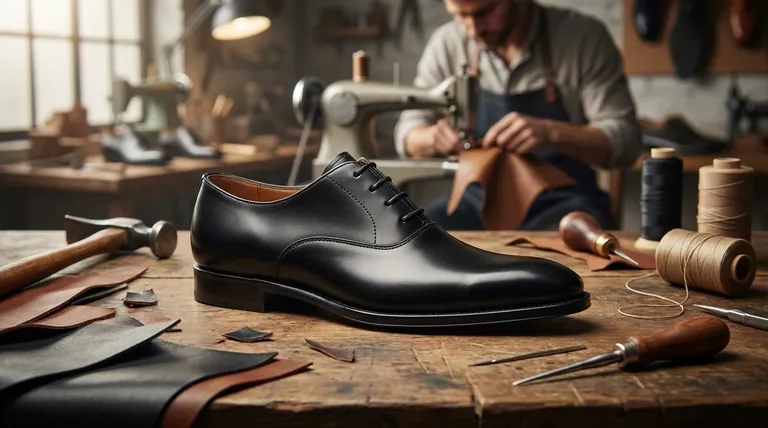
How Blake Stitch Construction Works
To understand the characteristics of a Blake-stitched shoe, you must first understand its unique assembly. It is a simpler and more direct method than many of its counterparts.
The Single Interior Stitch
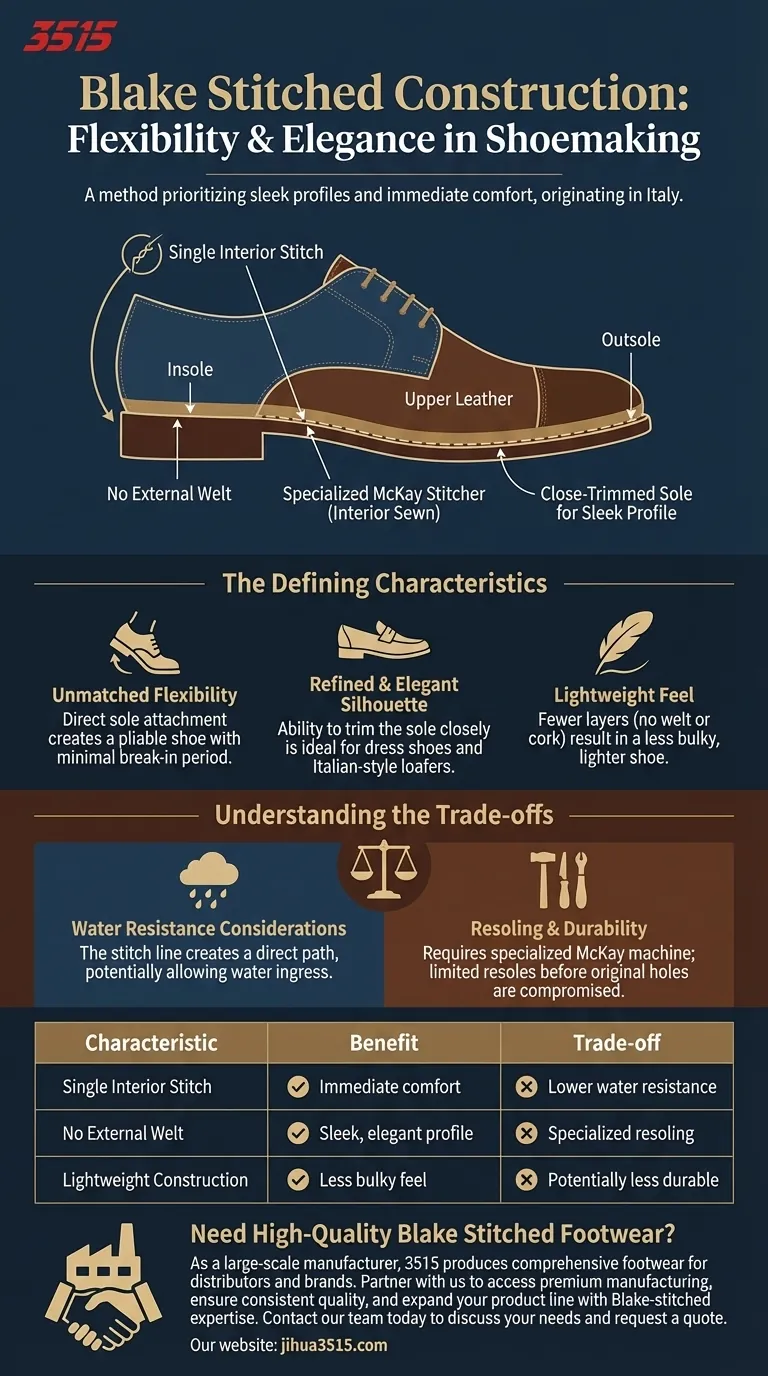
The defining feature of this method is a single line of stitching that directly binds the key components. A specialized machine, known as a McKay stitcher, sews from the inside of the shoe, passing through the insole and the upper before attaching to the outsole.
This direct connection is what gives the shoe its signature character.
The Absence of a Welt
Unlike more robust construction methods like the Goodyear welt, Blake stitching eliminates the welt entirely. A welt is a strip of leather that runs along the perimeter of the outsole, acting as an intermediary to which both the upper and outsole are stitched.
By removing this component, the shoe's construction becomes much simpler and more integrated.
The Result: A Sleek Profile
Because there is no external welt, the outsole of a Blake-stitched shoe can be trimmed exceptionally close to the upper. This creates a slim, close-cut silhouette that is considered more formal and elegant.
The Defining Characteristics: Flexibility and Form
The internal stitch and lack of a welt directly translate into the look and feel of the final product.
Unmatched Flexibility
The simple, direct attachment of the sole results in a shoe that is incredibly flexible right out of the box. This means there is a significantly shorter, if any, break-in period required for the shoe to feel comfortable.
A Refined and Elegant Silhouette
The ability to trim the sole closely is the primary aesthetic advantage of the Blake stitch. It is the preferred construction for Italian-style loafers and sleek dress shoes where a chunky or heavy profile would be undesirable.
Lightweight Feel
With fewer layers and materials involved in its construction—specifically the lack of a welt and cork filling—a Blake-stitched shoe is generally lighter and less bulky on the foot.
Understanding the Trade-offs
The benefits of the Blake stitch come with important considerations. No construction method is superior in all aspects; it is a matter of design and purpose.
Water Resistance
The primary drawback is reduced water resistance. The stitch line that runs through the outsole directly enters the shoe's interior, creating a potential channel for water to seep in during wet conditions.
Resoling and Durability
While Blake-stitched shoes can be resoled, the process is more specialized. It requires a McKay stitching machine, which not all cobblers possess.
Furthermore, each time the shoe is resoled, the new stitches must pass through the original holes in the upper and insole, which limits the number of times this can be done before the leather is compromised.
Making the Right Choice for Your Goal
Selecting a shoe construction method depends entirely on your intended use and priorities.
- If your primary focus is a sleek, formal aesthetic: A Blake-stitched shoe is an excellent choice for its elegant profile, making it ideal for dress shoes and loafers.
- If your primary focus is maximum durability and all-weather use: You should consider a Goodyear-welted shoe for its superior water resistance and ease of resoling.
- If your primary focus is immediate comfort and flexibility: Blake-stitched shoes provide a minimal break-in period and a pliable, comfortable feel from the first wear.
Understanding these construction principles allows you to choose a shoe not just for its style, but for its fundamental engineering and purpose.
Summary Table:
| Characteristic | Benefit | Trade-off |
|---|---|---|
| Single Interior Stitch | Immediate comfort, minimal break-in period | Lower water resistance |
| No External Welt | Sleek, elegant, close-trimmed profile | More specialized resoling process |
| Lightweight Construction | Less bulky, more flexible feel | Potentially less durable than welted shoes |
Need High-Quality Blake Stitched Footwear for Your Brand?
As a large-scale manufacturer, 3515 produces a comprehensive range of footwear for distributors, brand owners, and bulk clients. Our production capabilities encompass all types of shoes and boots, including expertly crafted Blake-stitched dress shoes and loafers that deliver the sleek profiles and superior flexibility your customers demand.
Partner with us to:
- Access Premium Manufacturing: Leverage our expertise in sophisticated construction techniques.
- Ensure Consistent Quality: Benefit from our large-scale, quality-controlled production.
- Expand Your Product Line: Offer your customers the elegant aesthetics and immediate comfort of Blake-stitched footwear.
Contact our team today to discuss your manufacturing needs and request a quote.
Visual Guide
Related Products
- Wholesale Durable Safety Boots Manufacturer Customizable Steel Toe Work Boots
- Wholesale Leather Apron Toe Derby Shoes Custom Factory Production
- Durable Leather Work Boots Wholesale Manufacturer & Custom Factory
- Wholesale Modern Business Shoes with Dial Closure System for Bulk Orders
- Comfortable Block Heel Pumps Wholesale & Custom Factory Production
People Also Ask
- What are the pros and cons of steel toe work boots? A Guide to Maximum Protection vs. Comfort
- What are the different types of steel toe work boots? Choose the Right Boot for Your Job
- What is the history of steel toe work boots? From German Invention to Modern Safety Standard
- How much weight can steel toe work boots withstand? Unpacking the 3,372 lb. Safety Standard
- What are some common myths about steel toe work boots? Debunked for Modern Workers