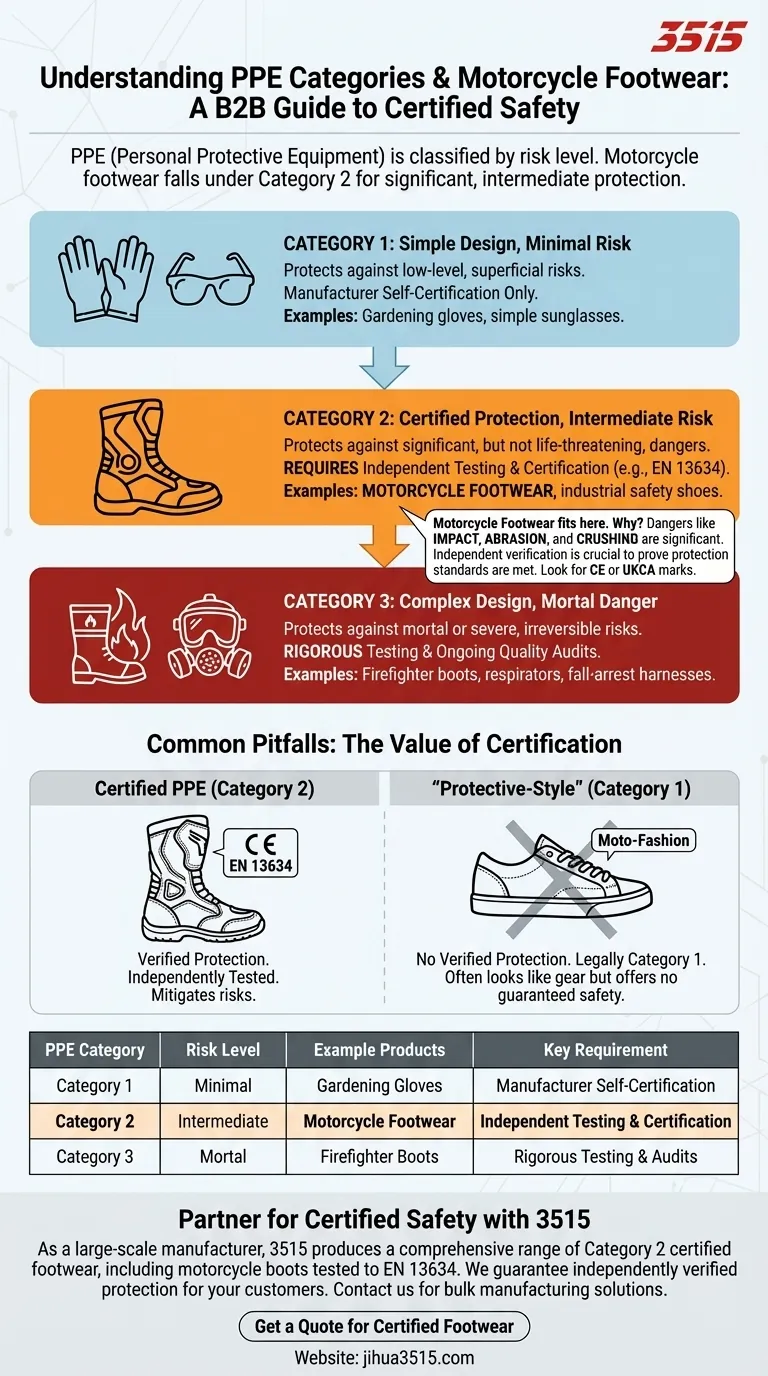
In the simplest terms, Personal Protective Equipment (PPE) is divided into three distinct categories based on the level of risk it protects against. Motorcycle footwear, because it is designed to guard against significant but not life-threatening dangers, is classified as Category 2 PPE.
Understanding the PPE category system is not just an academic exercise; it is the fundamental way to distinguish between gear that is independently verified to protect you and gear that merely looks the part. The category dictates the level of testing and certification required before a product can legally be sold as "protective."
Deconstructing the PPE Categories
The classification of PPE into three tiers is a legal framework designed to match the level of protection and regulatory oversight to the severity of the potential hazard.
Category 1: Simple Design for Minimal Risk
This category covers equipment designed to protect against low-level risks. The potential injuries are typically superficial and reversible.
Think of items like gardening gloves or simple sunglasses. Manufacturers can "self-certify" these products without needing an independent body to test them.
Category 2: Certified Protection for Intermediate Risk
Category 2 is for risks that are significant but not expected to cause death or irreversible harm. This is where the vast majority of motorcycle gear, including footwear, resides.
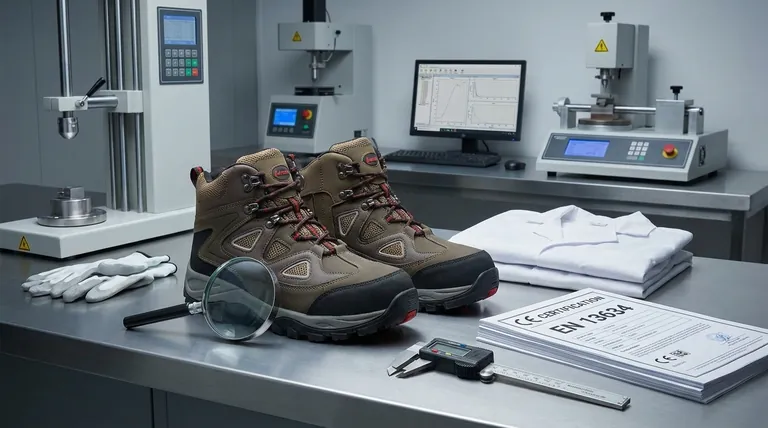
The key distinction for this category is the legal requirement for independent testing and certification. A manufacturer cannot simply claim their boots are protective; they must submit them to a Notified Body (an accredited test lab) to prove they meet specific performance standards.
Category 3: Complex Design for Mortal Danger
This category is reserved for equipment that protects against the highest levels of risk, where a failure could result in death or severe, irreversible health damage.
Examples include firefighter boots protecting from extreme heat, respirators for toxic environments, or fall-arrest harnesses. This gear undergoes the most rigorous testing and requires ongoing quality assurance audits of the manufacturing process.
Why Motorcycle Footwear is Category 2
The placement of motorcycle boots in Category 2 is a direct reflection of the dangers faced during a ride. The system correctly identifies these risks as serious enough to warrant independent verification.
The Nature of Riding Risks
Motorcycle accidents primarily present "intermediate" risks like impact, abrasion, and crushing. While severe, these are the specific dangers that certified boots are tested to mitigate.
They are not typically designed to protect against the mortal dangers of Category 3, such as chemical splashes or extreme temperatures.
The Mandate for Independent Verification
Because the potential for broken bones or serious abrasion is high, a manufacturer's internal claims are insufficient.
Category 2 designation means the boots must be proven to meet a standard (like EN 13634 for motorcycle footwear) through standardized tests. The CE or UKCA mark, accompanied by the standard number, is your proof of this certification.
Common Pitfalls to Avoid
Navigating the gear market requires a clear understanding of what "protective" truly means. The distinction between certified and non-certified products is the most critical factor.
"Protective-Style" vs. Certified PPE
Many boots are sold that look like riding boots but have no certification. These are often called "moto-fashion" or "protective-style" footwear.
Without a CE or UKCA certification mark, these products are legally considered Category 1 items, like a standard pair of sneakers. They offer no verified protection against the specific risks of motorcycling.
The Limits of Certification
Even certified Category 2 gear has its limits. It is designed to reduce the probability and severity of injury in common accident scenarios, not to make you invincible.
Certification ensures a baseline of proven performance, but a sufficiently severe incident can still overcome the boot's protective capabilities.
Making the Right Choice for Your Goal
Your choice of footwear should always be aligned with the real-world risks you face. Understanding the PPE categories empowers you to select gear based on verified performance, not just marketing.
- If your primary focus is casual, non-hazardous activity: Basic, non-certified Category 1 footwear is adequate.
- If your primary focus is certified safety for motorcycling: You must exclusively choose Category 2 boots that are clearly marked as certified to a relevant standard like EN 13634.
- If your primary focus is protection from mortal or extreme hazards: Your professional needs will require specialized Category 3 equipment designed and certified for those specific dangers.
Ultimately, recognizing that motorcycle gear is mandated to be Category 2 PPE gives you the power to demand and identify genuine, tested protection.
Summary Table:
| PPE Category | Risk Level | Example Products | Key Requirement |
|---|---|---|---|
| Category 1 | Minimal, superficial | Gardening Gloves | Manufacturer Self-Certification |
| Category 2 | Intermediate, significant (e.g., impact, abrasion) | Motorcycle Footwear | Independent Testing & Certification (e.g., EN 13634) |
| Category 3 | Mortal, irreversible (e.g., extreme heat, toxic gas) | Firefighter Boots | Rigorous Testing & Ongoing Quality Audits |
Ensure Your Footwear Meets Certified Safety Standards
As a large-scale manufacturer, 3515 produces a comprehensive range of Category 2 certified footwear for distributors, brand owners, and bulk clients. Our production capabilities encompass all types of certified safety shoes and boots, including motorcycle footwear tested to standards like EN 13634.
We provide the assurance of independently verified protection for your customers. Contact us today to discuss your certified footwear needs and leverage our manufacturing expertise.
Get a Quote for Certified Footwear
Visual Guide
Related Products
- Wholesale Lightweight Tactical Boots with Dial Closure OEM & Bulk Orders
- Wholesale Durable Camouflage Canvas Shoes with High-Traction Cleated Rubber Sole
- Wholesale Tactical Boots High-Traction & Reflective for Bulk & Brand Orders
- Durable Leather Tactical Boots Wholesale & Custom Manufacturing for Brands
- Wholesale Waterproof Tactical Boots Custom Suede & High-Traction Soles
People Also Ask
- What features enhance breathability and comfort in tactical boots? A Guide to Superior Footwear Performance
- What should be considered when choosing the best tactical boots? Key Factors for Mission Success
- How do combat boots and tactical boots differ in design and purpose? Choose the Right Boot for Your Mission
- What are the primary characteristics of tactical boots? Lightweight, Agile, and Built for All-Day Missions
- Why is durability an important feature of tactical footwear? The Key to Uncompromising Safety & Performance