
Hiking shoes are specifically designed for day hiking with light packs, fastpacking where agility is a priority, and backpacking with light-to-medium loads on well-maintained trails. They serve as a versatile middle ground between heavy boots and lightweight trail runners.
The core principle is this: hiking shoes deliver the ideal balance of trail-ready protection and athletic flexibility. They trade the heavy-duty ankle support of a boot for significantly less weight and greater comfort, making you faster and more agile on suitable terrain.
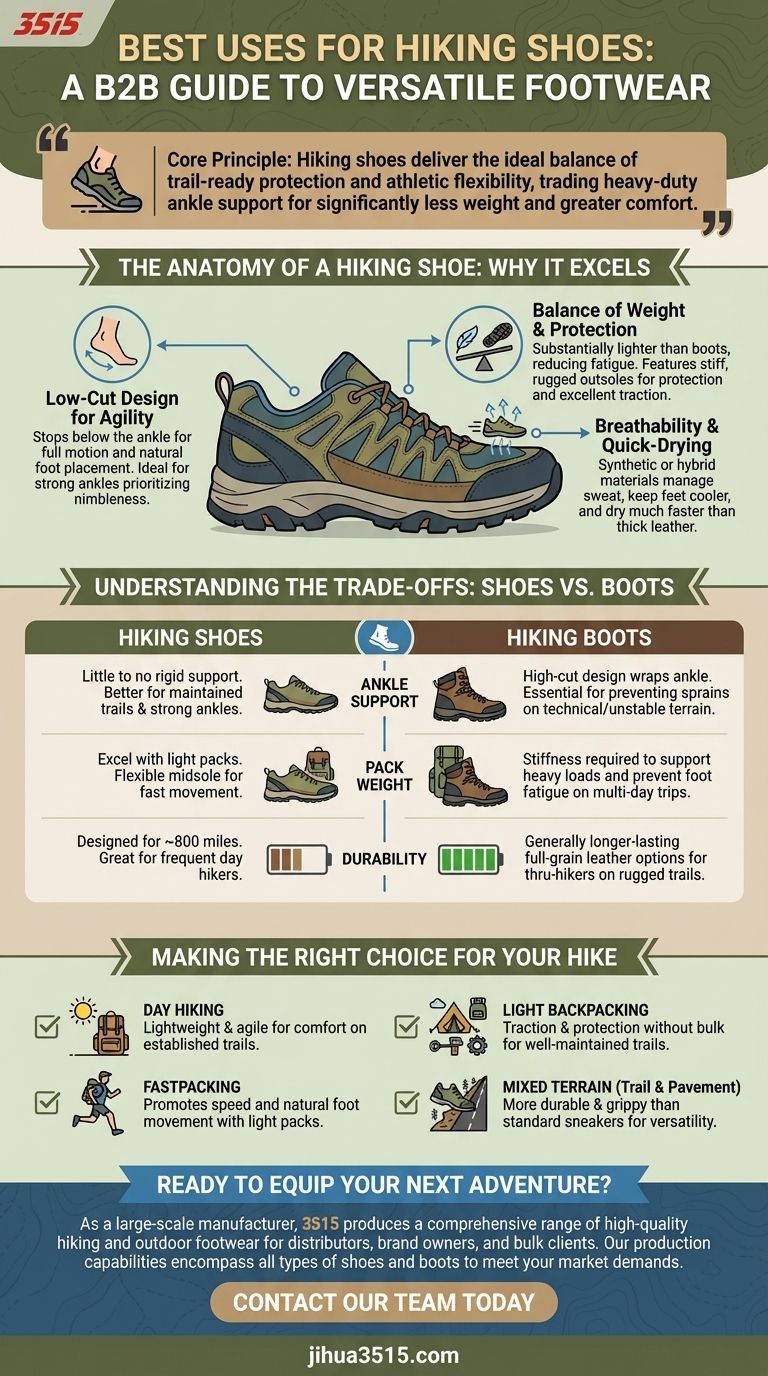
The Anatomy of a Hiking Shoe: Why It Excels
Understanding the design of a hiking shoe reveals why it's the right tool for specific jobs. Its construction is a deliberate compromise, combining features from both boots and running shoes.
Low-Cut Design for Maximum Agility
A hiking shoe's low-cut profile stops below the ankle, which is its most defining feature. This allows for a full range of motion, promoting natural foot placement and better balance on uneven ground.
This design is ideal for hikers with strong, stable ankles who value nimbleness over rigid support.
A Balance of Weight and Protection
Hiking shoes are substantially lighter than traditional boots, which reduces fatigue on your legs over a long day. They feel less clunky and more like a sturdy sneaker.
Despite their lower weight, they feature stiff, rugged outsoles that protect your feet from sharp rocks and provide excellent traction on varied surfaces.
Breathability and Quick-Drying Materials
Most hiking shoes are made from synthetic materials or a combination of leather and synthetics, emphasizing breathability. This helps manage sweat and keep your feet cooler and drier.
When they do get wet, their lighter construction means they dry much faster than a thick leather boot, a critical advantage in damp conditions or after a stream crossing.
Understanding the Trade-offs: Shoes vs. Boots
Choosing hiking shoes means accepting a clear set of trade-offs. Being aware of these limitations is key to using them safely and effectively.
The Ankle Support Debate
The most significant difference is ankle support. A hiking boot's high-cut design wraps around the ankle, providing rigid support that helps prevent twists and sprains on highly technical or unstable terrain.
Hiking shoes offer very little of this specialized ankle protection. The choice depends entirely on the trail's difficulty and your personal injury history.
Pack Weight and Trail Conditions
Hiking shoes excel with light packs on maintained trails. Their flexible midsoles provide comfort for fast movement under a light load.
However, when carrying a heavy pack (e.g., for multi-day backpacking), the stability and cushioning of a stiffer hiking boot are essential to support the extra weight and prevent foot fatigue.
Durability and Lifespan
While more durable than a typical trail-running shoe, hiking shoes are generally not as long-lasting as a full-grain leather hiking boot. They are designed to last around 800 miles.
This makes them a great option for frequent day hikers or weekend backpackers, but a thru-hiker on a rugged trail might opt for a more robust boot.
Making the Right Choice for Your Hike
Your intended activity is the ultimate guide. Use these scenarios to determine if a hiking shoe is the best fit for your needs.
- If your primary focus is day hiking or fastpacking on established trails: A hiking shoe is the ideal choice for its blend of low weight, comfort, and reliable traction.
- If your primary focus is backpacking with a heavy load or on rough, off-trail terrain: A traditional hiking boot is the safer and more supportive option to protect your ankles and feet.
- If your primary focus is walking on a mix of pavement and easy trails: A hiking shoe provides excellent versatility, offering more durability and grip than a standard sneaker.
Ultimately, selecting the right footwear is about matching the tool to the specific demands of your adventure.
Summary Table:
| Best Use Case | Why Hiking Shoes Excel |
|---|---|
| Day Hiking | Lightweight and agile for comfort on established trails. |
| Fastpacking | Promotes speed and natural foot movement with light packs. |
| Light Backpacking | Provides traction and protection without the bulk of heavy boots. |
| Mixed Terrain (Trail & Pavement) | More durable and grippy than standard sneakers. |
Ready to equip your next adventure with the perfect footwear?
As a large-scale manufacturer, 3515 produces a comprehensive range of high-quality hiking and outdoor footwear for distributors, brand owners, and bulk clients. Whether you need durable day hikers or versatile trail shoes, our production capabilities encompass all types of shoes and boots to meet your market's demands.
Contact our team today to discuss your footwear needs and discover how we can support your business.
Visual Guide
Related Products
- Durable Rubber Sole Outdoor Shoes Wholesale & Custom Manufacturing
- Wholesale High-Traction Camo Boots - Custom Manufacturer for Brands
- Wholesale Durable Camouflage Canvas Shoes with High-Traction Cleated Rubber Sole
- Wholesale Durable Camo Canvas Shoes with High-Traction Rubber Soles
- Wholesale Breathable Perforated Leather Derby Shoes with Modern Comfort Sole
People Also Ask
- What is the function of the sole in outdoor shoes? Find the Perfect Grip and Support
- What role do outdoor shoes and sneakers play in navigating external terrains? Engineered Stability for Every Surface
- How is AI utilized in the design of outdoor and safety footwear? Harnessing Big Data for Market-Driven Shoe Innovation
- Why is durability important when selecting outdoor shoes? A Guide to Safety & Long-Term Value
- What are the key components of outdoor shoes that affect comfort and sturdiness? A Guide to Durable, High-Performance Footwear



















