
The single most important step in caring for synthetic hiking boots happens the moment you return from a trip. The first step is to immediately clean off all mud, sand, grit, and other debris. These materials act as powerful abrasives that grind away at the boot's fabric and stitching, drastically shortening their functional lifespan.
Proactive cleaning after every single hike is the foundation of synthetic boot care. This simple habit prevents the abrasive breakdown of materials and seams, which is the primary reason this type of footwear fails prematurely.
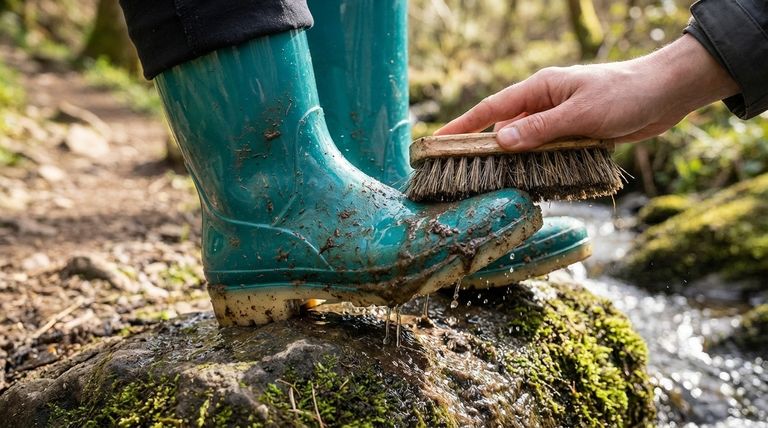
Why Immediate Cleaning is Non-Negotiable
Failing to clean your boots is the fastest way to destroy them. The synthetic materials used in modern hiking boots have specific vulnerabilities that dirt and grit exploit.
The Abrasive Effect of Debris
Dried mud, sand, and fine grit become a sandpaper-like substance. With every step you take, these particles grind away at the synthetic fibers and, most critically, the seams holding the boot together.
Protecting Material Integrity
Synthetic materials like polyester and nylon rely on a tight weave for their strength. Caked-on mud can hold moisture against the fabric, slowly degrading its integrity and any water-resistant coatings.
Maintaining Breathability
Modern boots are designed to be breathable, allowing sweat to escape. A layer of dried mud clogs the microscopic pores in the fabric, trapping moisture inside and leading to discomfort, blisters, and a breakdown of internal materials.
A Practical Guide to Post-Hike Cleaning
A proper cleaning doesn't require much time but pays enormous dividends in boot longevity. Follow these simple steps.
Step 1: Remove Laces and Insoles
Take out the laces and insoles. This allows you to clean the boot thoroughly and lets all components dry properly, preventing mildew and odor.
Step 2: Dislodge Dry Debris
Once the mud has dried, knock your boots together to dislodge the largest clumps. Use a soft brush to gently scrub away the remaining dirt and grit.
Step 3: Wash the Exterior
For a deeper clean, use a soft brush or cloth with either a mild dish soap solution or a specialized product like Nikwax Footwear Cleaning Gel. Gently scrub the entire outer surface of the boot.
Step 4: Rinse Thoroughly
Wipe the boots down with a clean, damp cloth to remove all soap residue. Leaving soap on the fabric can attract more dirt in the future.
Step 5: Dry Slowly and Safely
Never use intense, direct heat (like a campfire or radiator) to dry your boots, as this can damage the adhesives and warp the synthetic materials. Stuff them with newspaper, place them in front of a fan, or use a gentle boot dryer.
Understanding the Trade-offs of Synthetic Boots
Your choice of synthetic boots comes with a distinct set of advantages and a key vulnerability that your care routine must address.
The Benefit: Lightweight and Fast-Drying
Synthetic boots are significantly lighter, break in faster, and dry more quickly than their traditional leather counterparts. This makes them an excellent choice for a wide range of conditions.
The Vulnerability: Exposed Stitching
The main drawback is durability. Synthetic boots often have many more external seams than leather boots. These stitched seams are the most common failure point, and they are precisely what abrasive grit and dirt attack first.
Making Your Boots Last: Key Priorities
Your approach to care directly impacts how many miles you'll get from your investment.
- If your primary focus is longevity: Make post-hike cleaning an immediate and non-negotiable habit to protect the vulnerable seams from abrasive wear.
- If your primary focus is on-trail performance: Ensure you dry your boots thoroughly after cleaning to maintain their breathability and prevent the internal breakdown caused by trapped moisture.
Consistent care transforms your boots from a disposable purchase into a long-term investment in your adventures.
Summary Table:
| Boot Care Priority | Key Action | Primary Benefit |
|---|---|---|
| Maximizing Longevity | Immediate post-hike cleaning | Protects vulnerable seams from abrasive grit |
| On-Trail Performance | Thorough, slow drying | Maintains breathability and prevents internal breakdown |
As a leading manufacturer, 3515 produces a comprehensive range of durable footwear for distributors, brand owners, and bulk clients. We understand the engineering behind long-lasting boots. Let us help you source or develop high-performance synthetic hiking boots built to withstand the elements. Contact our experts today to discuss your footwear needs and production capabilities.
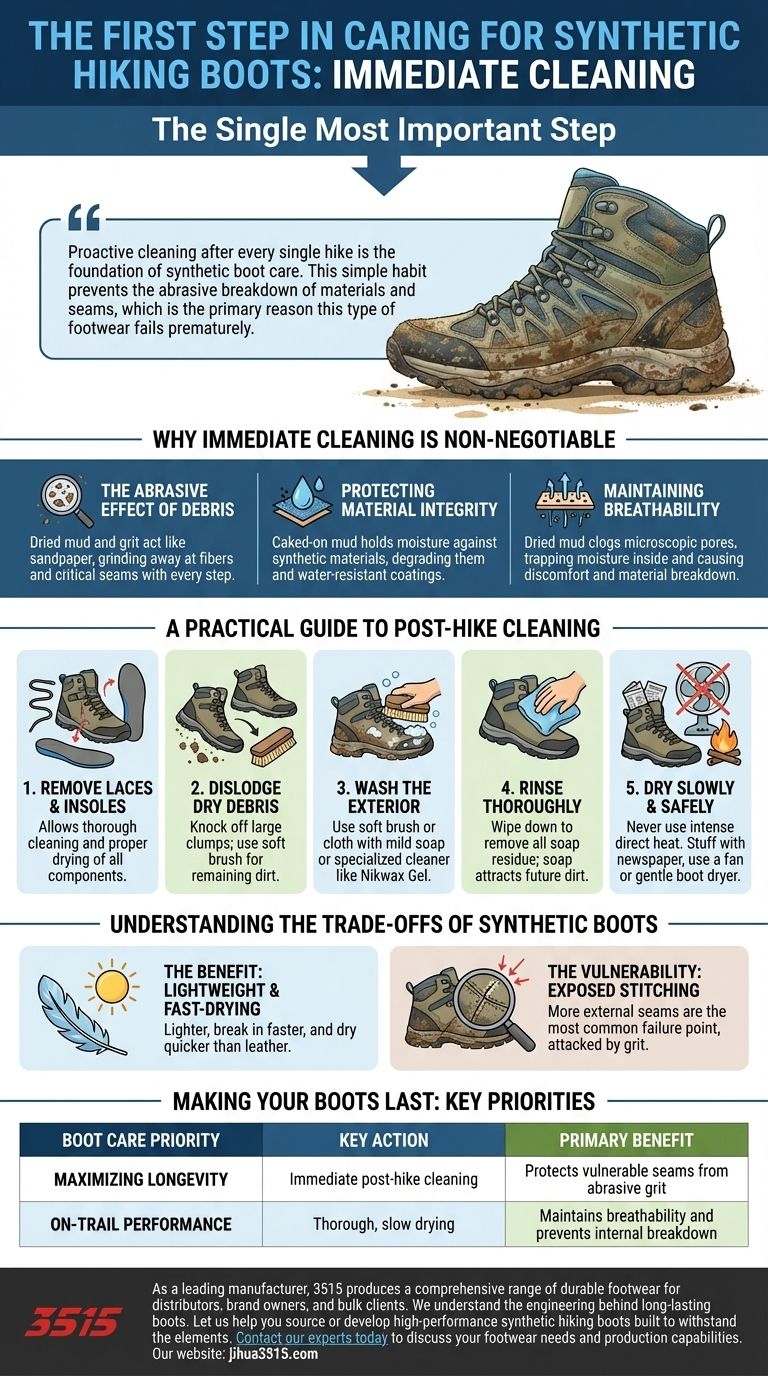
Visual Guide
Related Products
- Wholesale High-Traction Camo Boots - Custom Manufacturer for Brands
- Durable Rubber Sole Outdoor Shoes Wholesale & Custom Manufacturing
- Wholesale Lightweight Tactical Boots Custom Manufacturer for Desert & Combat Use
- Wholesale Waterproof Tactical Boots Custom Suede & High-Traction Soles
- Durable High-Ankle Tactical Boots Wholesale Manufacturer for Custom & Bulk Orders
People Also Ask
- What are the key features of the new line of camo boots? Built for Extreme Cold & Rugged Terrain
- Are camo boots necessary for hunting success? Prioritize Performance Over Pattern
- How does the Rank Score Test identify the primary causes of premature failure in tactical and work boots? Key Insights
- What is the technical logic behind using closed-eye testing for tactical boots? Unlocking Peak Footwear Stability
- What shoes to wear for a security job? Durable, Protective Footwear for Long Shifts



















