
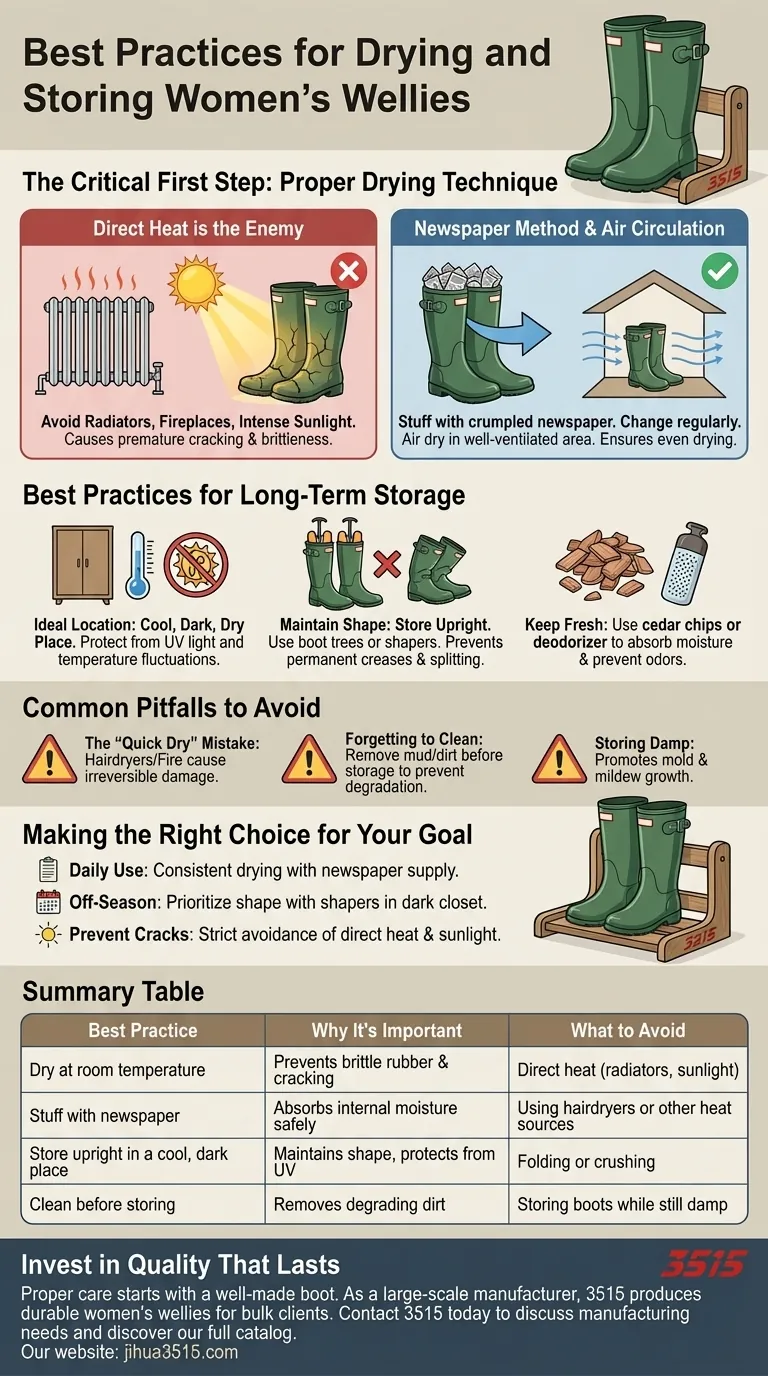
To ensure your wellies last for years, the best practice is to always dry them slowly at room temperature and store them upright in a cool, dark, and dry location. The most common cause of premature cracking and failure is exposure to direct heat sources or sunlight, which degrades the rubber. Stuffing them with newspaper is a highly effective way to absorb internal moisture without resorting to damaging heat.
The core principle of wellie care is simple: avoid extremes. Sudden temperature changes and improper storage are the primary enemies of rubber, leading to brittleness and cracks. Gentle, consistent maintenance is the key to their longevity.
The Critical First Step: Proper Drying Technique
How you dry your wellies after use has the single biggest impact on their lifespan. Rushing this process with artificial heat is a common but destructive mistake.
Why Direct Heat is the Enemy
Exposing rubber boots to direct heat from a radiator, fireplace, or even intense sunlight causes the material to dry out too quickly. This rapid drying process makes the rubber lose its natural flexibility, leading to brittleness and the formation of cracks, especially around flex points like the ankle.
The Newspaper Method for Interior Moisture
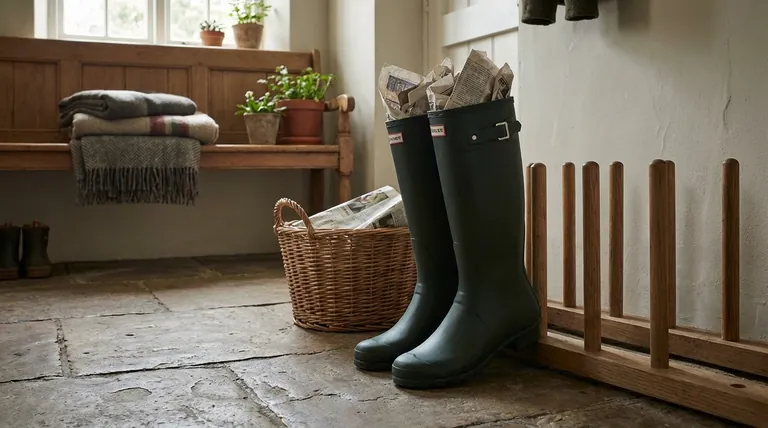
The most effective and safest way to dry the inside of your wellies is to stuff them with crumpled newspaper. Newspaper is highly absorbent and will draw moisture out of the boot lining overnight. Change the paper every few hours for boots that are particularly saturated.
Ensuring Complete Air Circulation
Once you've cleaned any mud from the exterior, place the boots in a well-ventilated area to air dry. Avoid sealed cupboards or damp corners. Propping them up or using a boot rack allows air to circulate freely around the entire boot, ensuring they dry evenly.
Best Practices for Long-Term Storage
Where and how you store your wellies when not in use prevents material degradation and deformation.
Finding the Ideal Storage Location
The best place for your boots is a cool, dry, and dark environment like a closet, mudroom, or garage. The key is to protect them from UV light, which can fade and weaken the rubber over time, and from the temperature fluctuations of being near a window or heat source.
Maintaining the Boot's Shape
Never store your wellies folded over or crushed under other items. This creates permanent creases that become weak points prone to splitting. Store them standing upright. Using boot trees or shapers is the ideal way to maintain their form and prevent the ankle from collapsing.
Keeping Them Fresh
For long-term storage or to combat odor, consider placing cedar chips or a dedicated boot deodorizer inside. This helps absorb any lingering moisture and prevents musty smells from developing.
Common Pitfalls to Avoid
Steering clear of these common mistakes is just as important as following the correct procedures.
The "Quick Dry" Mistake
The temptation to place wet boots by a fire or use a hairdryer on them is strong, but it will cause irreversible damage. Always choose slow, patient air drying over fast, intense heat.
Forgetting to Clean Before Storing
Leaving mud and dirt on your boots can degrade the rubber over time. A quick rinse with water and a soft brush after use is a crucial step before you begin the drying and storing process.
Storing Boots While Still Damp
Ensuring your wellies are completely bone-dry before putting them away for an extended period is critical. Trapped moisture in a dark space is the perfect breeding ground for mold and mildew, which can ruin the lining and create unpleasant odors.
Making the Right Choice for Your Goal
Your routine should adapt slightly based on how you use your wellies.
- If you use your wellies daily: Focus on a consistent drying routine by keeping a supply of newspaper and a designated airy spot ready.
- If you store your wellies for the off-season: Prioritize shape and environment by ensuring they are completely clean and dry and using boot shapers in a dark closet.
- If your primary concern is preventing cracks: Your main focus should be on avoiding all direct heat sources and storing the boots away from sunlight.
A few simple habits are all it takes to ensure your wellies are protected and ready for any adventure.
Summary Table:
| Best Practice | Why It's Important | What to Avoid |
|---|---|---|
| Dry at room temperature | Prevents rubber from becoming brittle and cracking | Direct heat (radiators, sunlight) |
| Stuff with newspaper | Absorbs internal moisture safely | Using a hairdryer or other heat sources |
| Store upright in a cool, dark place | Maintains shape and protects from UV damage | Folding or crushing the boots |
| Clean before storing | Removes dirt that can degrade the material | Storing boots while still damp |
Invest in Quality That Lasts
Proper care is essential, but it starts with a well-made boot. As a large-scale manufacturer, 3515 produces a comprehensive range of durable footwear for distributors, brand owners, and bulk clients. Our production capabilities encompass all types of women's wellies, designed with longevity in mind.
Let us help you provide your customers with boots built to withstand the elements and proper care.
Contact 3515 today to discuss your manufacturing needs and discover our full catalog.
Visual Guide
Related Products
- Wholesale Women's Leather Derby Shoes Custom Factory Production
- Wholesale Classic Leather Lace-Up Ankle Boots for Brand Manufacturing
- Durable Waterproof Rain Boots | Custom Manufacturer for Wholesale & Brands
People Also Ask
- How do Derby shoes fit into business casual attire? Master the Perfect Balance of Professional Style
- What are the features and appropriate occasions for wearing derby shoes? A Guide to Versatile Style
- What is the main difference between Derby Shoes and Oxford Shoes? It's All in the Lacing.
- What historical figure is associated with the Derby shoe? The Earl of Derby's Comfort Revolution
- How do Derby shoes differ from Oxford shoes? A Guide to Formality, Fit & Style


