
In short, women's wellies are primarily made from natural rubber, PVC, and neoprene. Each material is chosen for a specific balance of durability, flexibility, insulation, and cost. While natural rubber is the traditional gold standard for its resilience, modern synthetics offer distinct advantages for different uses, from cold-weather comfort to budget-friendly functionality.
The material of a wellie is not just a feature; it is the core determinant of its performance. The choice between classic rubber, affordable PVC, or insulated neoprene is a direct trade-off between longevity, cost, and comfort for specific conditions.
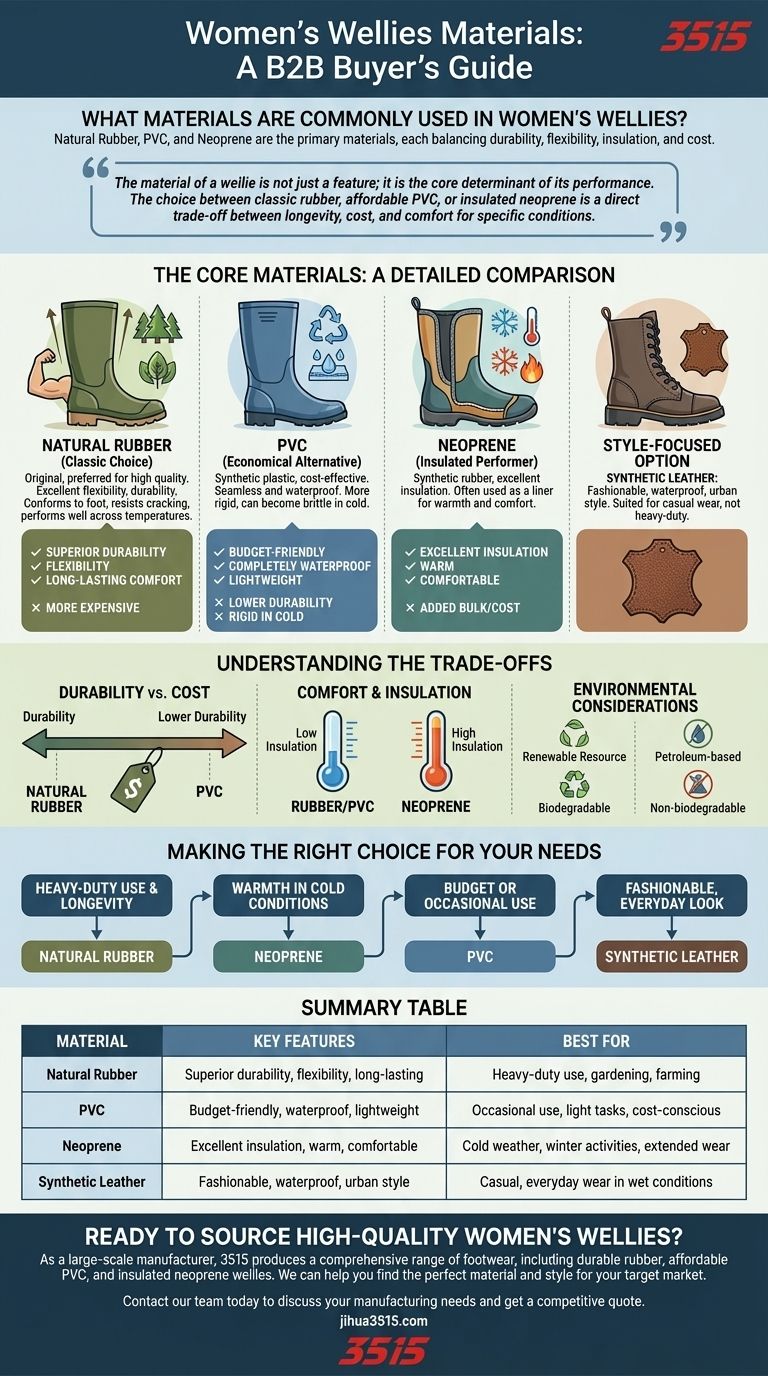
The Core Materials: A Detailed Comparison
Understanding the fundamental properties of each material is the first step in selecting the right boot. While all are waterproof, their performance characteristics vary significantly.
Natural Rubber: The Classic Choice
Natural rubber is the original and often preferred material for high-quality wellington boots. It is known for its excellent flexibility and durability.
This material conforms to your foot and leg over time, providing a more comfortable fit for extended wear. It also has a natural resistance to cracking and performs well across a range of temperatures.
PVC (Polyvinyl Chloride): The Economical Alternative
PVC is a synthetic plastic that serves as a common, cost-effective alternative to rubber. These boots are manufactured through an injection molding process, making them completely seamless and waterproof.
While PVC is less expensive, it is also more rigid and can become brittle in very cold temperatures. It doesn't offer the same long-term durability or comfort as natural rubber.
Neoprene: The Insulated Performer
Neoprene is the same synthetic rubber used in wetsuits and is prized for its exceptional insulating properties. It is often used as a liner or for the upper part of the boot shaft.
This material keeps your feet warm in cold and wet conditions, making it ideal for winter use. It is also soft, flexible, and adds a significant level of comfort.
Synthetic Leather: The Style-Focused Option
While less common for traditional, heavy-duty wellies, synthetic leather is used for more fashion-oriented waterproof boots. It provides the look of leather with waterproof capabilities.
These boots prioritize aesthetics and are typically suited for casual urban wear rather than demanding outdoor activities like farming or gardening.
Understanding the Trade-offs
Choosing the right material involves balancing competing priorities. No single material is perfect for every situation.
Durability vs. Cost
The most significant trade-off is often between longevity and price. Natural rubber boots are typically more expensive but will last much longer with proper care. PVC boots are very affordable but are more likely to split or crack with heavy use.
Comfort and Insulation
Standard rubber and PVC boots offer little insulation on their own. For cold weather, you will either need thick socks, a separate liner, or a boot constructed with neoprene, which provides built-in warmth and cushioning.
Environmental Considerations
The production of wellies has an environmental impact. Natural rubber is a renewable resource, but PVC is a petroleum-based plastic that involves chemical treatments and is not biodegradable. This is an important factor for environmentally conscious consumers.
Making the Right Choice for Your Needs
To select the best wellies, match the material's strengths to your intended use.
- If your primary focus is heavy-duty use and longevity: Choose boots made from high-quality natural rubber for their superior durability and flexibility.
- If your primary focus is warmth in cold conditions: Look for wellies made with or lined with neoprene for its excellent insulation properties.
- If your primary focus is budget or occasional use: PVC wellies offer a completely waterproof and highly affordable option for light tasks and infrequent wear.
- If your primary focus is a fashionable, everyday look: Consider a style-driven boot made from synthetic leather for urban environments.
By aligning the material's inherent strengths with your specific activities, you can ensure your wellies provide the right balance of comfort, durability, and performance.
Summary Table:
| Material | Key Features | Best For |
|---|---|---|
| Natural Rubber | Superior durability, flexibility, long-lasting | Heavy-duty use, gardening, farming |
| PVC | Budget-friendly, completely waterproof, lightweight | Occasional use, light tasks, cost-conscious buyers |
| Neoprene | Excellent insulation, warm, comfortable | Cold weather, winter activities, extended wear |
| Synthetic Leather | Fashionable, waterproof, urban style | Casual, everyday wear in wet conditions |
Ready to Source High-Quality Women's Wellies?
As a large-scale manufacturer, 3515 produces a comprehensive range of footwear for distributors, brand owners, and bulk clients. Our production capabilities encompass all types of shoes and boots, including durable rubber wellies, affordable PVC options, and insulated neoprene designs.
We can help you find the perfect material and style for your target market. Contact our team today to discuss your manufacturing needs and get a competitive quote.
Visual Guide
Related Products
- Wholesale Classic Leather Lace-Up Ankle Boots for Brand Manufacturing
- Wholesale Women's Leather Derby Shoes Custom Factory Production
- Durable Waterproof Rain Boots | Custom Manufacturer for Wholesale & Brands
- Wholesale Durable Leather Work Boots | 8-Inch Goodyear Welt Manufacturer
People Also Ask
- How are oils used to waterproof leather boots? A Guide to Deep Conditioning & Protection
- Why is regular maintenance necessary for the performance of leather boots? Boost Durability & Brand Reputation
- Why might it be beneficial to pre-heat the boots before applying wax? Achieve Deeper, Longer-Lasting Protection
- How can leather boots maintain their water resistance? A Guide to Lasting Protection
- What is the biggest enemy of leather boots? Protect Your Investment from Water Damage



