
Wearing shoes with proper support is a direct investment in your entire body's health, not just your feet. The immediate benefits include the alleviation of foot and back pain, significant improvement in posture, and a reduction in fatigue and soreness. This is especially critical for anyone who spends long periods standing, walking, or running, as supportive footwear helps prevent common injuries by providing a stable foundation.
Proper shoe support extends far beyond immediate comfort. It works by correctly aligning your entire body from the ground up, reducing cumulative stress on your joints and preventing a cascade of musculoskeletal issues that can develop over time.
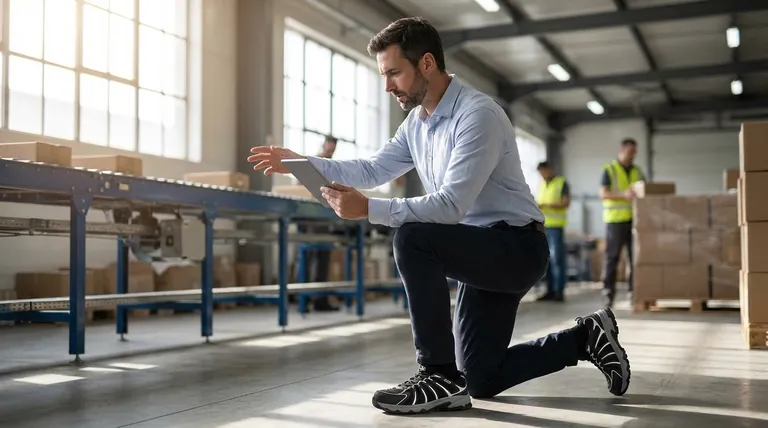
The Biomechanics of Support: Your Body's Foundation
Understanding how shoe support works requires thinking of your feet as the foundation of a building. If the foundation is unstable or misaligned, it creates stress throughout the entire structure.
Aligning the Kinetic Chain
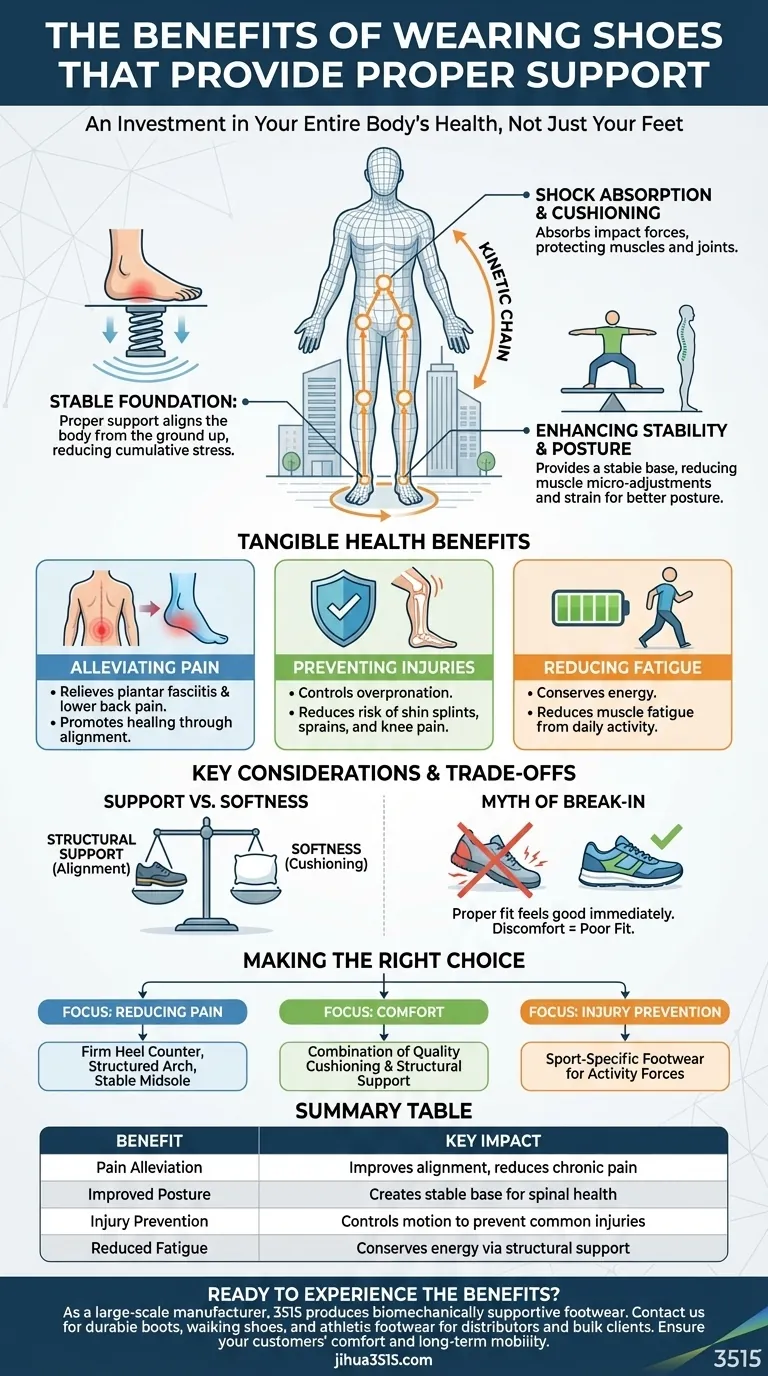
Your body is a "kinetic chain," where movement in one joint affects the others. Improper foot alignment—often caused by unsupportive shoes—can force your ankles, knees, hips, and lower back to compensate, leading to chronic pain and poor posture.
Proper support helps maintain a neutral foot position, ensuring this chain functions correctly from the ground up.
Shock Absorption and Cushioning
Every step you take sends impact forces up through your body. Quality cushioning is a key component of support that absorbs and disperses this shock.
This function is vital for preventing the fatigue and soreness that comes from repetitive impact on hard surfaces, protecting both your muscles and joints.
Enhancing Stability and Posture
A supportive shoe provides a stable base. This stability reduces the micro-adjustments your muscles must constantly make to keep you balanced.
When your base is secure, it's easier for your spine to maintain its natural, healthy alignment, directly improving your overall posture and reducing strain on your back muscles.
The Tangible Health Benefits of Proper Support
The mechanical advantages of supportive footwear translate directly into noticeable improvements in your daily life and long-term health.
Alleviating Chronic Foot and Back Pain
For many people, persistent foot issues (like plantar fasciitis) and unexplained lower back pain are directly linked to inadequate footwear.
Shoes with the right arch support and structure can immediately relieve stress on affected tissues and provide the alignment needed for healing and pain reduction.
Preventing Common Injuries
Supportive footwear is a powerful preventative tool. It helps control excessive foot motion, such as overpronation (where the foot rolls inward), which is a common cause of shin splints, knee pain, and ankle sprains.
By keeping your foot secure and properly aligned during movement, you significantly reduce your risk of injury.
Reducing Daily Fatigue
If you end your day with tired, aching feet and legs, your shoes are likely a primary cause. Unsupportive footwear forces the small muscles in your feet and lower legs to work overtime to provide stability.
A shoe that provides structural support does that work for them, conserving your energy and reducing muscle fatigue throughout the day.
Understanding the Trade-offs and Key Considerations
Choosing the right shoe involves more than just picking the one with the most arch support. Context and fit are crucial.
Support is Not Just Softness
A common misconception is that a soft, heavily cushioned shoe is always a supportive one. While cushioning absorbs impact, structural support is what provides alignment and stability.
A shoe can feel like a pillow but lack the firm midsole or heel counter needed to prevent your foot from moving in unhealthy ways.
The Myth of the "Break-In" Period
A properly fitting and supportive shoe should feel comfortable and secure from the moment you put it on.
While some durable materials may soften slightly over time, the fundamental fit and support should not require a painful "break-in" period. Discomfort is a sign of a poor fit, not a shoe that needs taming.
Support Must Match the Activity
The "right" support is entirely dependent on the context. A running shoe is designed to absorb high impact and guide forward motion, while a good walking shoe focuses on stability and a smooth stride.
A durable boot for rough terrain provides ankle support and protection that would be too rigid for other activities. Always match the shoe's support features to your intended use.
Making the Right Choice for Your Goal
To select the best footwear, start by identifying your primary need.
- If your primary focus is reducing chronic pain: Look for shoes with a firm heel counter, structured arch support that matches your foot type, and a stable midsole.
- If your primary focus is comfort during long periods of standing or walking: Prioritize a shoe with an effective combination of quality cushioning for shock absorption and structural support for stability.
- If your primary focus is injury prevention during athletic activity: Choose sport-specific footwear designed to handle the forces and movements unique to that activity.
Investing in genuinely supportive footwear is one of the most effective actions you can take to improve your daily comfort and protect your long-term mobility.
Summary Table:
| Benefit | Key Impact |
|---|---|
| Pain Alleviation | Reduces chronic foot and back pain by improving alignment. |
| Improved Posture | Creates a stable base for better spinal alignment. |
| Injury Prevention | Controls foot motion to prevent shin splints, knee pain, and sprains. |
| Reduced Fatigue | Conserves energy by providing structural support for muscles. |
Ready to experience the benefits of properly supportive footwear?
As a large-scale manufacturer, 3515 produces a comprehensive range of footwear designed with biomechanical support in mind. We offer durable boots, walking shoes, and athletic footwear for distributors, brand owners, and bulk clients. Our production capabilities ensure every pair provides the structural support, cushioning, and stability your customers need for all-day comfort and injury prevention.
Contact 3515 today to discuss your footwear needs and let us help you support your customers' health and mobility.
Visual Guide
Related Products
- Wholesale Durable & Breathable Training Shoes for Custom Brands
- Wholesale Modern Comfort Shoes with Dial Closure for Private Label & Bulk Orders
- Custom OEM Training Shoes Wholesale Manufacturer Durable & Breathable
- Wholesale Durable Camouflage Canvas Shoes with High-Traction Cleated Rubber Sole
- Wholesale Breathable & Cushioned Training Shoes Custom Factory Production
People Also Ask
- Why is structural stability in footwear required during dual-task walking tests? Ensure Sensor Precision & Data Integrity
- Why is the integration of advanced cushioning in training shoes necessary for athletes? Boost Recovery and Performance
- Why is the use of flat-soled or professional training shoes essential for WBV? Maximize Vibration Energy Transfer
- Why is it necessary for participants to wear professional training shoes? Ensuring Data Accuracy & Patient Safety
- How does the Ground Reaction Force (GRF) constancy hypothesis influence professional training shoes and sneakers?



















