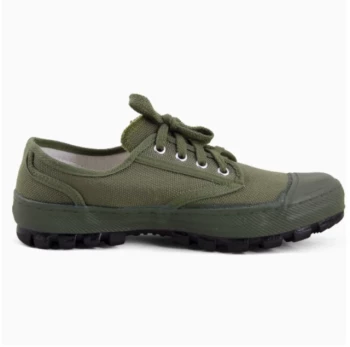
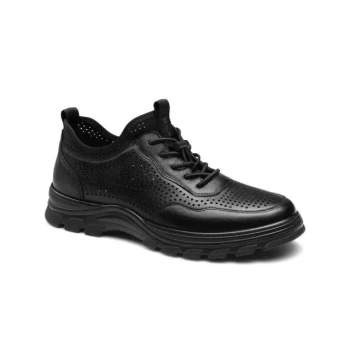
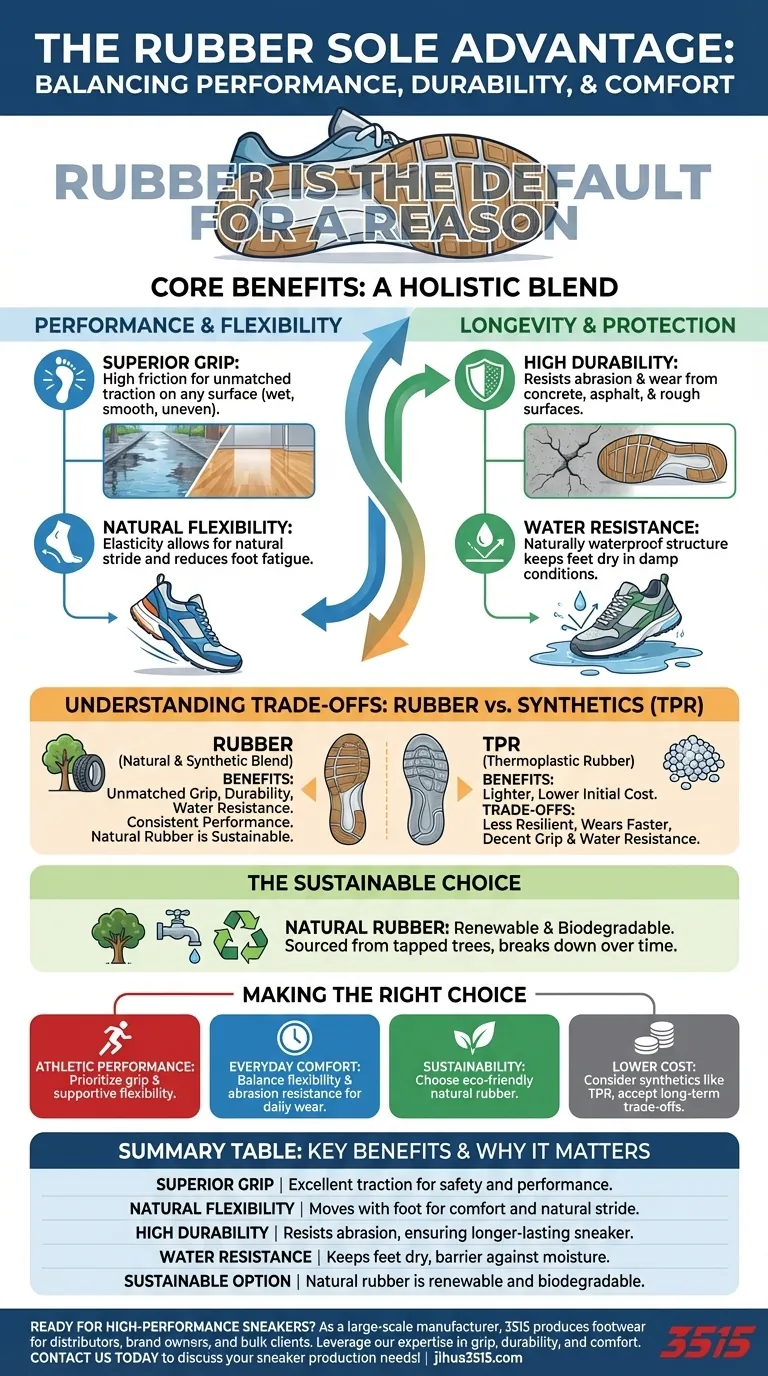
At its core, rubber is the default material for sneaker soles because it uniquely balances performance, durability, and comfort. It provides superior grip and flexibility for natural movement while remaining incredibly hardy and water-resistant, making it the ideal foundation for footwear designed for both athletic activity and everyday life.
The fundamental advantage of rubber is not a single feature, but its holistic blend of properties. It provides the essential grip and flexibility for dynamic movement while offering the resilience and protection required for long-term, daily use.
The Foundation of Performance: Grip and Flexibility
A sneaker's sole is the critical interface between your body and the ground. Its material properties directly dictate performance, safety, and comfort.
Unmatched Traction on Any Surface
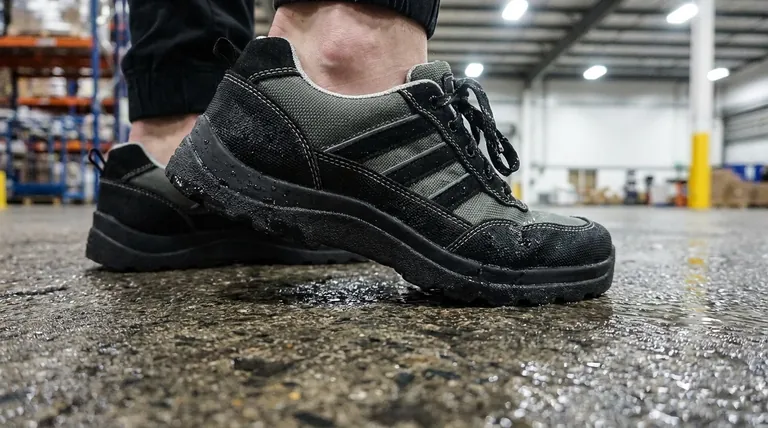
Rubber possesses a high coefficient of friction, which allows it to provide excellent grip on a wide variety of surfaces without needing aggressive lugs or studs.
This natural slip resistance is a key safety feature, offering stable footing on wet pavement, polished floors, or uneven terrain. This makes it a reliable choice for sports and daily wear.
Flexibility for Natural Movement
A good sneaker must move with your foot. Rubber is inherently elastic and flexible, allowing the sole to bend and adapt as you walk, run, or jump.
This elasticity enhances comfort by reducing foot fatigue and contributes to a more natural stride, preventing the stiff, board-like feeling found in less compliant materials.
Built for Longevity: Durability and Protection
Beyond immediate performance, a sole must withstand the repeated stress of daily use. Rubber excels in its ability to endure constant impact and environmental exposure.
Resisting Abrasion and Wear
Rubber is an exceptionally hardy and abrasion-resistant material. It stands up to friction from concrete, asphalt, and other rough surfaces.
This inherent durability means the sole maintains its integrity and performance characteristics for a longer period, translating to a longer lifespan for the sneaker.
A Barrier Against the Elements
The molecular structure of rubber makes it naturally waterproof. It prevents water from seeping into the shoe from below, keeping your feet dry in damp conditions.
This protective quality is essential not only for comfort but also for preserving the other materials within the shoe's construction.
Understanding the Trade-offs: Rubber vs. Synthetics
While rubber is a superior all-around material, it's important to understand how it compares to common synthetic alternatives you might encounter.
The Clear Advantages of Rubber
High-quality rubber offers an unmatched combination of grip, durability, and water resistance. Its performance is consistent and reliable across different conditions, making it the benchmark for quality footwear.
Furthermore, natural rubber is a more sustainable option, adding an environmental benefit to its technical superiority.
The Synthetic Alternative: Thermoplastic Rubber (TPR)
You may find some footwear uses TPR, a synthetic blend. TPR soles are often lighter and cheaper to produce.
However, these benefits come with significant trade-offs. TPR is generally less resilient than rubber, showing wear more quickly. Its grip and water resistance, while decent, are typically not as effective as those of a true rubber sole, especially in demanding conditions.
The Sustainable Choice
In an era of increasing environmental awareness, the origin of materials matters more than ever.
A Renewable and Biodegradable Material
Natural rubber is derived from the latex of rubber trees, which are tapped for this resource without being cut down. This makes it a renewable and sustainably sourced material.
Unlike many synthetic plastics that persist for centuries in landfills, natural rubber is also biodegradable, meaning it will break down over time after being discarded.
Making the Right Choice for Your Needs
Your primary goal for your footwear should dictate your material choice.
- If your primary focus is athletic performance and safety: Prioritize a high-quality rubber sole for its non-negotiable grip and supportive flexibility.
- If your primary focus is everyday comfort and longevity: A rubber sole provides the ideal balance of flexibility and abrasion resistance for constant daily wear.
- If your primary focus is sustainability: Natural rubber is one of the most eco-friendly and responsible sole materials available today.
- If your primary focus is a lower initial cost: You may find synthetics like TPR, but be prepared for a trade-off in long-term durability and peak performance.
Ultimately, understanding the properties of a rubber sole empowers you to choose footwear that truly serves its purpose.
Summary Table:
| Key Benefit | Why It Matters |
|---|---|
| Superior Grip | Excellent traction on various surfaces for safety and performance. |
| Natural Flexibility | Moves with your foot for enhanced comfort and a natural stride. |
| High Durability | Resists abrasion and wear, ensuring a longer-lasting sneaker. |
| Water Resistance | Keeps feet dry by acting as a barrier against moisture. |
| Sustainable Option | Natural rubber is renewable and biodegradable. |
Ready to source high-performance sneakers with superior rubber soles?
As a large-scale manufacturer, 3515 produces a comprehensive range of footwear for distributors, brand owners, and bulk clients. Our production capabilities encompass all types of shoes and boots, ensuring you get the perfect balance of grip, durability, and comfort for your market.
Contact us today to discuss your sneaker production needs and leverage our expertise!
Visual Guide
Related Products
- Durable Rubber-Soled Utility Shoes for Wholesale & Custom Brand Manufacturing
- Durable High-Traction Canvas Sneakers Wholesale & Custom Manufacturing
- Wholesale Durable Camouflage Canvas Shoes with High-Traction Cleated Rubber Sole
- Durable Canvas Work Shoes with Rubber Lug Sole | Wholesale Manufacturer
- Durable Rubber Sole Outdoor Shoes Wholesale & Custom Manufacturing
People Also Ask
- Why are rubber-soled shoes considered multi-weather footwear? Unlock All-Season Traction & Protection
- Why should we wear rubber soled shoes? Unlock Superior Safety and Durability
- How do rubber soles affect a shoe's appearance? Defining Your Shoe's Style and Formality
- What are the types of rubber sole shoes available? Choose the Right Sole for Durability & Comfort
- When were rubber sole shoes invented? From 1800s Concept to Modern Mainstay